Drain Snaking vs Hydro Jetting: Which Is Better Before Southwest Washington’s Fall Rains?
| Potential Service | Estimated Market Context |
|---|---|
| Simple drain snaking | $100-$275 |
| Sewer line cleaning | $150-$800 |
| Sewer camera inspection | $125-$500 |
| Sump pump repair | $380-$550 |
| Septic tank repair | $600-$3,000 |
We explain what we find before recommending a larger scope. A burst pipe creates enough disruption already without replacing plumbing that is still serviceable.
A slow drain can look like a simple inconvenience until the same clog returns, several fixtures begin gurgling, or wastewater starts rising in a tub or floor drain. At that point, Battle Ground homeowners often hear two possible solutions: drain snaking and hydro jetting. Both can restore flow, but they solve different problems.
The practical answer to
drain snaking vs hydro jetting depends on the obstruction, its location, the pipe’s material and condition, and whether the problem is isolated or recurring. Snaking is often the efficient choice for a specific blockage. Hydro jetting can be more appropriate when buildup coats a longer section of sound pipe. Neither method repairs a cracked, separated, sagging, or collapsed line.
The new season is a great reason to make and keep resolutions. Whether it’s eating right or cleaning out the garage, here are some tips for making and keeping resolutions.
Lists are great ways to stay on track. Write down some big things you want to accomplish and some smaller things, too.
Check the list regularly
Don’t forget to check in and see how you’re doing. Just because you don’t achieve the big goals right away doesn’t mean you’re not making progress.
Reward yourself
When you succeed in achieving a goal, be it a big one or a small one, make sure to pat yourself on the back.
Think positively
Positive thinking is a major factor in success. So instead of mulling over things that didn’t go quite right, remind yourself of things that did.
Why the Seasonal Transition Is a Smart Time to Check Drains
As September moves toward October, Southwest Washington begins shifting toward wetter conditions. That makes this a useful time to pay attention to drains that have been slow, noisy, or unreliable through the dry season. A marginal restriction may already be reducing flow even if it has not caused a complete backup.
Rain does not create hair, grease, wipes, or a foreign object inside a household drain. It can, however, coincide with symptoms that deserve closer investigation, especially when damaged sewer piping admits groundwater or when a problem involves the public wastewater system rather than one fixture. A clog that appears only during wet weather should not automatically be treated like an ordinary sink blockage.
The goal of pre-fall drain cleaning is to resolve known warning signs before a partial blockage becomes more disruptive. Because Battle Ground properties may connect to municipal sewer or use an onsite septic system, the plumber should first understand where the affected drain leads.
Drain Snaking vs Hydro Jetting: What Is the Difference?
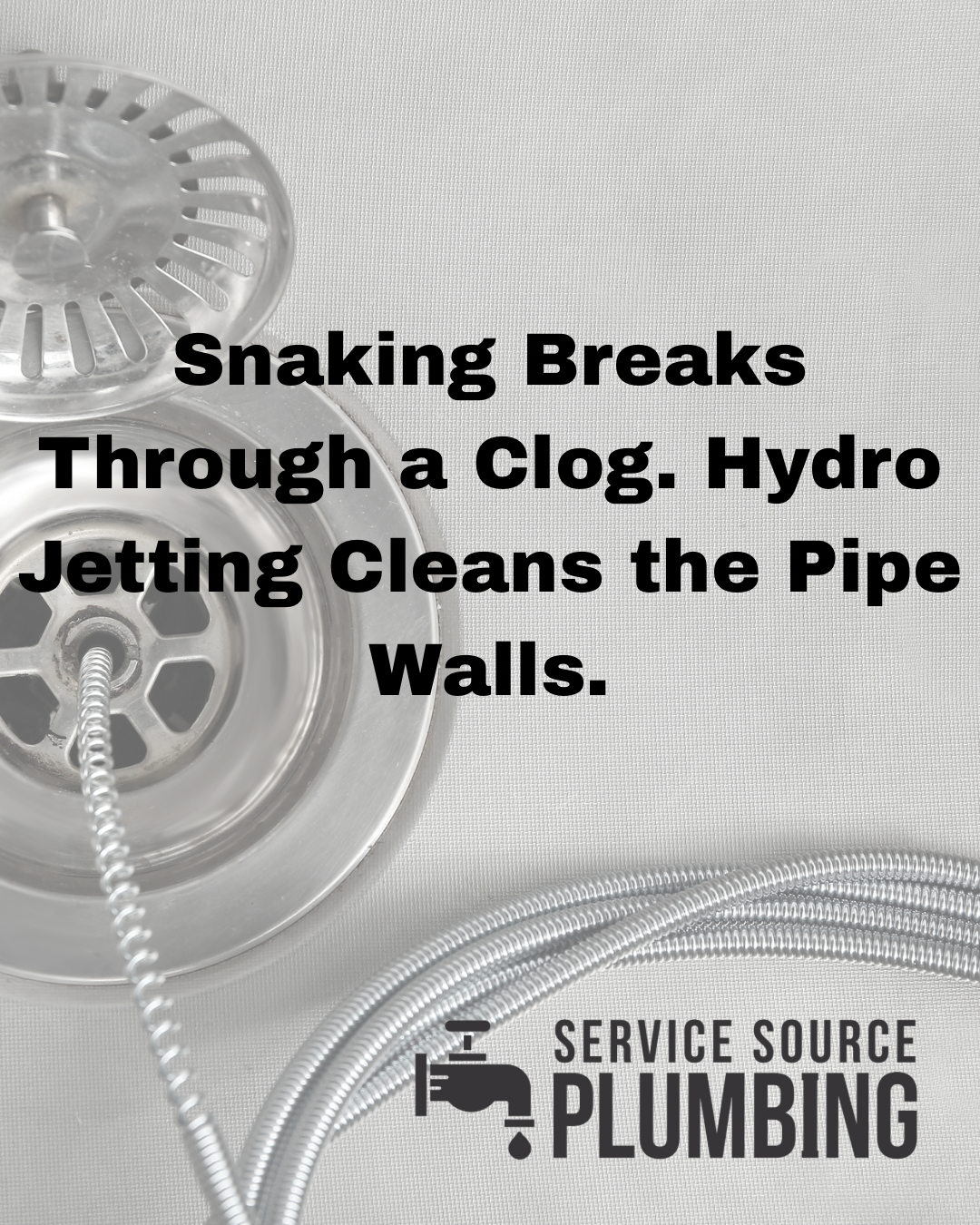
Drain snaking uses a flexible cable and an appropriate head to reach, break apart, cut through, or retrieve an obstruction. It creates a path for wastewater to move again. This method is especially useful when the problem is localized, accessible, and caused by material such as hair, paper, or a small foreign object.
Hydro jetting sends controlled, high-pressure water through a drain or sewer line using a specialized hose and nozzle. The water can remove buildup from more of the pipe wall and carry loosened material through the line. It is commonly considered for recurring restrictions involving grease, sludge, scale, or certain root growth, provided the pipe is in suitable condition.
| Decision point | Drain snaking | Hydro jetting |
|---|---|---|
| How it works | A mechanical cable opens or removes an obstruction | Pressurized water breaks up material and cleans a larger portion of the pipe wall |
| Best fit | A localized or first-time clog | Recurring clogs or buildup extending along the line |
| Typical examples | Hair, paper, small objects, or a concentrated blockage | Grease, sludge, scale, and some root intrusion in serviceable piping |
| Pipe-wall cleaning | Limited | More comprehensive when the line can safely be jetted |
| Pipe condition | Tool and head still must match the line | Condition should be assessed before high-pressure cleaning |
| Main limitation | Flow may return while wall buildup remains | Cannot correct structural pipe defects |
| Best next step | Confirm flow and watch for recurrence | Confirm access, pipe suitability, and the source of buildup |
The better method is the one that matches the verified condition.
Drain snaking is not automatically a temporary shortcut, and
hydro jetting is not automatically the premium answer. A correctly selected snake can fully solve an isolated clog, while jetting a damaged line can be inappropriate.
When Drain Snaking Is Usually the Better First Choice
Snaking often makes sense when one sink, shower, tub, or toilet is affected and nearby fixtures still drain normally. That symptom pattern points toward a fixture trap or branch-line blockage rather than a restriction in the main building drain. Hair and soap near a bathroom drain, food residue in a kitchen branch, or an object lodged in a toilet may be reachable with the right cable or auger.
It can also be the practical first step when the line is completely blocked and a camera cannot yet pass. Opening a path may allow the plumber to restore basic flow and inspect farther into the system. The result of that inspection, rather than the initial clearing alone, helps determine whether additional cleaning or repair is justified.
For an established home in Orchards, for example, a single slow bathroom sink that has never clogged before may not call for whole-line jetting. The plumber can evaluate the fixture, trap, branch line, and pipe condition, clear the obstruction, and test the connected fixtures. If the line remains open and the problem does not return, no more aggressive service may be necessary.
Snaking has limits. A cable can pass through a grease restriction without removing all material attached to the pipe wall. If
recurring drain clogs return in the same line, that history is evidence that the cause needs to be identified rather than repeatedly treating the immediate opening.
When Hydro Jetting May Make More Sense
Hydro jetting is most useful when the objective is broader than punching through one obstruction. A suitable nozzle can clean around the interior of the line, loosen accumulated material, and flush debris toward an appropriate exit. This can provide a more complete result where buildup, not one discrete object, is narrowing the pipe.
Signs that a plumber may consider hydro jetting include:
- The same kitchen or main drain has been cleared before and is slowing again.
- Several fixtures are affected, suggesting a restriction farther downstream.
- Grease, sludge, or mineral accumulation has been identified along the pipe wall.
- A camera inspection shows buildup through a longer section of otherwise serviceable piping.
- Small root intrusion is restricting a sewer lateral, and the pipe can safely be cleaned.
- A commercial kitchen or frequently used drain needs more complete wall cleaning.
- Snaking restored partial flow but did not resolve the underlying restriction.
The line should still be evaluated before jetting. High-pressure water does not mend a crack, close an offset joint, lift a sagging section, or restore a collapsed pipe. Root removal also does not repair the opening that allowed roots to enter. If a Hockinson property has older piping or a private sewer or septic connection with an uncertain layout, inspection and access planning become especially important.
This is why professional
clogged drain cleaning should be based on evidence. Hydro jetting can be highly effective, but only when the pipe condition and clog type make it the right tool.
Start With the Symptom Pattern, Not the Cleaning Method
Homeowners do not need to identify the obstruction before calling. Noting the affected fixtures, timing, previous attempts, and whether rain changes the symptoms helps the plumber decide where to begin.
One Fixture Is Slow or Blocked
One affected fixture usually points toward a nearby trap or branch line. A plunger, fixture-specific auger, or professional drain snake may be appropriate, depending on the fixture and suspected material. Stop using the fixture if water is rising, leaking from a connection, or affecting nearby finishes.
A slow sink does not necessarily justify hydro jetting. First determine whether the problem is in the stopper, trap, short branch, or a shared line. This narrower approach can solve the actual issue without adding unnecessary scope.
Several Fixtures Are Gurgling or Backing Up
When flushing a toilet changes the water level in a tub, or multiple drains slow at once, the restriction may be in a shared building drain or private sewer lateral. Continuing to run water can add volume behind the blockage. This pattern deserves prompt professional assessment rather than repeated treatment of individual fixtures.
The Clark Regional Wastewater District’s customer guidance explains that customers are generally responsible for blockages in their building plumbing and private side sewer, while the district handles blockages in its sewer main. The precise boundary can vary with the connection, so identifying whether the problem is private or public can prevent work on the wrong part of the system.
The Same Drain Keeps Clogging
Repeated trouble is a diagnostic clue. Grease buildup, roots, an offset joint, deteriorated pipe, poor slope, or an object that was never fully removed can all produce recurrence. Hydro jetting may solve buildup, but structural defects require repair rather than stronger cleaning.
A camera inspection can be useful after enough flow has been restored to see the pipe interior. Service Source Plumbing offers camera inspection alongside snaking and hydro jetting, allowing the recommendation to follow the observed condition instead of the homeowner having to choose a tool in advance.
Fall Rain Changes the Urgency, Not the Root Cause
Wetter weather can make an existing drainage weakness more noticeable, but it does not mean hydro jetting is always the answer. If only one shower drain is slow, rain is probably incidental. If lower-level fixtures back up during storms, the plumber may need to consider the private lateral, damaged piping, improper connections, groundwater entry, or a condition in the public system.
For homes in Vancouver or Battle Ground connected to a public sewer, property owners should understand where their responsibility ends. For rural properties around Hockinson, confirming whether the building uses a septic system changes the diagnostic path. Hydro jetting a household drain does not replace septic inspection or pumping, and a sewer snake cannot correct a saturated drain field.
If the concern involves roadside flooding, a storm drain, erosion, or surface-water drainage rather than wastewater inside the building, it belongs in a different service category. Clark County provides a separate channel for reporting stormwater, erosion, and drainage concerns. Keeping sanitary plumbing and stormwater problems separate helps the right responder address the right system.
The useful pre-rain step is therefore an assessment of known symptoms. Clearing an actual restriction before it becomes a full backup is practical. Scheduling a powerful cleaning method solely because the season is changing is not.
Pipe Condition, Access, and Camera Findings Shape the Decision
Pipe material alone does not determine whether hydro jetting is safe. Age, corrosion, cracking, separated joints, previous repairs, and installation quality all matter. A relatively new pipe can be damaged, while an older line may remain serviceable. The plumber should also account for pipe diameter, cleanout location, bends, branch connections, and where loosened debris can be safely moved.
Camera inspection adds information, but it has limits. Standing water or a complete blockage can hide the pipe wall, so the plumber may need to establish flow first. After cleaning, another camera pass can help confirm that buildup was removed and reveal defects that debris previously concealed. Not every simple fixture clog requires a sewer camera; recurring or main-line symptoms make it more valuable.
Preventing new buildup matters after the line is open. The Clark Regional Wastewater District identifies residential fats, oils, grease, and food waste as leading contributors to sewer blockages. The City of Vancouver also advises keeping grease and wipes out of the wastewater system. A successful service restores flow, but daily disposal habits help preserve the result.
If wastewater has already entered a living area, treat it as a contamination issue rather than a routine mop-up. The Washington State Department of Health’s sewage-spill guidance advises keeping children and pets away, using protective gear, and cleaning affected areas carefully. Stop water use when practical and seek professional help for the blockage and any substantial contaminated-water cleanup.
What Drain Snaking and Hydro Jetting Cost
Price depends on more than the selected method. A visible blockage in an accessible sink line differs from a main sewer restriction beneath a finished area. Service time, access, line length, clog severity, camera work, root cutting, toilet removal, emergency timing, and structural repairs can all change the total.
Estimated 2026 Market Context
| Service | Estimated 2026 national market range | How to use the figure |
|---|---|---|
| Sink drain snaking | $150 to $275 | Planning range for a typical accessible fixture drain |
| Main sewer line snaking | $200 to $500 | Broader range for cable clearing of a sewer line |
| Hydro jetting | $600 to $1,400 | National range for professional water-jet cleaning, depending on access and severity |
| Service Source Plumbing drain estimate | Free estimate | Final price depends on the inspected scope |
The national figures come from HomeGuide’s 2026 hydro-jetting cost guide and are not Service Source Plumbing prices or a quote for Southwest Washington. They are useful for comparing the general scale of the two methods, not predicting an exact invoice.
Ask what the proposal includes. A lower snaking price may be appropriate for an isolated clog. It is not a savings if buildup causes the same line to block repeatedly. Conversely, paying for hydro jetting is unnecessary when a simple obstruction can be fully removed with a cable. The estimate should identify the access point, affected line, proposed method, camera work, cleanup, and any conditions that could require additional repair.
Frequently Asked Questions
Is hydro jetting always better than drain snaking?
No. Hydro jetting cleans more of the pipe wall, but a correctly performed snaking service may be the better answer for a localized hair clog, paper blockage, or foreign object. Pipe condition, access, and the cause of the restriction should determine the method.
Can hydro jetting damage old pipes?
It can worsen an already compromised line if pressure, nozzle, or technique is not suited to the pipe. Age alone does not provide the answer. A plumber should consider the material and visible condition, especially when the line may be cracked, corroded, separated, or collapsed.
Why does my drain clog again after it was snaked?
The cable may have restored flow while grease, scale, roots, or another defect remained. Recurrence can also indicate a damaged or poorly sloped pipe. The next step is diagnosis, often including a camera inspection, rather than automatically repeating the same service.
Does heavy rain mean my sewer line needs hydro jetting?
Not necessarily. Wet-weather backups may involve an ordinary private-line blockage, groundwater entering damaged piping, a septic issue, or a public-system condition. Hydro jetting addresses removable material inside suitable piping. It does not repair infiltration, a failed septic component, or a municipal sewer problem.
Should a sewer camera be used before hydro jetting?
Often, particularly for a recurring clog or main-line concern, but the order depends on flow and visibility. A complete blockage may need to be opened before the camera can inspect the line. The plumber can then use the findings to confirm whether jetting, additional snaking, or repair is appropriate.
Does Service Source Plumbing provide both methods in Battle Ground?
Yes. Service Source Plumbing offers drain snaking, hydro jetting, camera inspection, and main-line clearing for residential and commercial properties. Its Battle Ground drain service page explains that the crew selects equipment according to pipe size, material, access, condition, and the likely cause of the blockage.
Choose the Right Drain Cleaning Method Before the Wet Season
The decision between drain snaking vs hydro jetting should follow the evidence. Snaking is often the efficient choice for a single, localized obstruction. Hydro jetting is a stronger candidate when recurring drain clogs come from buildup along a serviceable line. If the pipe is damaged, neither cleaning method replaces the repair it needs.
Service Source Plumbing provides professional drain cleaning for homes and businesses in Battle Ground, Vancouver, Hockinson, Orchards, and nearby Southwest Washington communities. Its licensed plumbers can evaluate the symptom pattern, locate the restriction, assess the line, and explain why the recommended method fits the condition.
Call 360-798-5887 or request a free estimate online. Emergency service is available when wastewater is backing up, fixtures are overflowing, or multiple drains stop working at once.
Drain Unclogging Services in Battle Ground
Drain Cleaning and Unclogging Services
Plumbing Services in Battle Ground
why choose
service source plumbing?
Get in Touch Today
Homeowners and businesses in Battle Ground, Duluth, Hockinson, Vancouver, Orchards, and Walnut Grove rely on us for our:
- 24/7 emergency services – We’re always ready to assist with urgent plumbing issues.
- Experienced professionals – Our team is trained in advanced drain cleaning techniques.
- State-of-the-art equipment – We use the latest tools to ensure safe and effective unclogging.
- Commitment to customer satisfaction – We deliver reliable, long-term plumbing solutions.
- Preventative inspections – We don’t just fix the issue; we help you prevent future problems.
Recent Posts