Black sink and faucet icon with a hand under the faucet, suggesting washing or plumbing.

Tankless vs Traditional Water Heaters: Which Is Right for Your Clark County Home

July 29, 2026

Share this article

Most homeowners in Vancouver, Battle Ground, Yacolt, and Hockinson do not think about their water heater until it fails. Then the decision has to be made fast, usually with cold water running and no time to research. That is the worst possible moment to weigh a tankless unit against a traditional tank, because the two systems differ in upfront cost, monthly operating cost, installation requirements, and how well they fit a specific household.


The better time to understand the comparison is now, while the current unit is still working. A traditional tank water heater lasts roughly 10 to 15 years. A homeowner whose unit is past year ten is already in the decision window, whether the tank has announced it yet or not.


Service Source Plumbing installs and services both system types across Clark County. The honest answer on which one belongs in a specific home depends on the household size, the fuel available, the existing plumbing and gas configuration, and how the family actually uses hot water. This is the full comparison the team walks homeowners through before any replacement decision gets made.

The new season is a great reason to make and keep resolutions. Whether it’s eating right or cleaning out the garage, here are some tips for making and keeping resolutions.

Make a list

Lists are great ways to stay on track. Write down some big things you want to accomplish and some smaller things, too.


Check the list regularly

Don’t forget to check in and see how you’re doing. Just because you don’t achieve the big goals right away doesn’t mean you’re not making progress.


Reward yourself

When you succeed in achieving a goal, be it a big one or a small one, make sure to pat yourself on the back.


Think positively

Positive thinking is a major factor in success. So instead of mulling over things that didn’t go quite right, remind yourself of things that did.

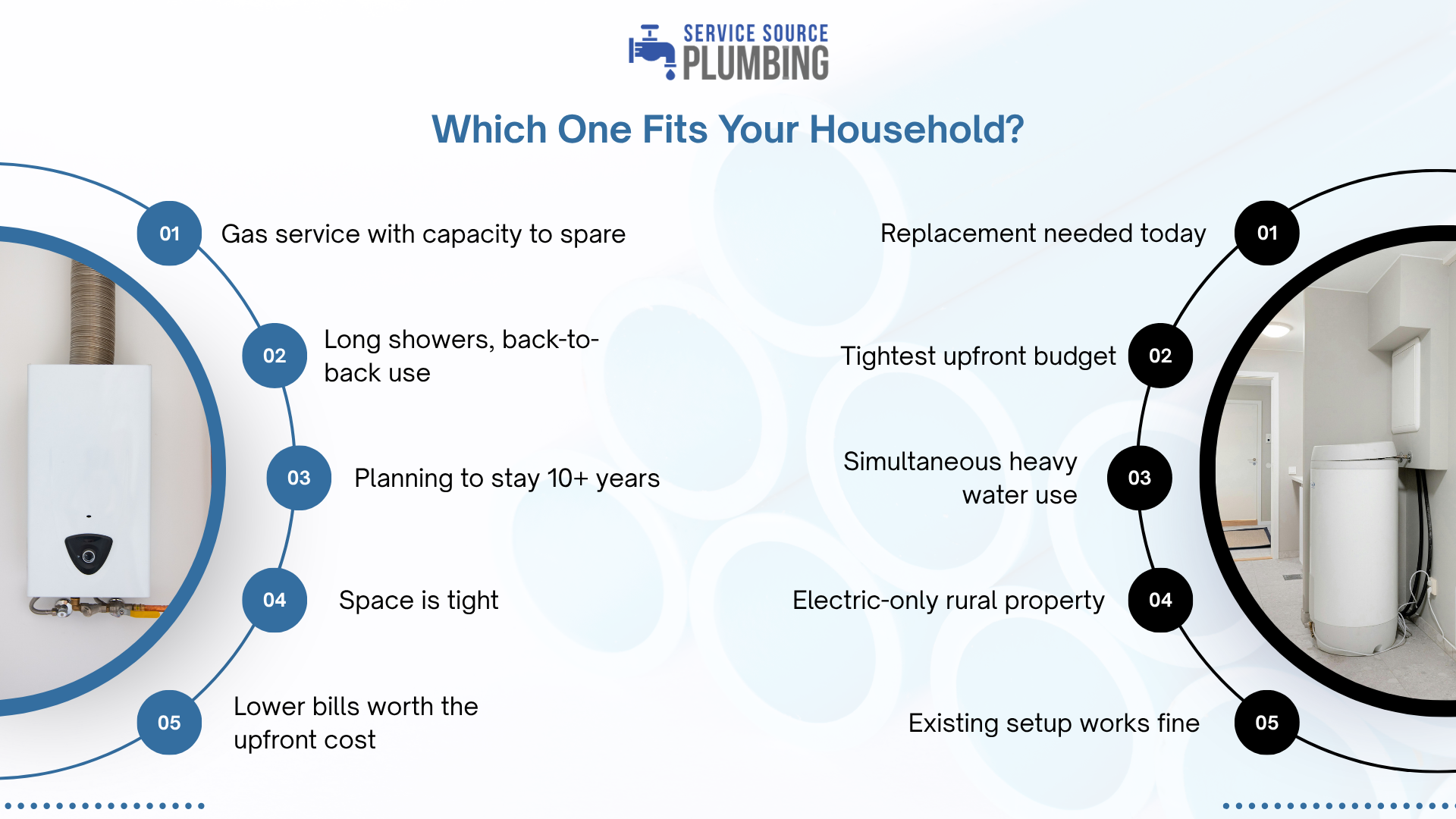
Infographic comparing tankless and tank water heaters, with images of both units and checkmarked benefits.

How Each System Actually Works

A traditional tank water heater stores 30 to 80 gallons of water and keeps it hot around the clock. When someone opens a hot tap, the system draws from the tank and refills with cold water, which then gets reheated. The design is simple, proven, and inexpensive to install. Its weakness is built into the concept: the unit spends energy keeping water hot whether anyone is using it or not. That constant reheating is called standby heat loss, and it is the main reason tank systems cost more to run.


A tankless water heater, also called an on-demand unit, heats water only when a tap opens. Cold water flows through the unit, a gas burner or electric element heats it instantly, and hot water continues for as long as the tap runs. There is no stored water, no standby loss, and no running out mid-shower. The tradeoffs are a higher purchase and installation cost, and a limit on how much hot water flows at once rather than how long it flows.


That flow-rate distinction is the single most misunderstood part of the comparison:


  • A tank can run out of hot water but delivers full flow until it does
  • A tankless never runs out but can only heat so many gallons per minute at once
  • A household running two showers and a dishwasher simultaneously needs a tankless sized for that combined demand
  • Undersized tankless units are the source of most tankless complaints, and sizing is an installation decision, not a product flaw

The Energy Numbers, Straight From the Department of Energy

The energy efficiency case for tankless is real and well documented, and it scales with how much hot water a household uses.


According to the U.S. Department of Energy, tankless water heaters are 24 to 34 percent more energy efficient than conventional storage tank models for homes using 41 gallons or less of hot water daily. For higher-use households around 86 gallons per day, the efficiency advantage narrows to 8 to 14 percent, because heavy use reduces the share of energy a tank wastes on standby.


The ENERGY STAR program puts the savings in dollar terms: a certified gas tankless water heater saves a family of four about $95 per year, roughly $1,800 over the unit's lifetime, compared to a standard gas storage model.

Household hot water use Tankless efficiency advantage What it means
Low, 41 gallons or less daily 24 to 34 percent Strongest tankless case
Moderate, 40 to 60 gallons daily Roughly 15 to 25 percent Solid ongoing savings
High, around 86 gallons daily 8 to 14 percent Savings real but smaller
Very high, large family peak use Varies by sizing Tank or dual tankless may fit

The lifespan difference adds to the tankless side of the ledger. A tankless unit typically serves 20 years or more, roughly double the 10 to 15 year expectancy of a storage tank. A homeowner comparing the two on cost needs to count one tankless installation against two tank installations across the same window.

What the Comparison Looks Like for Clark County Homes Specifically

National comparisons miss the local factors that actually decide this question for homes in Vancouver, Battle Ground, Yacolt, and Hockinson.


Three of them come up on nearly every water heater consultation Service Source Plumbing runs in Clark County.


Cold groundwater raises the sizing bar. A tankless unit's output depends on how much it has to raise the incoming water temperature. Pacific Northwest groundwater arrives cold, especially through the winter months, which means a tankless unit in Clark County works harder per gallon than the same unit in a warm-climate state. The practical effect is that sizing matters more here. A unit that would comfortably serve a home in the Southwest can underdeliver in a Battle Ground winter. Service Source Plumbing sizes tankless installations against local winter inlet temperatures, not the optimistic numbers on the box.


Gas line capacity decides feasibility. A gas tankless unit demands significantly more fuel at peak than the tank it replaces, because it does all its heating in the moment. Many older homes in established Vancouver neighborhoods have gas lines sized for the original tank appliance and furnace, and a tankless conversion requires upsizing that line. This is a real cost that belongs in the upfront comparison, and it is one of the first things the team checks on a tankless consultation.


Rural properties change the electric math. Homes in Yacolt and Hockinson on well systems and electric service face a different equation.


Whole-house electric tankless units draw substantial amperage and often require electrical service upgrades. For many rural Clark County homes, a high-efficiency electric tank or a heat pump water heater is the more practical fit than electric tankless, and an honest assessment says so rather than forcing the trendier product.

The Real Cost Comparison Over 20 Years

Upfront price is where tank systems win, and it is the number most homeowners see first. The full picture runs across two decades.

Cost factor Traditional tank Tankless
Unit and standard installation $1,200 to $2,500 $2,800 to $5,500
Gas line or venting upgrades Rarely needed $500 to $1,500 when required
Expected lifespan 10 to 15 years 20+ years
Units needed over 20 years Two One
Annual energy cost Higher, standby loss Lower, on-demand only
Annual maintenance Flush recommended Descale recommended

Two honest observations from that table:


  • The tank's upfront advantage shrinks over time. Counting a second tank replacement around year 12 to 15, plus higher annual operating costs throughout, the 20-year totals land closer together than the day-one prices suggest.
  • Tankless does not automatically win either. A home that needs a gas line upsize, or an electric-only property where tankless requires a service upgrade, can tilt the full math back toward a quality tank. The right answer is property-specific, which is why Service Source Plumbing assesses before recommending.


One Clark County note that applies to both systems: the region's water carries enough mineral content that annual maintenance meaningfully extends equipment life. Tanks benefit from an annual flush to clear sediment. Tankless units benefit from periodic descaling of the heat exchanger. Either system neglected on maintenance gives back part of its expected lifespan.

The Real Cost Comparison Over 20 Years

For homeowners replacing like for like, a tank swapped for a tank, the job is typically completed in a single visit. The old unit comes out, the new unit goes in on the existing connections, and hot water is restored the same day.


A tank-to-tankless conversion is a bigger project, and knowing the scope in advance prevents surprises:


  • Assessment first. Gas line capacity, venting path, electrical service, and winter water temperatures all get verified before anything is quoted
  • Venting is different. Gas tankless units require dedicated venting, usually through an exterior wall, which is part of the installation scope
  • Wall mounting frees floor space. The tank footprint in the garage or utility closet opens up, which is a genuine benefit in smaller Vancouver homes
  • Conversion typically takes a day to a day and a half depending on gas and venting work required


Service Source Plumbing provides written quotes covering the full scope before any work begins, for either system. If a tankless conversion requires gas or venting upgrades, those numbers are in the quote, not discovered mid-job.


Homeowners whose current unit is showing the warning signs, rumbling during heating cycles, rusty hot water, moisture around the base, or simply age past the ten-year mark, are better served scheduling an assessment now than making this decision during a failure. The water heater services page covers both repair and replacement paths, and for units that fail without warning, emergency plumbing service is available across Clark County.

Frequently Asked Questions

  • How do I know what size tankless water heater my Clark County home needs?

    Sizing depends on the peak simultaneous demand in the home and the temperature of the incoming water. Clark County's cold winter groundwater means units here need more capacity per gallon than the same household would need in a warmer state. Service Source Plumbing calculates sizing against local winter inlet temperatures and the fixtures that realistically run at the same time, then recommends the unit that handles that peak without overspending on unused capacity.

  • Will a tankless water heater work with my existing gas line in an older Vancouver home?

    Sometimes, but this is the single most common complication in tank-to-tankless conversions. Tankless units draw significantly more gas at peak than the tank they replace, and gas lines in many established Vancouver neighborhoods were sized for the original appliances. The line capacity gets verified during the assessment, and if an upsize is required, that cost appears in the written quote before any decision is made.

  • Is a tankless water heater worth it for a small household?

    Small households are actually where the efficiency case is strongest. The Department of Energy's 24 to 34 percent efficiency advantage applies to homes using 41 gallons or less of hot water daily, which describes most one and two person households. Smaller homes also tend to benefit most from the reclaimed floor space. The main counterweight is upfront cost, so the answer depends on how long the homeowner plans to stay.

  • How long do water heaters actually last in Clark County?

    Traditional tanks typically serve 10 to 15 years, and tankless units 20 years or more. Local water conditions affect where in that range a specific unit lands. Mineral content in Clark County water builds sediment in tanks and scale in tankless heat exchangers, and annual maintenance, a flush for tanks, periodic descaling for tankless, is what keeps units at the long end of their expected life.

  • Can I switch back to a tank if I try tankless and do not like it?

    Physically yes, but it is an expense worth avoiding by making the right call the first time. This is exactly why Service Source Plumbing runs a real assessment before recommending either system. A properly sized tankless unit matched to the home's gas capacity and the household's usage pattern does not generate the complaints that drive switch-backs. Nearly all tankless dissatisfaction traces to undersized units or installations that ignored winter water temperatures.

  • Does Service Source Plumbing install water heaters in Battle Ground, Yacolt, and Hockinson?

    Yes. Service Source Plumbing installs and services both tankless and traditional water heaters throughout Clark County, including Vancouver, Battle Ground, Yacolt, Hockinson, and the surrounding communities. Every installation starts with an on-site assessment and a written quote covering the full scope.

If your water heater is past the ten-year mark, showing warning signs, or you simply want to know which system makes sense for your home before a failure forces the decision, Service Source Plumbing can assess your Vancouver, Battle Ground, Yacolt, or Hockinson home and walk you through the honest numbers for both options.


Water Heater Services

Emergency Plumber

Plumbing Repair

Our Services in Vancouver WA

 Contact Service Source Plumbing

why choose

service source plumbing?

Get in Touch Today

Homeowners and businesses in Battle Ground, Duluth, Hockinson, Vancouver, Orchards, and Walnut Grove rely on us for our:

  • 24/7 emergency services – We’re always ready to assist with urgent plumbing issues.
  • Experienced professionals – Our team is trained in advanced drain cleaning techniques.
  • State-of-the-art equipment – We use the latest tools to ensure safe and effective unclogging.
  • Commitment to customer satisfaction – We deliver reliable, long-term plumbing solutions.
  • Preventative inspections – We don’t just fix the issue; we help you prevent future problems.


Recent Posts

Built-in bathtub with water and three deck-mounted faucets in a tiled bathroom.
July 21, 2026
A burst pipe in Vancouver WA can release hundreds of gallons before a plumber arrives. Service Source Plumbing explains exactly how to shut off your water, where to find every valve, and what to do next.
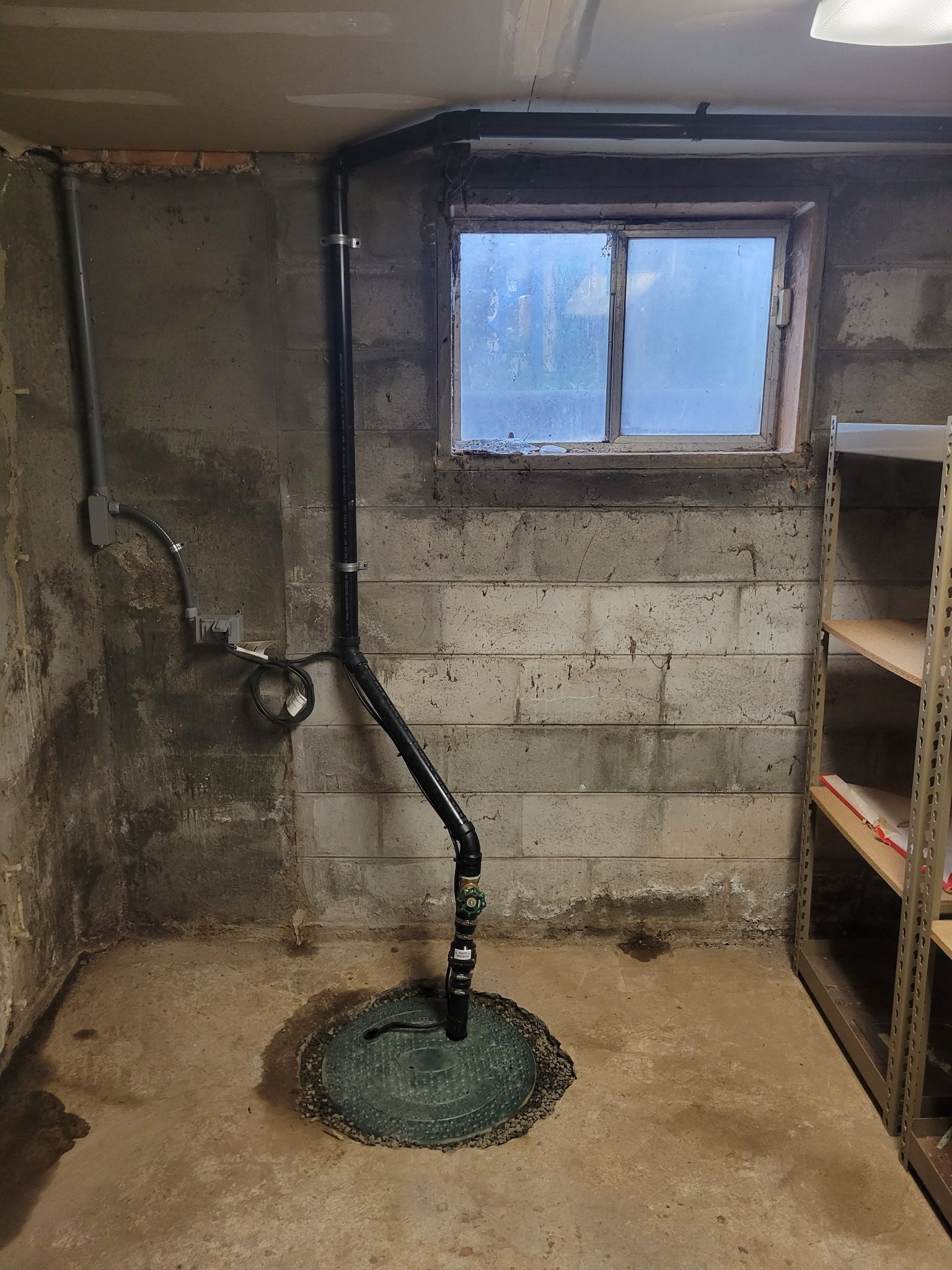
Basement utility room with window, concrete walls, exposed pipes, and a floor drain with green cover
July 16, 2026
Underground and above-ground gas lines each have specific safety requirements, applications, and conditions where one is the right choice over the other. Service Source Plumbing explains what Clark County homeowners need to know.
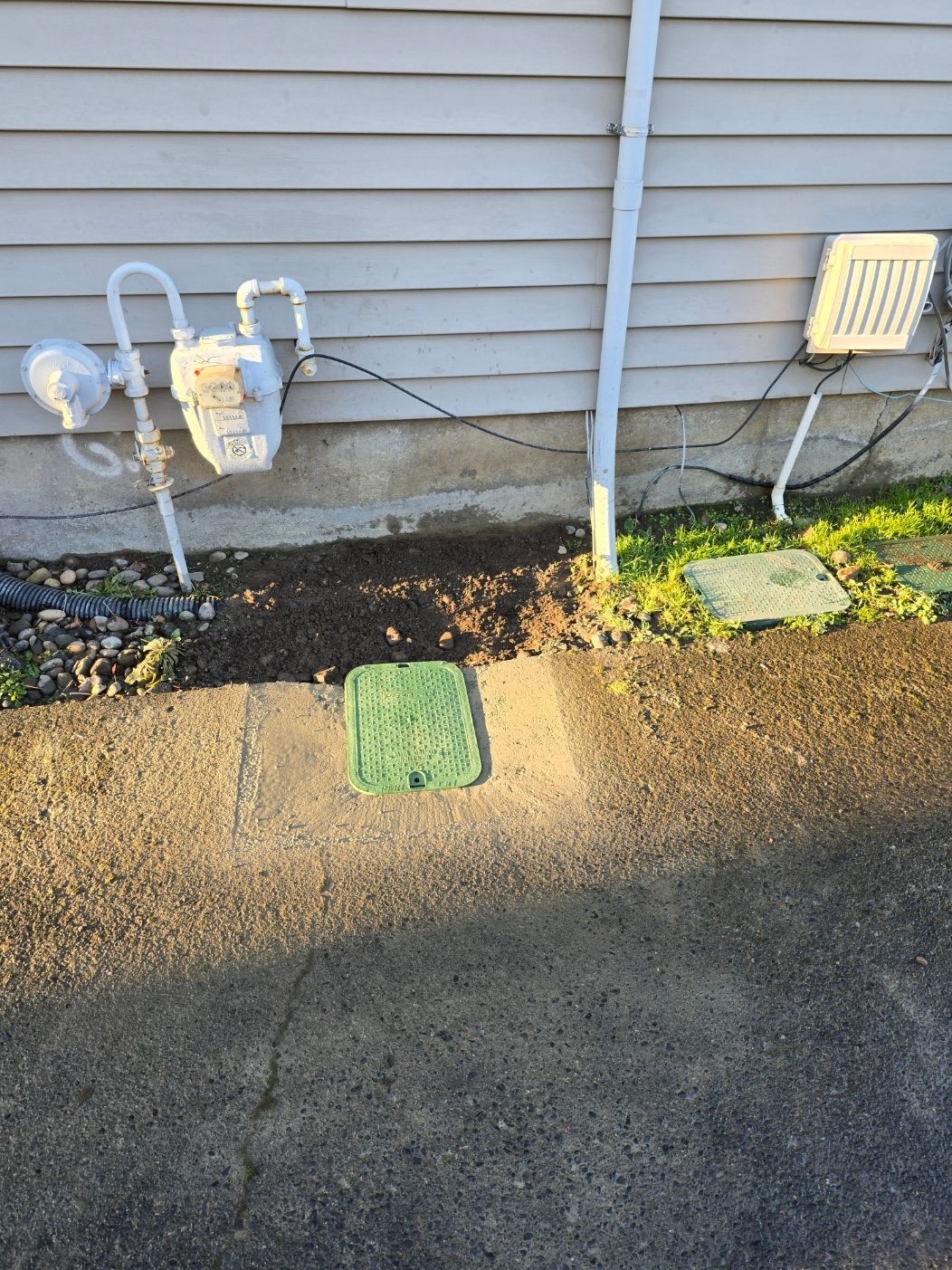
Side of house with gas meters, utility pipes, and a driveway with green utility covers.
July 9, 2026
Not every sump pump is right for every home in Clark County. Service Source Plumbing explains the five types of residential sump pumps, how each one works, and which one your Vancouver WA home actually needs.
Basement utility area with a white water heater and ducted HVAC equipment beside a furnace.
June 30, 2026
Most water heater failures in Vancouver WA announce themselves weeks before they happen. Service Source Plumbing explains the 7 warning signs to catch before a repair becomes an emergency replacement.
Exterior house wall with gas meters, utility pipes, and a sidewalk near small utility covers
June 23, 2026
Six plumbing problems in Vancouver WA homes that compound silently until the repair bill is unrecognizable. Service Source Plumbing explains what each one does over time and when to call an emergency plumber in Clark County.
Gray water heater in a utility closet with pipes and labels, sitting on a wooden stand.
June 16, 2026
Upgrading showerheads, faucets, and toilets in your Yacolt WA home can cut water bills and boost performance. Service Source Plumbing explains what to upgrade, what the savings look like, and when to call a plumber.
Trench dug in muddy yard beside a house, with a white pipe running through it and coiled pipe nearby.
June 9, 2026
Learn how to prevent summer clogs in Yacolt WA with expert plumbing tips. Discover common causes of drain blockages and protect your home's plumbing system.
Utility meters and pipes beside a house wall, with a sidewalk and curb in front.
June 4, 2026
Summer is when Clark County homeowners discover what winter did to their outdoor plumbing. Service Source explains what to check on hose bibs, irrigation, and outdoor lines in Yacolt WA.
Close-up of insulated plumbing pipes and brass valve under a sink or floor, with a blue hose attached.
May 27, 2026
Frozen pipes in Yacolt WA move fast. Service Source Plumbing explains how to prevent them before a Clark County freeze — and exactly what to do when one bursts.
Utility room water heater next to a silver insulated tank, with exposed pipes and a door in the background
May 20, 2026
Clark County's hard water is hard on tankless water heaters. Service Source Plumbing explains the maintenance schedule that keeps your Yacolt WA system running efficiently.
Show More