Why Does My Sump Pump Keep Running After the Rain Stops?
| Potential Service | Estimated Market Context |
|---|---|
| Simple drain snaking | $100-$275 |
| Sewer line cleaning | $150-$800 |
| Sewer camera inspection | $125-$500 |
| Sump pump repair | $380-$550 |
| Septic tank repair | $600-$3,000 |
We explain what we find before recommending a larger scope. A burst pipe creates enough disruption already without replacing plumbing that is still serviceable.
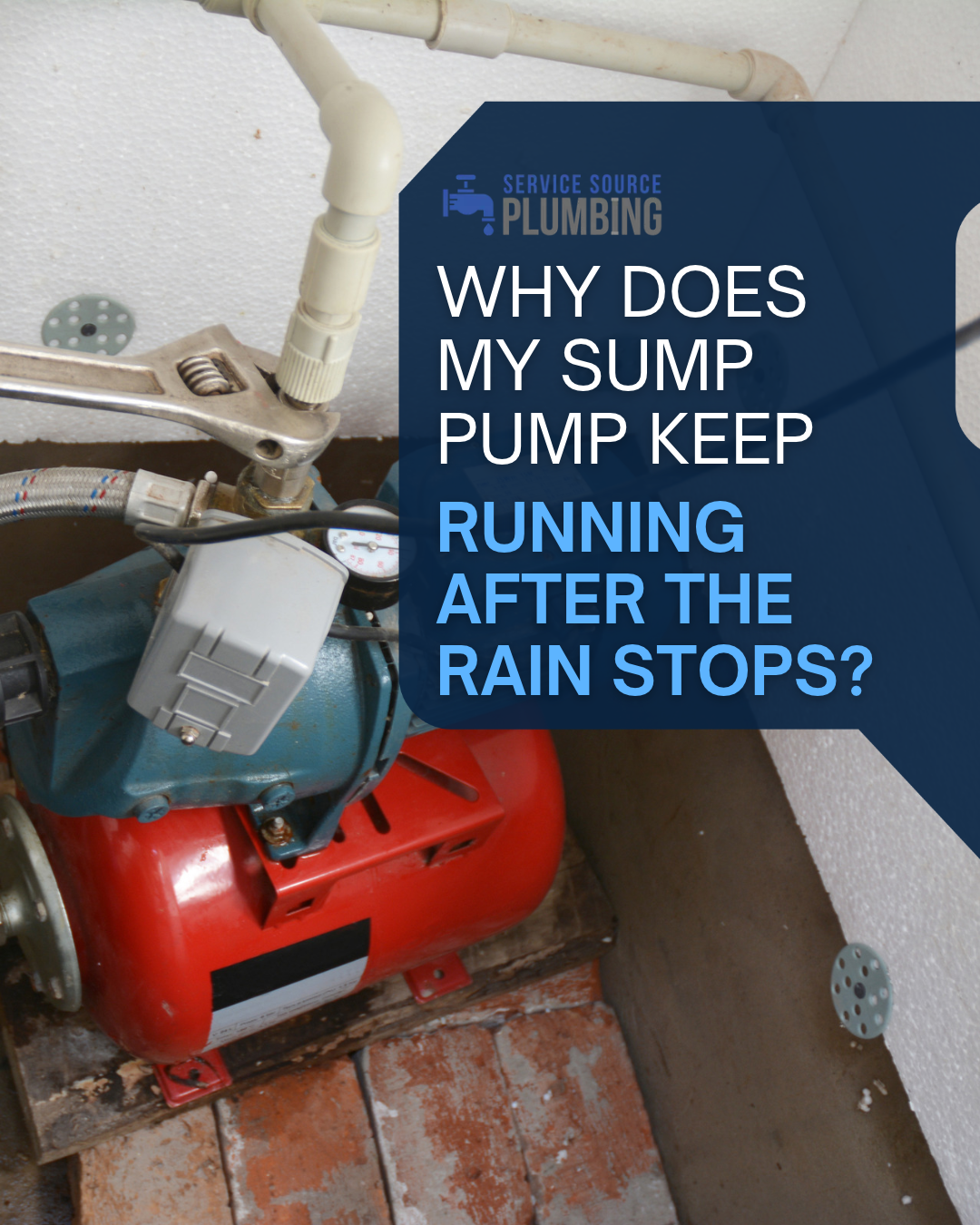
A sump pump that keeps running after rain may still be removing groundwater from saturated soil, or it may have a switch, discharge, or pump problem. The first distinction is whether water is still entering the pit and being pumped away effectively. A pump running with little water, failing to lower the level, or repeatedly restarting needs a different response from one steadily handling continued inflow. Sound alone does not tell you which situation you have.
For homeowners in Battle Ground and surrounding Southwest Washington communities, the end of rainfall does not necessarily mark the end of groundwater movement. What matters is whether the system is managing that water and operating as intended. We can inspect the pump, controls, and accessible discharge arrangement to help identify the cause. This guide explains what you can observe safely and when the symptoms call for prompt plumbing help.
The new season is a great reason to make and keep resolutions. Whether it’s eating right or cleaning out the garage, here are some tips for making and keeping resolutions.
Lists are great ways to stay on track. Write down some big things you want to accomplish and some smaller things, too.
Check the list regularly
Don’t forget to check in and see how you’re doing. Just because you don’t achieve the big goals right away doesn’t mean you’re not making progress.
Reward yourself
When you succeed in achieving a goal, be it a big one or a small one, make sure to pat yourself on the back.
Think positively
Positive thinking is a major factor in success. So instead of mulling over things that didn’t go quite right, remind yourself of things that did.
Start With the Water Level, Not Just the Motor Noise
A running motor does not prove that water is leaving the building. If the pit level keeps rising while the pump runs, the system is not keeping up with the water entering it. If the level falls but the motor continues running at an unusually low level, the control or operating arrangement deserves attention. Both observations are more useful than estimating the problem from how loud the equipment sounds.
Observe only from a dry, safely accessible position without reaching into the pit or removing a secured cover. Note whether the water rises, falls, or remains roughly steady while the pump operates. Tell us whether this is a new pattern or the way the system has behaved during previous wet periods.
A change in performance is a reason to investigate, even if flooding has not occurred yet.
Why Groundwater Can Keep Arriving After Rain Stops
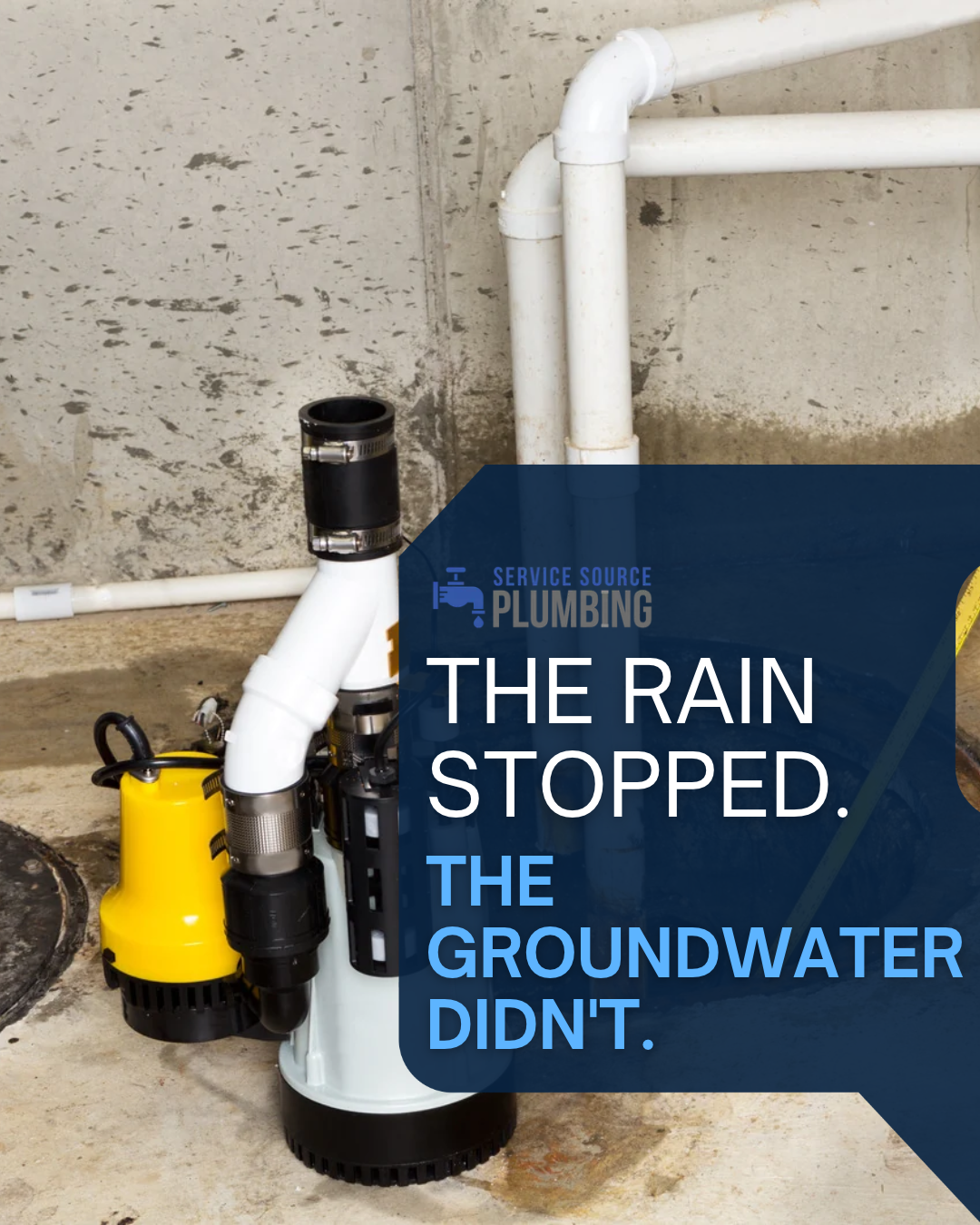
Soil and groundwater do not respond to weather on the same schedule as the roof or driveway. Water can continue moving toward a collection system after the surface rain ends. The amount and duration depend on the property, drainage arrangement, ground conditions, and recent weather. There is no universal number of post-rain hours that establishes whether every sump pump is functioning normally.
Steady inflow with effective removal may explain continued operation without proving that the system has unlimited capacity. A new increase in run time, a rising water level, or failure to shut down appropriately still deserves assessment. Compare the current event with previous conditions where you can, rather than assuming long operation must always be either normal or defective. Our guide to plumbing problems revealed by heavy rain explains why weather timing can help direct the investigation.
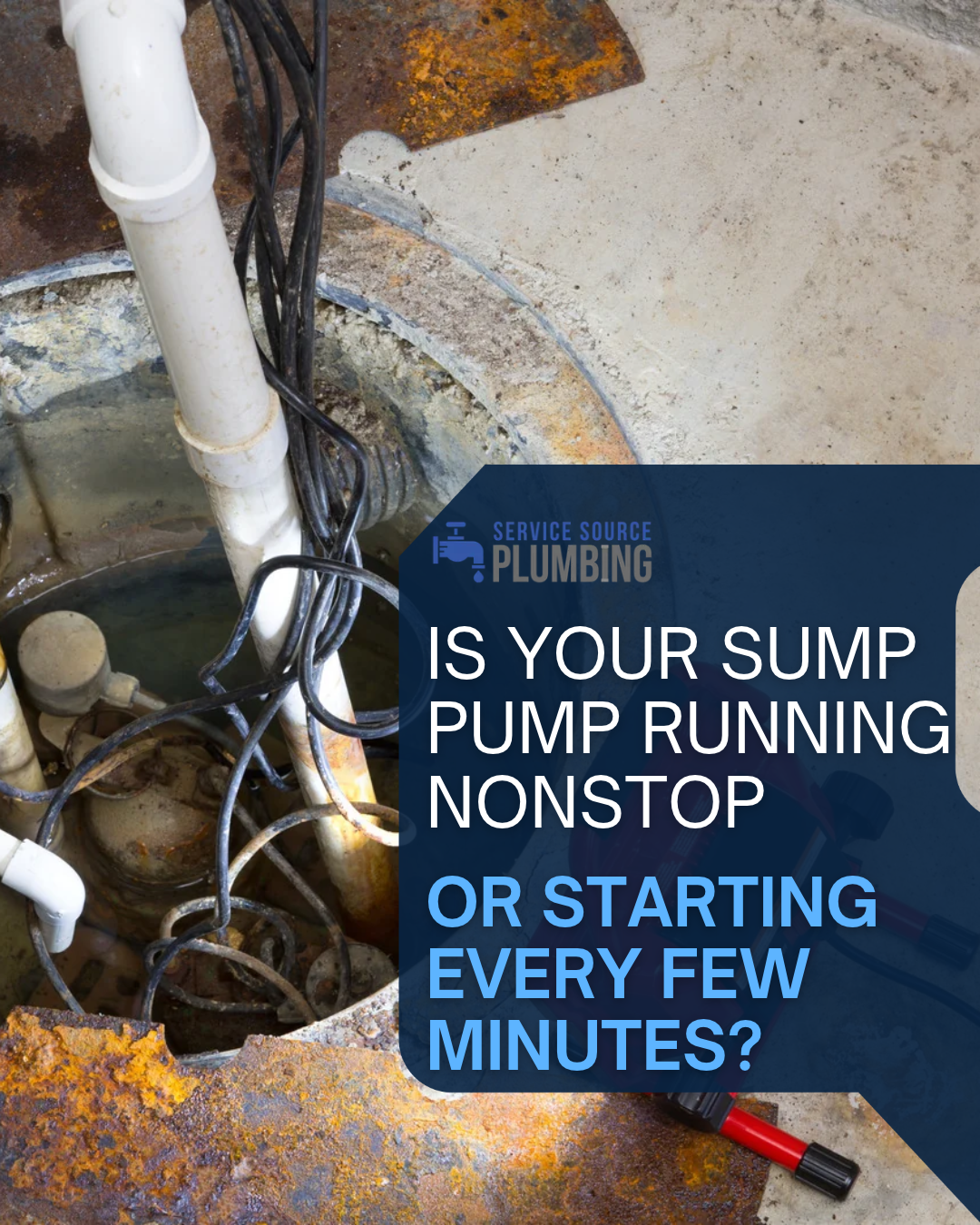
Continuous Running and Short Cycling Are Different Symptoms
Continuous running means the pump stays on, while short cycling means it starts and stops repeatedly over short intervals. A homeowner may describe either pattern as a pump that will not stop. Distinguishing the two helps the plumber decide which operating conditions to examine. Record the pattern without changing the float or controls to test a theory.
| What you observe safely | What may need investigation | Why it matters |
|---|---|---|
| Steady running with continuing inflow and effective discharge | Groundwater load and system capacity | Operation may reflect continued demand |
| Running with the water level rising | Restriction, inadequate capacity, or reduced pump performance | Water intrusion may be approaching |
| Motor running after the level drops unusually low | Switch or control operation | The pump may not be shutting off as intended |
| Frequent starts shortly after shutdown | Backflow, switch range, or basin-related cycling | The same operating problem may repeat |
| Humming with little apparent water movement | A pumping or discharge problem | Motor noise does not establish protection |
| New noise, burning odor, or electrical trouble | Mechanical or electrical fault | Prompt qualified help is needed |
WAYNE's sump-pump troubleshooting manual lists different possible causes for failure to shut off and excessive cycling. These include switch issues, restrictions, excessive inflow, sizing, and discharge backflow. The manual applies to its specified products, so the installed pump's own instructions remain important. A symptom narrows the questions; it does not identify a replacement part on its own.
What Can Keep the Pump Running or Restarting?
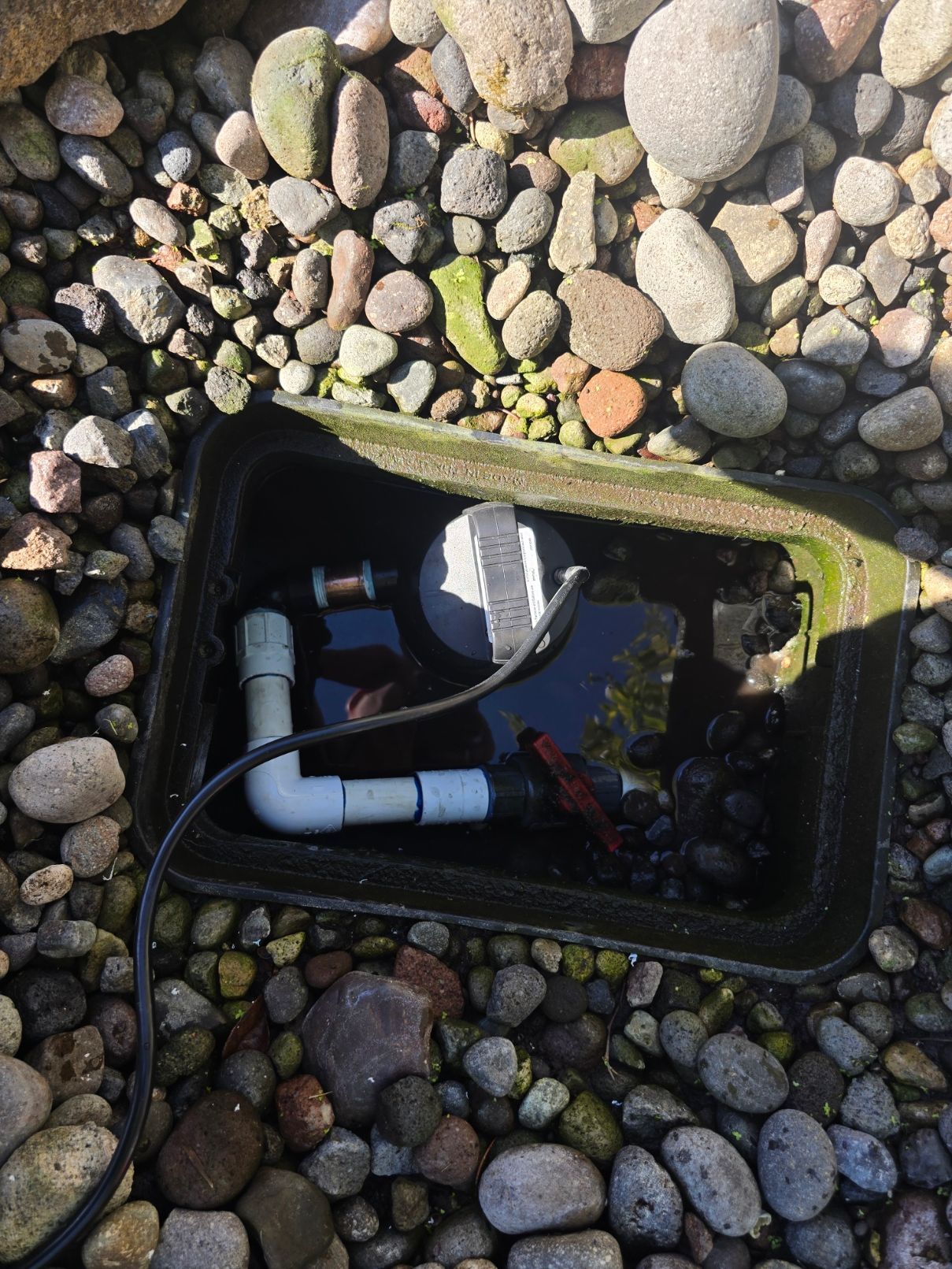
Several components work together to move water out and end the pumping cycle. A problem with one part can look like a failed pump even when the motor itself still operates. The inspection should consider controls and the discharge path alongside the equipment in the basin. Replacing the pump without checking those connected conditions can leave the original problem unresolved.
A float or switch problem
A float-related issue can interfere with normal starting or stopping. Obstruction and switch failure are possibilities that require an appropriate assessment of the installed system. Do not reach into the pit, lift the float by hand, or bypass the switch while the equipment is powered. Tell us if the pump runs at a low water level or behaves differently from earlier cycles.
Water returning through the discharge assembly
If water visibly returns after shutdown and the pump promptly restarts, the check valve and discharge arrangement deserve investigation. A valve that is missing, unsuitable, incorrectly installed, or leaking can be part of that pattern. The observation does not prove that every valve needs replacement. The plumber should establish what is returning and whether the assembly functions as intended.
A restricted discharge or reduced pumping performance
An obstruction, frozen section during freezing conditions, or another discharge problem can limit removal. The installed pump's performance also needs to match the actual lift and route. A larger motor is not automatically a solution to an unidentified restriction. The system needs a confirmed path for water to leave, not simply equipment that sounds more powerful.
Water cycling back toward the building
Discharged water that repeatedly returns toward the foundation can contribute to continued demand. That is different from immediate backflow through a check valve after shutdown. If you can see an outlet safely, note where the water goes without approaching a wet electrical area or unstable ground. The route should be assessed for the property and applicable requirements rather than redirected casually toward a neighbor, street, or unknown drain.
Why Check Valve and Basin Conditions Matter
Zoeller's product-support guidance explains that short cycling can relate to basin diameter and the pump's on/off operating range. It also discusses check valves and pumping problems such as air locking. That reinforces why repeated starts do not always mean the motor has worn out. The inspection needs to distinguish the operating pattern from the component that actually causes it.
A narrow operating range can create a different repair decision from a leaking valve or restricted discharge. Controls also differ between models, so a setting or modification suitable for one pump may be inappropriate for another. Do not copy a video that recommends adjusting a switch or drilling the discharge pipe without confirming the installed product's requirements. We evaluate the actual arrangement before recommending changes to the pump or associated parts.
Safe Observations and Signs That Need Urgent Help
Keep the check limited to what you can see or hear from a dry, safe location. Do not open electrical connections, pull a wet plug, remove the pump, or enter standing water to inspect it. If flooding threatens outlets, equipment, or other electrical components, leave the affected area and seek qualified assistance. Do not approach a breaker panel through water or repeatedly reset a device that trips.
Useful information to share includes:
- Water level: whether it is rising, falling, or remaining steady during operation.
- Operating pattern: continuous running, repeated short cycles, humming, or failure to restart.
- Visible discharge: whether water appears to leave the outlet, if it is safely visible.
- Return flow: whether water comes back into the pit immediately after the pump stops.
- Weather and timing: when rainfall ended and when the changed behavior began.
- Other clues: alarms, unusual sounds, odors, recent repairs, or nearby plumbing activity.
Call promptly if the level is rising, water is entering the living space, or the system is not moving water effectively. Electrical symptoms, smoke, or a burning smell require appropriate urgent help and separation from the equipment. Do not add test water to an already struggling system. Our pre-rain sump-pump testing guide addresses preventive checks after the current fault has been resolved, rather than troubleshooting during an active flooding risk.
When Repair Makes Sense and When Replacement Needs Evaluation
A defined component problem may be repairable when the pump remains suitable for continued service. A confirmed switch or valve issue is a different scope from a motor that cannot deliver the required performance. Persistent inflow also needs to be separated from inadequate equipment capacity or a discharge restriction. The recommendation should explain what was established, not simply label every long-running pump old.
| Findings established during service | Possible next step | What to clarify |
|---|---|---|
| A specific control or float issue | Repair or compatible component replacement | Whether the remaining pump performs reliably |
| A confirmed check-valve problem | Correct or replace the affected assembly | Whether backflow and cycling improve afterward |
| A restricted or unsuitable discharge route | Address the discharge problem | Whether the pump can then perform as required |
| Inadequate capacity for the verified system conditions | Evaluate appropriate pump sizing | Inflow, lift, route, and performance requirements |
| A worn or failed pump | Replacement may be appropriate | Compatibility with the basin, controls, and discharge |
| A possible plumbing leak feeding the pit | Source-specific leak investigation | Whether the pump is responding to another fault |
Ask whether the proposed work includes verifying the full operating cycle after correction. The system should be evaluated for starting, water movement, appropriate stopping, and any recurring backflow. We can discuss sump-pump installation options when replacement is supported by the findings. A new unit should fit the application rather than repeat an unsuitable arrangement with newer equipment.
Backup protection deserves a separate conversation if an outage or primary-pump failure would leave the property exposed. The appropriate arrangement depends on the site, existing equipment, and the backup system's limitations. A backup does not remove the need to correct a blocked discharge or other primary problem. Ask how any proposed protection will operate and be maintained under the conditions relevant to your home.
What Does Sump Pump Repair Cost?
We base the recommendation on the actual fault and the condition of the connected system. For budgeting context, HomeGuide's sump-pump repair guide reports $200 to $870 for repairs on average nationally and $100 to $250 for annual maintenance. Those figures describe different services and do not establish the cost of correcting a particular discharge route or electrical problem. We will explain the scope and expected cost before you approve the work.
| Cost item | Planning context | What affects the total |
|---|---|---|
| Sump-pump repair | HomeGuide national average range: $200 to $870 | Diagnosis, parts, access, and equipment condition |
| Annual maintenance | HomeGuide national range: $100 to $250 | Service tasks and system condition |
| Switch or check-valve work | Requires a component-specific estimate | Compatibility and the assembly needing correction |
| Discharge correction | Requires a route-specific scope | Restriction location, accessibility, and needed changes |
| Pump replacement | Quoted after assessment | Capacity, equipment, controls, installation, and disposal |
| Electrical or water-damage work | May require separate qualified services | The actual hazard or affected materials |
Compare the tasks included rather than choose between a broad replacement quote and a narrow part-repair price as though they are identical. Ask whether the estimate includes diagnosis, the identified correction, and a performance check afterward. Clarify how additional findings will be handled before the work expands. Our plumbing repair services start with understanding the problem so you can make a decision based on the actual system.
Frequently Asked Questions
How long should a sump pump run after rain?
There is no single duration that applies to every property. Continuing groundwater movement can keep the system working after the rainfall stops. The more useful questions are whether it moves water effectively and shuts off appropriately for its design. New behavior, rising water, or ineffective pumping deserves attention regardless of elapsed time.
Should I unplug a sump pump that will not stop?
Do not make that decision solely to stop the noise, because the pump may still be handling active inflow. Do not touch a plug or electrical equipment from a wet location. If the pump is running at an unusually low level or shows electrical or overheating symptoms, seek prompt qualified help and follow model-specific instructions where safe. Flooding near electrical equipment is a reason to leave the affected area rather than attempt hands-on diagnosis.
Does short cycling always mean the check valve is bad?
No, because repeated starts can involve controls, the operating range, basin conditions, or other system issues. Backflow after shutdown makes the discharge assembly worth checking but is not a complete diagnosis. A plumber should establish the cause before replacing parts. Describe the sequence you observe instead of assuming which component failed.
Could a plumbing leak keep feeding the sump pit?
It is possible for a separate water source to contribute, depending on the property's layout. Continuing inflow without recent rain is a reason to investigate rather than assume the pump alone is responsible. Tell us about nearby plumbing symptoms or changes in water use. We can determine whether source-specific leak checks belong in the next step.
Schedule Help for a Pump That Is Not Returning to Normal
If your sump pump keeps running after rain, we can inspect its performance and help distinguish continuing demand from a fault. We serve homeowners in Battle Ground, Vancouver, Yacolt, Hockinson, and Woodland. Tell us whether the water level is rising, the pump is cycling repeatedly, or discharge appears weak. Report electrical concerns or active flooding when you call so the urgency is clear.
Contact Service Source Plumbing or call (360) 798-5887 to discuss the symptoms and arrange service. We can recommend repair or replacement according to the pump, controls, and discharge findings. Our plumbing repair services also support investigation when another plumbing fault may contribute. You can then address the identified problem before the next storm adds more demand.
Helpful Services and Related Reading
why choose
service source plumbing?
Get in Touch Today
Homeowners and businesses in Battle Ground, Duluth, Hockinson, Vancouver, Orchards, and Walnut Grove rely on us for our:
- 24/7 emergency services – We’re always ready to assist with urgent plumbing issues.
- Experienced professionals – Our team is trained in advanced drain cleaning techniques.
- State-of-the-art equipment – We use the latest tools to ensure safe and effective unclogging.
- Commitment to customer satisfaction – We deliver reliable, long-term plumbing solutions.
- Preventative inspections – We don’t just fix the issue; we help you prevent future problems.
Recent Posts