5 Reasons Your Hot Water Runs Out Faster as Southwest Washington Gets Colder
| Potential Service | Estimated Market Context |
|---|---|
| Simple drain snaking | $100-$275 |
| Sewer line cleaning | $150-$800 |
| Sewer camera inspection | $125-$500 |
| Sump pump repair | $380-$550 |
| Septic tank repair | $600-$3,000 |
We explain what we find before recommending a larger scope. A burst pipe creates enough disruption already without replacing plumbing that is still serviceable.
A shower that stayed hot through summer may begin cooling sooner when Southwest Washington temperatures drop. That change does not always mean the water heater is failing, but it can expose limited capacity, slow recovery, sediment, or a weak component. When a water heater runs out of hot water, the timing and pattern usually provide better clues than the thermostat setting alone.
For Yacolt homeowners, the useful first question is whether the supply changed suddenly or only became noticeable as colder water began entering the home. The same approach applies in Battle Ground, Vancouver, Hockinson, and Orchards. This guide explains five likely reasons, safe observations to make, and how to decide whether the system needs maintenance,
water heater repair, or replacement evaluation.
The new season is a great reason to make and keep resolutions. Whether it’s eating right or cleaning out the garage, here are some tips for making and keeping resolutions.
Lists are great ways to stay on track. Write down some big things you want to accomplish and some smaller things, too.
Check the list regularly
Don’t forget to check in and see how you’re doing. Just because you don’t achieve the big goals right away doesn’t mean you’re not making progress.
Reward yourself
When you succeed in achieving a goal, be it a big one or a small one, make sure to pat yourself on the back.
Think positively
Positive thinking is a major factor in success. So instead of mulling over things that didn’t go quite right, remind yourself of things that did.
Why Cooler Weather Changes the Hot-Water Baseline
A water heater must raise incoming water to the thermostat setpoint. Colder inlet water creates a larger temperature rise, so the same heater needs more time or energy. A. O. Smith explains that season and location affect inlet temperature and recovery. Back-to-back use and simultaneous appliances make that difference obvious. Cooler weather may expose a capacity problem that summer was hiding.
Storage tanks are evaluated partly by first-hour rating, not volume alone. ENERGY STAR defines it as the hot-water volume a fully heated unit can supply in the first hour. Performance also depends on temperature rise, recovery, plumbing losses, condition, and demand. One shorter shower is useful evidence but not a diagnosis. Comparing normal-use periods helps separate seasonal load from a defect.
| Possible reason | Pattern homeowners may notice | Best next question |
|---|---|---|
| 1. Colder incoming water | Supply lasts less time as weather cools | Does it recover between high-demand periods? |
| 2. Sediment buildup | Noise, slow recovery, or less usable volume | Has the tank received appropriate maintenance? |
| 3. Weak heating component | Sudden drop in temperature or very slow reheating | Is the unit gas, electric, or heat pump? |
| 4. Control or internal-flow problem | Inconsistent or abruptly cold water | Is every fixture affected? |
| 5. Demand exceeds capacity | Overlapping use causes shortages | Has household usage changed? |
1. Colder Incoming Water Requires a Larger Temperature Rise
The first reason is simple physics. Colder water needs more heating to reach the same delivery temperature. Adequate summer recovery may fall behind when each gallon starts colder. Tankless flow can also decline at a larger temperature rise, depending on the model. Seasonal timing therefore matters even without a failed component.
Look for a pattern before assuming the heater needs replacement:
- Hot water still reaches its normal temperature after a full recovery period.
- The shortage appears mainly during back-to-back showers.
- Performance is worse when laundry or the dishwasher runs at the same time.
- The problem began gradually as outdoor and groundwater temperatures cooled.
- There is no leaking, rusty water, fault code, gas odor, or electrical issue.
Reduce overlapping demand and compare the result. If spaced showers work, the system may be reaching seasonal capacity rather than failing. Persistently slow recovery points toward sediment, components, controls, or sizing. Do not raise the thermostat without considering scald risk and manufacturer instructions.
2. Sediment Buildup Reduces Effective Capacity and Recovery
Minerals and debris can settle at the bottom of a tank as water is heated repeatedly. That layer occupies space and can interfere with heat transfer, so the heater may run longer while delivering less useful hot water. Popping or rumbling can occur when water and steam move through deposits near the heat source. Sediment buildup in a water heater does not produce the same symptoms in every system, and tankless units develop scale in their heat exchangers instead. Maintenance should match the equipment type, water quality, and manufacturer’s instructions.
Service Source Plumbing recommends maintenance that includes flushing a tank to address sediment, along with checking the anode rod and connections. Our water heater repair page also explains that heating problems, leaks, and mechanical failures require different responses. A professional assessment matters when the tank is older, has never been flushed, or already shows leakage or corrosion. Aggressive DIY flushing on a neglected tank can uncover valve problems or fail to remove hardened deposits. The inspection should determine whether maintenance can restore performance or whether sediment-related damage has progressed too far.
3. A Heating Element, Burner, or Control Is Losing Capacity
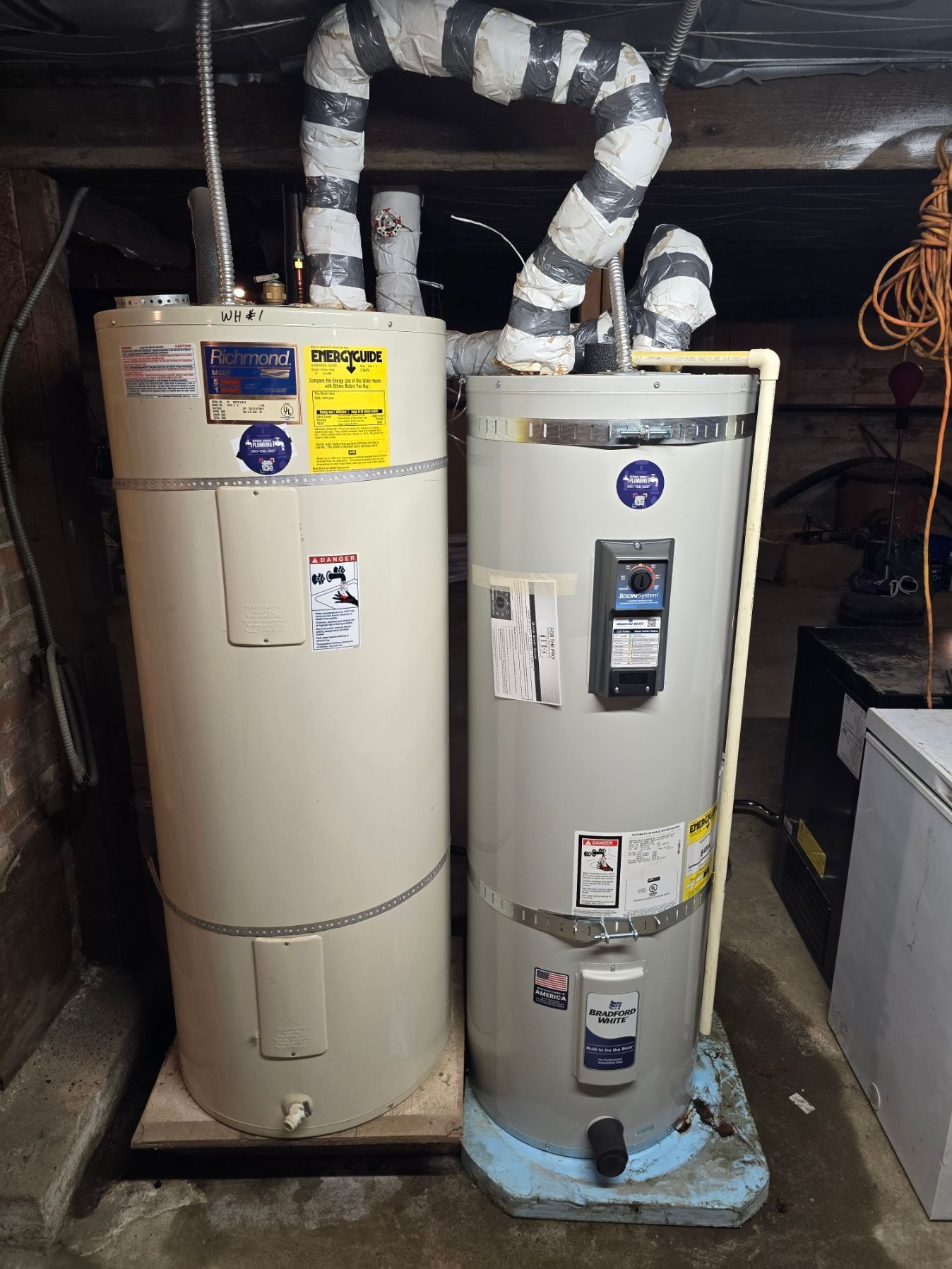
Electric tanks commonly use two heating elements, and a failed lower element can leave the home with a small amount of hot water followed by a rapid temperature drop. Gas units may have burner, ignition, venting, gas-control, or combustion problems that slow recovery or stop heating. Heat-pump water heaters can also change operating modes when demand or surrounding conditions change. The homeowner usually experiences these differences as hot water that runs out fast, but the correct repair depends on the equipment. A part should be tested rather than replaced from symptoms alone.
A sudden change is more suspicious than a mild seasonal shift. If the heater previously handled the same household routine and now needs far longer to recover, a component may be underperforming. Service Source Plumbing’s seven water-heater warning signs covers insufficient hot water, noise, discoloration, leakage, safety-valve concerns, age, and rising energy use. Do not remove electrical access panels, test live 240-volt components, adjust gas controls, or attempt combustion repairs without proper training. A technician can test the heat source, thermostat, wiring, controls, and safety devices as one system.
4. A Thermostat, Dip Tube, or Mixing Problem Changes Delivery
Not every short shower is caused by a weak heat source. A thermostat that reads or controls temperature incorrectly can create water that is cooler, hotter, or inconsistent. In a tank heater, a damaged dip tube can allow incoming cold water to mix near the hot outlet instead of being directed lower in the tank. A mixing valve or crossover at a fixture can also introduce cold water into the hot side. These conditions require different tests even though the complaint sounds identical.
Helpful clues include:
- Every fixture is affected: investigate the water heater or main hot-water distribution first.
- Only one shower changes: check that shower valve or fixture before blaming the tank.
- Water starts hot, then turns cold abruptly: consider element, dip-tube, or mixing problems.
- Temperature fluctuates without heavy use: check controls and cross-connections.
- Water is dangerously hot: stop adjusting controls and schedule service.
The U.S. Department of Energy’s home energy checklist identifies 120°F as a common energy-saving setting that also helps reduce scald risk. A higher setting may seem like a way to stretch tank capacity, but it increases risk and can mask the actual defect. Households with children, older adults, or people with reduced temperature sensitivity need particular caution. Verify the outlet temperature and mixing arrangement with a qualified professional instead of repeatedly turning the thermostat upward.
5. Household Demand Now Exceeds Recovery and Storage
A water heater can operate correctly and still fail to meet the household’s peak demand. Added residents, longer showers, a large soaking tub, high-flow fixtures, or overlapping laundry and dishwashing can consume stored hot water faster than the unit recovers. Cold inlet water makes that gap larger because each replacement gallon needs more heating. The issue may therefore appear seasonal even though the underlying cause is sizing or a changed routine. A water heater not keeping up is not automatically a broken water heater.
Compare demand with both storage volume and first-hour rating. A 50-gallon tank does not promise 50 gallons of shower-temperature water under every condition, and different models recover at different rates. Tankless sizing depends on simultaneous flow and required temperature rise, not the word “endless.” Record shower duration, fixture flow, overlapping appliance use, and the time needed for recovery. That information helps determine whether scheduling changes, a repair, a different operating mode, or a capacity upgrade is the sensible response.
Run a Safe Hot-Water Pattern Check Before You Call
A short observation period can improve a service visit without opening the appliance. Choose a normal day, leave the thermostat unchanged, and start after full recovery. Stop immediately for leaking, gas odor, scorching, arcing, a fault warning, or unsafe temperature.
Record these details:
- Heater type, fuel, size, model, and age
- Current thermostat setting if visible without removing a panel
- Time when the first shower begins and when temperature drops
- Whether another shower, washer, or dishwasher was running
- Time until hot water returns
- Any popping, rumbling, clicking, error code, or unusual cycling
- Whether every hot-water fixture has the same problem
- Water around the tank, corrosion, or discharge from a safety valve
Then perform two low-risk comparisons:
- Try one shower after the unit has had a full recovery period with no other hot-water use.
- On another day, repeat the normal high-demand routine and compare when the temperature drops.
If one isolated shower works but overlapping use fails, capacity or recovery is likely involved. If the isolated test fails, suspect a component, control, sediment, or flow issue. Do not drain the tank, operate the relief valve, relight gas equipment, or access wiring without proper instructions and skill. When unsure, provide your observations to a licensed plumber.
Decide Between Maintenance, Repair, and Replacement
The decision begins with the pattern, age, leakage, corrosion, maintenance, warranty, and capacity. Seasonal load may call for demand changes, while a failed element may need focused repair. A leaking tank is different because the vessel is generally not repairable. Consider replacement when an older system needs repeated repairs and still misses normal demand.
| Finding | Most likely next step | Why it fits |
|---|---|---|
| Seasonal shortage during overlapping use | Adjust demand and verify sizing | Unit may be reaching normal capacity |
| Sediment symptoms on a sound tank | Maintenance assessment | Cleaning may improve usable volume |
| Failed element, thermostat, igniter, or control | Targeted repair | Component may be replaceable |
| One-fixture temperature problem | Diagnose fixture or mixing valve | Heater may not be the source |
| Correct operation but undersized system | Compare capacity upgrades | Repair cannot add recovery |
| Tank leak or advanced corrosion | Replacement evaluation | Tank failures are not routine repairs |
| Older unit with repeated failures | Compare repair and replacement | Reliability affects value |
Before approving work, ask:
- What failed, and what test confirmed it?
- Is the tank itself sound and dry?
- Will the repair restore normal capacity or only basic operation?
- Is sediment maintenance appropriate for this tank’s age and condition?
- What are the first-hour rating or flow requirements for the household?
- Is the repair covered by a manufacturer or labor warranty?
- What code or utility updates affect replacement?
Estimated 2026 Market Context
Service Source Plumbing does not publish one fixed price because cause and equipment determine scope. For planning only, HomeGuide’s 2026 repair data reports $150 to $700 for tank repairs, $75 to $250 for flushing, and $100 to $350 for an element or thermostat. Its installation guide lists $600 to $3,100 for standard tank replacement and $1,400 to $5,600 for tankless installation. These national ranges are not Service Source prices or a Yacolt quote.
| Service or project | 2026 national market range | Scope note |
|---|---|---|
| Tank water-heater repair | $150 to $700 | Diagnosis and parts determine total |
| Tank flush and cleaning | $75 to $250 | Suitability depends on tank condition |
| Heating-element replacement | $100 to $350 | Electric tank component |
| Thermostat replacement | $100 to $350 | Testing should confirm the fault |
| Gas-control valve replacement | $150 to $550 | Requires qualified gas work |
| Standard tank replacement | $600 to $3,100 | National installed range |
| Tankless installation | $1,400 to $5,600 | Fuel and utility upgrades matter |
Compare written scopes, not one headline number. An estimate may include diagnosis, permits, disposal, connections, venting, strapping, or electrical changes. Consider repair price alongside age, tank condition, warranty, and reliability.
A useful estimate explains why the work should restore normal performance.
Frequently Asked Questions
Why does hot water run out faster only in cold weather?
Colder inlet water creates a larger temperature rise. The same unit may recover more slowly during peak demand. Longer showers and overlapping appliances add to the change. Problems during low demand still deserve diagnosis.
How long should water-heater recovery take?
Recovery varies by tank size, fuel, input, temperature rise, settings, and condition. Gas, electric, heat-pump, and tankless models differ. Check model documentation instead of one universal time. A major change from previous performance is the useful clue.
Can sediment make a water heater run out sooner?
Yes, sediment can reduce usable space and interfere with heat transfer in a tank. It may also contribute to rumbling or popping during heating. Whether flushing is appropriate depends on age, history, valves, and tank condition. A technician should evaluate a neglected or leaking unit before aggressive maintenance.
Should I turn up the thermostat for more hot water?
Not as the first response. A higher setpoint increases scald risk and can conceal sediment, component, sizing, or mixing problems. The Department of Energy identifies 120°F as a common energy-saving setting. Ask a plumber about safe capacity options if normal demand exceeds what the system can deliver.
When should I stop using the water heater?
Stop and request prompt help if you notice:
- A gas odor or combustion concern
- Water leaking from the tank body
- Scorching, arcing, or damaged wiring
- Water that becomes dangerously hot
- A safety valve discharging repeatedly
- A fault code that the manual identifies as unsafe
Does running out of hot water always mean replacement?
No. A failed element, thermostat, control, fixture valve, or maintenance issue may be repairable. Replacement becomes more likely with a leaking tank, advanced corrosion, repeated failures, serious undersizing, or poor repair value. Diagnosis should identify the cause before the equipment is condemned. Age matters, but condition and repair history matter with it.
Restore Reliable Hot Water Before Colder Weather Settles In
When hot water begins disappearing sooner, the pattern can reveal whether the heater is facing seasonal load, maintenance needs, a failed component, or a capacity mismatch. Service Source Plumbing diagnoses tank and tankless systems and explains the findings before recommending maintenance, repair, or replacement. We serve Yacolt and nearby communities including Battle Ground, Vancouver, Hockinson, and Orchards. Our goal is to restore dependable hot water with work that matches the actual cause.
Track one or two normal-use cycles, note the heater type and age, and contact us before the shortage becomes a complete loss of hot water. If the tank is leaking, water is dangerously hot, or gas or electrical safety is in question, stop troubleshooting and request prompt service. Our team can inspect the system, test the relevant components, and compare repair value with replacement when necessary. Contact Service Source Plumbing to schedule water-heater service.
Water Heater Repair
Yacolt Plumbing Services
Seven Signs Your Water Heater Needs Repair
Service Source Plumbing Service Areas
why choose
service source plumbing?
Get in Touch Today
Homeowners and businesses in Battle Ground, Duluth, Hockinson, Vancouver, Orchards, and Walnut Grove rely on us for our:
- 24/7 emergency services – We’re always ready to assist with urgent plumbing issues.
- Experienced professionals – Our team is trained in advanced drain cleaning techniques.
- State-of-the-art equipment – We use the latest tools to ensure safe and effective unclogging.
- Commitment to customer satisfaction – We deliver reliable, long-term plumbing solutions.
- Preventative inspections – We don’t just fix the issue; we help you prevent future problems.
Recent Posts