Black sink and faucet icon with a hand under the faucet, suggesting washing or plumbing.

Warning Signs Your Pipes Are Corroding — What Yacolt Homeowners Need to Know

May 6, 2026

Share this article

Corroding pipes don't announce themselves until they've already caused significant damage. In Yacolt and Clark County's older housing stock, the process happens quietly — a slow internal rust buildup in galvanized steel, gradual pitting in copper from acidic groundwater, or the silent brittleness developing in polybutylene that was installed three decades ago and has been degrading ever since. By the time a homeowner notices discolored water, low pressure, or a wet spot in the crawl space, the corrosion has usually been progressing for years. Service Source Plumbing serves Yacolt and Clark County with pipe assessment, repair, and replacement — and this guide gives homeowners the tools to recognize what's developing before it becomes a flooded crawl space.

The new season is a great reason to make and keep resolutions. Whether it’s eating right or cleaning out the garage, here are some tips for making and keeping resolutions.

Make a list

Lists are great ways to stay on track. Write down some big things you want to accomplish and some smaller things, too.


Check the list regularly

Don’t forget to check in and see how you’re doing. Just because you don’t achieve the big goals right away doesn’t mean you’re not making progress.


Reward yourself

When you succeed in achieving a goal, be it a big one or a small one, make sure to pat yourself on the back.


Think positively

Positive thinking is a major factor in success. So instead of mulling over things that didn’t go quite right, remind yourself of things that did.

Corroding pipes Yacolt WA Service Source Plumbing Clark County galvanized rust pipe inspection

Why Pipe Corrosion Is a Bigger Problem in the Pacific Northwest

The PNW's combination of water chemistry, climate, and housing age creates corrosion conditions that don't exist at the same intensity in most other regions:


Constant exterior moisture exposure Clark County's high rainfall and persistent humidity mean pipes in crawl spaces, basements, and outdoor locations are chronically wet. Unlike dry climates where exterior moisture exposure is seasonal, PNW pipes in accessible areas experience the oxidation conditions that cause rust essentially year-round. Condensation on cool-water pipes in humid crawl spaces creates a continuous moisture layer even during drier periods.


Acidic groundwater chemistry While the Pacific Northwest is often associated with soft water, the specific water chemistry in parts of Clark County — particularly well water in rural Yacolt — can be acidic with a pH below 7.0. Acidic water is actively corrosive to metal pipes from the inside, dissolving the pipe wall material progressively rather than simply depositing minerals. High dissolved oxygen levels in PNW water sources further accelerate internal oxidation.


Aging housing stock Many Yacolt and Clark County homes were built in the 1950s through 1980s — using pipe materials that are now at or well past their rated service life. Galvanized steel from pre-1960s construction, copper from the 1960s and 1970s that has been exposed to decades of acidic water, and polybutylene from the 1978 through 1995 period are all present in the regional housing stock. The combination of aggressive water chemistry and material age creates failure risk that increases with every passing year.


Wet acidic soil Underground pipes in Clark County's saturated, often acidic soil experience external corrosion conditions that accelerate deterioration from the outside simultaneously with internal water chemistry attack from the inside.

Material Common Era Expected Lifespan Expected Lifespan
Galvanized steel Pre-1960s through early 1980s 20–50 years Corrodes from the inside out — zinc coating wears off, steel rusts progressively
Copper 1960s through present 50–70+ years Vulnerable to acidic water — pitting corrosion creates pinhole leaks over time
Polybutylene 1978 through mid-1990s Unpredictable Becomes brittle from chlorine in municipal water — cracks from the inside without warning
PEX Late 1990s through present 40–50+ years Low corrosion risk — the standard modern replacement material

How to identify what's in your walls:


Galvanized steel — silver-gray color with threaded joints. A magnet sticks firmly to it. Scratch an exposed section with a screwdriver — the surface will be silver-gray beneath any surface rust.


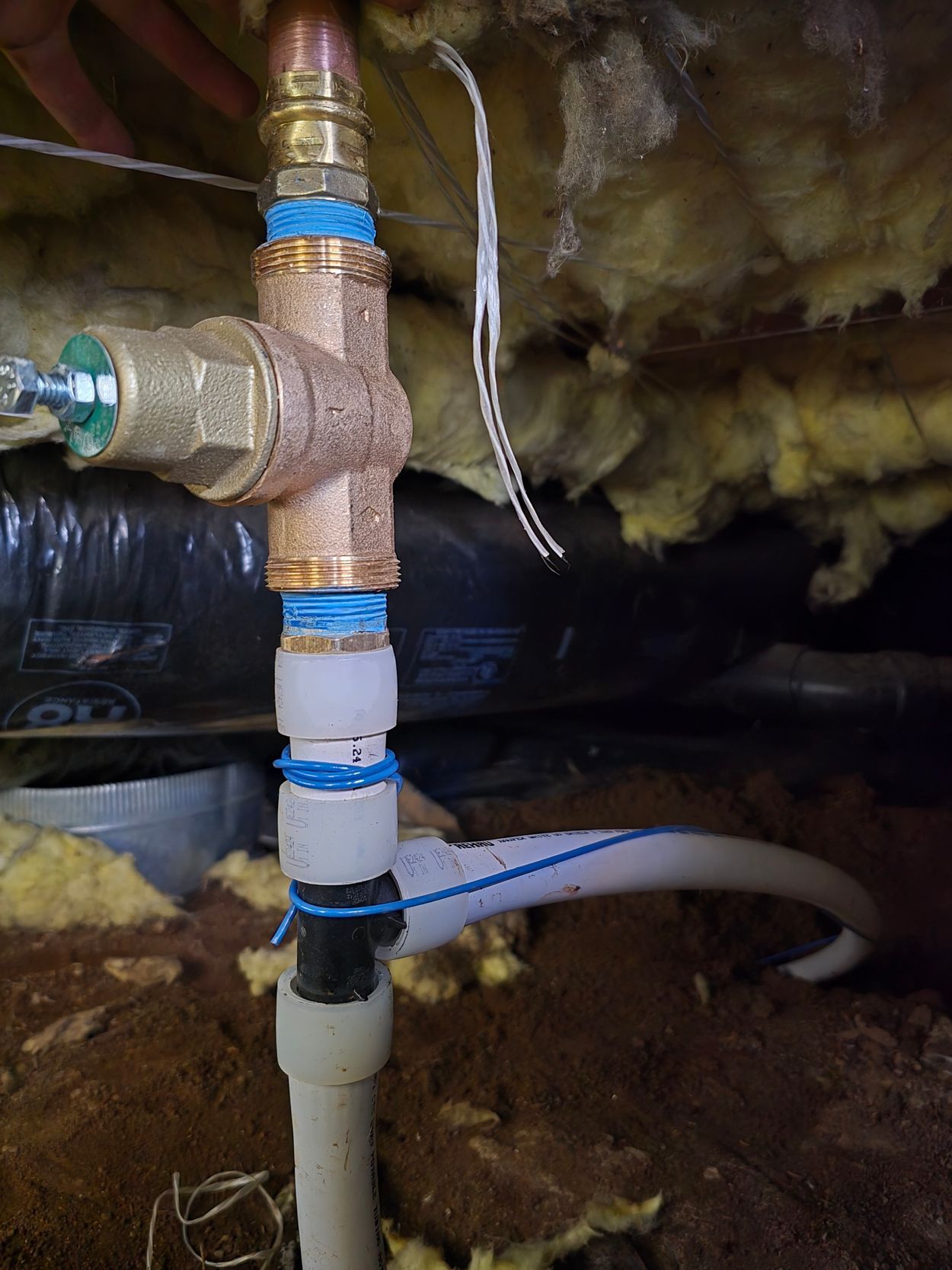
Copper — dull orange-brown or penny color. Non-magnetic. Soldered joints rather than threaded.


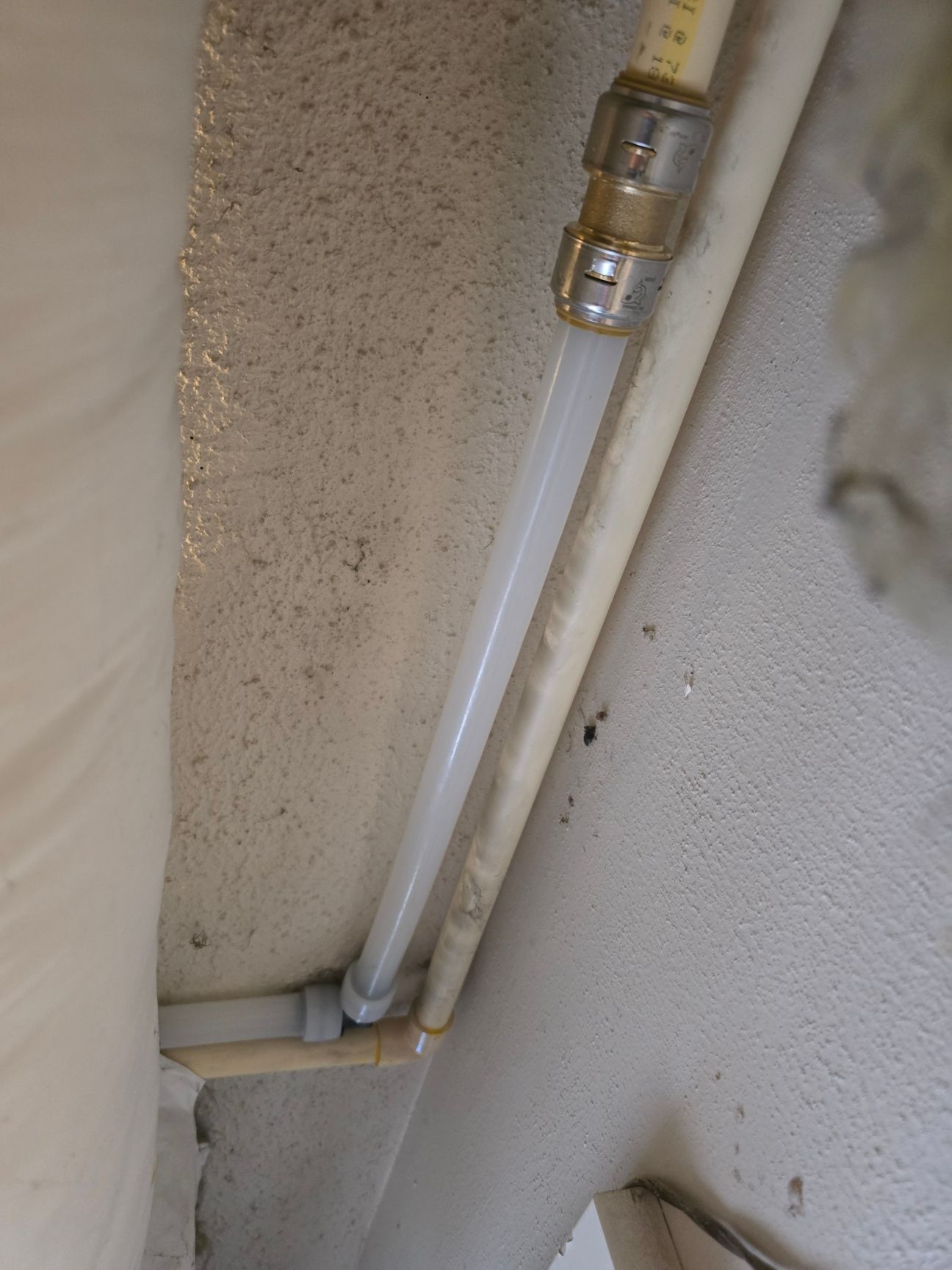
Polybutylene — gray, black, or milky-white flexible plastic, often with metal crimp rings at the joints. Does not look like modern PEX which is typically red, blue, or white with different fitting styles.


PEX — flexible colored plastic (red for hot, blue for cold, white for either) with plastic or brass push-fit fittings.


Why material identification matters for Yacolt specifically: Galvanized steel in a home that's now 60+ years old has been corroding for decades — many in this age range are near or past functional failure. Polybutylene of any age is a replacement priority regardless of visible condition — the internal degradation isn't externally visible. Copper in a home with acidic well water needs monitoring for pinhole leaks regardless of age.

7 Warning Signs Your Pipes Are Corroding Right Now

These indicators often appear before a leak becomes visible — catching them early is the difference between a planned repair and an emergency:


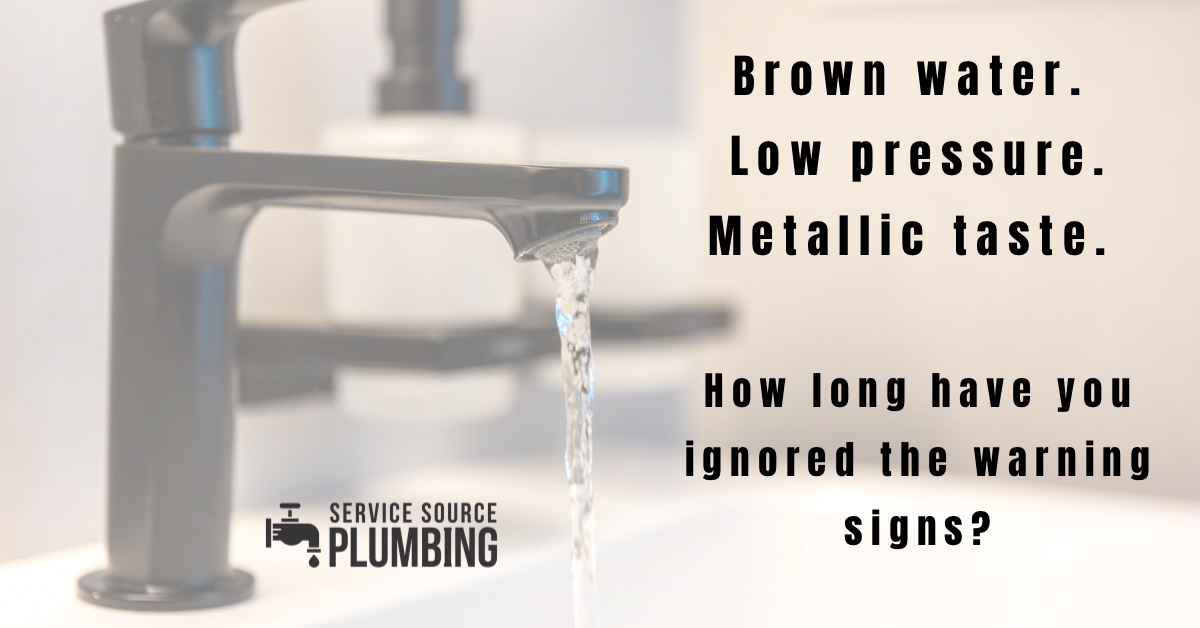
1. Discolored water Brown, orange, or reddish water — particularly when you first turn on a tap after the water has been sitting in the pipes — is the clearest single indicator of active galvanized pipe corrosion. The rust particles you're seeing in the water are coming directly from inside the pipe walls. In copper systems, blue-green tinting in water can indicate copper corrosion from acidic water chemistry. Neither should be ignored or attributed to municipal supply without investigation.


2. Reduced water pressure throughout the home Galvanized pipe corrosion creates internal rust buildup that progressively narrows the effective pipe diameter — producing the gradual whole-house pressure decline that most homeowners don't connect to pipe condition until it becomes severe. If pressure has been declining across multiple years without an obvious cause, pipe corrosion is one of the first things Service Source checks.


3. Metallic taste in tap water A metallic taste — particularly in cold water that's been sitting in the pipes — indicates pipe material is leaching into the water supply. Iron and manganese from corroded galvanized steel, copper from pitting copper pipe, and in older homes with certain pipe histories, lead — all produce metallic taste. This is both a plumbing warning and a water quality concern that warrants immediate investigation.


4. Visible rust, bubbling, or pitting on exposed pipes Check accessible pipe sections in your crawl space, utility room, and under sinks. Surface rust on galvanized steel is expected with age — but bubbling, flaking, or visible pitting indicates active corrosion that has progressed through the protective coating. Blue-green staining on copper indicates active oxidation. Any visible structural compromise to the pipe surface is a warning that the interior is progressing further.


5. Frequent pinhole leaks or recurring minor leaks A single pinhole leak repaired once could be an isolated incident. Two or three pinhole leaks in different locations within a few years indicates systemic pipe deterioration — the same corrosion process is active throughout the system, not just at the location that happened to fail first. Each repair is a temporary patch on a system that needs comprehensive assessment.


6. Persistent staining on fixtures Rust-orange or brown staining in toilets, sinks, and tubs that returns quickly after cleaning indicates iron-laden water coming from corroded galvanized pipes. Blue-green staining on copper fixtures indicates copper leaching from acidic water pitting. Both are signs of active internal pipe corrosion rather than surface mineral deposits.


7. Pipe surface pitting or textural changes On accessible copper pipe sections — look for small pit marks, rough patches, or areas where the pipe surface appears cratered. This pitting is exactly what it looks like: the pipe wall is being eaten away from the outside. Each pit is a future pinhole leak site. Multiple pits on accessible sections mean the same process is occurring throughout the hidden sections of the system.
What Happens If You Ignore Pipe Corrosion

Corrosion doesn't stabilize — it progresses. Here's the realistic timeline of what untreated pipe corrosion produces:


Progressive system failure Galvanized pipe rust buildup continues accumulating until the interior is essentially scaled shut — producing first severe pressure loss, then complete blockage. Copper pitting continues thinning the pipe wall until standard water pressure creates a burst. Neither process reverses or pauses — the question is only how much longer until it reaches failure stage.


Contaminated water supply Corroded pipes don't just affect water pressure — they affect water quality. Galvanized steel releases iron and potentially accumulated lead particles. Corroded copper releases copper. The rough interior surface of deteriorated pipes provides surfaces where bacterial biofilms establish and persist, protected from chlorine disinfection by the irregular pipe wall. For households with well water in Yacolt — where there's no municipal treatment providing additional disinfection — this is particularly significant.


Silent property damage in crawl spaces Clark County's homes with crawl spaces are especially vulnerable to the property damage that slow pipe leaks produce. A pinhole leak in a crawl space drips continuously — creating chronic moisture that produces wood rot in floor joists and framing, mold growth that migrates into living spaces, and soil saturation that affects foundation stability over time. The leak may not be discovered until the damage is already significant.


The financial comparison — proactive vs. emergency:

Proactive Replacement Emergency Response
Cost Standard market rates with time to compare quotes 2 to 3x higher for emergency labor rates
Secondary damage None Drywall, mold remediation, flooring, crawl space restoration
Scheduling Your timeline, your convenience Immediate disruption, potential hotel stay
Insurance Clean documentation supports coverage Many policies deny claims for "long-term seepage" from neglected corrosion
Material choice Select modern PEX appropriate for PNW water chemistry Whatever the emergency crew has available

Corrosion vs. Scaling — How to Tell the Difference

Both produce similar symptoms — low pressure, fixture problems, water quality issues — but they're opposite processes requiring different solutions:

Scaling (Buildup) Corrosion (Breakdown)
What's happening Minerals from water deposit on interior pipe walls Water chemistry or age is dissolving the pipe wall material
Visible sign White or chalky buildup on showerheads and faucets Red-orange or blue-green staining in sinks and tubs
Water appearance Usually clear — may contain white flakes Rusty, brown, or discolored — especially after sitting
Rusty, brown, or discolored — especially after sitting Gets thicker inside — narrows the opening Gets thinner — eventually creates holes
Common materials Copper, PEX in hard water areas Galvanized steel, copper in acidic water conditions

The fix is completely different depending on which problem you have:


Scaling fix — water treatment: Water softeners using ion exchange remove calcium and magnesium before they enter the plumbing system, preventing new scale formation. Salt-free conditioners prevent scale adhesion without removing minerals. For Yacolt well water with confirmed hardness — a softener addresses the root cause rather than treating symptoms. For more on water softener options for Clark County, read our water softener installation guide →


Corrosion fix — neutralization or replacement: If acidic water is driving corrosion, a pH neutralizing filter raises the water's pH before it contacts pipe material — stopping the dissolution process going forward. But neutralization can't restore metal that's already been lost to corrosion. Once pipe walls have thinned, pitted, or been structurally compromised — replacement with PEX (which is resistant to both acidic water and the PNW's exterior moisture conditions) is the only permanent solution.


Why getting the diagnosis right matters: Treating corrosion with a water softener doesn't help — softeners address mineral content, not pH. Treating scaling with a pH neutralizer doesn't address mineral buildup. Service Source Plumbing tests water chemistry and inspects pipe condition before recommending any treatment or replacement — because the right fix depends entirely on the actual problem.

What a Pipe Inspection From Service Source Includesse

If your Yacolt or Clark County home is showing any of the seven warning signs — or if it's simply old enough that you've never had a pipe assessment — here's exactly what Service Source Plumbing evaluates:


Visual inspection of all accessible pipe sections Crawl space, utility room, and under-sink pipe sections inspected for visible corrosion indicators — rust, pitting, staining, joint condition, and material identification. This often reveals the pipe material and general condition without any invasive work.


Water quality assessment Testing for discoloration, pH, and mineral content — confirming whether the problem is corrosion-driven, scale-driven, or both, and whether water treatment in addition to pipe work is warranted.


Pressure testing Confirms whether pressure loss is pipe-related or has another source — distinguishing between internal corrosion narrowing, scale buildup, valve issues, and supply problems.


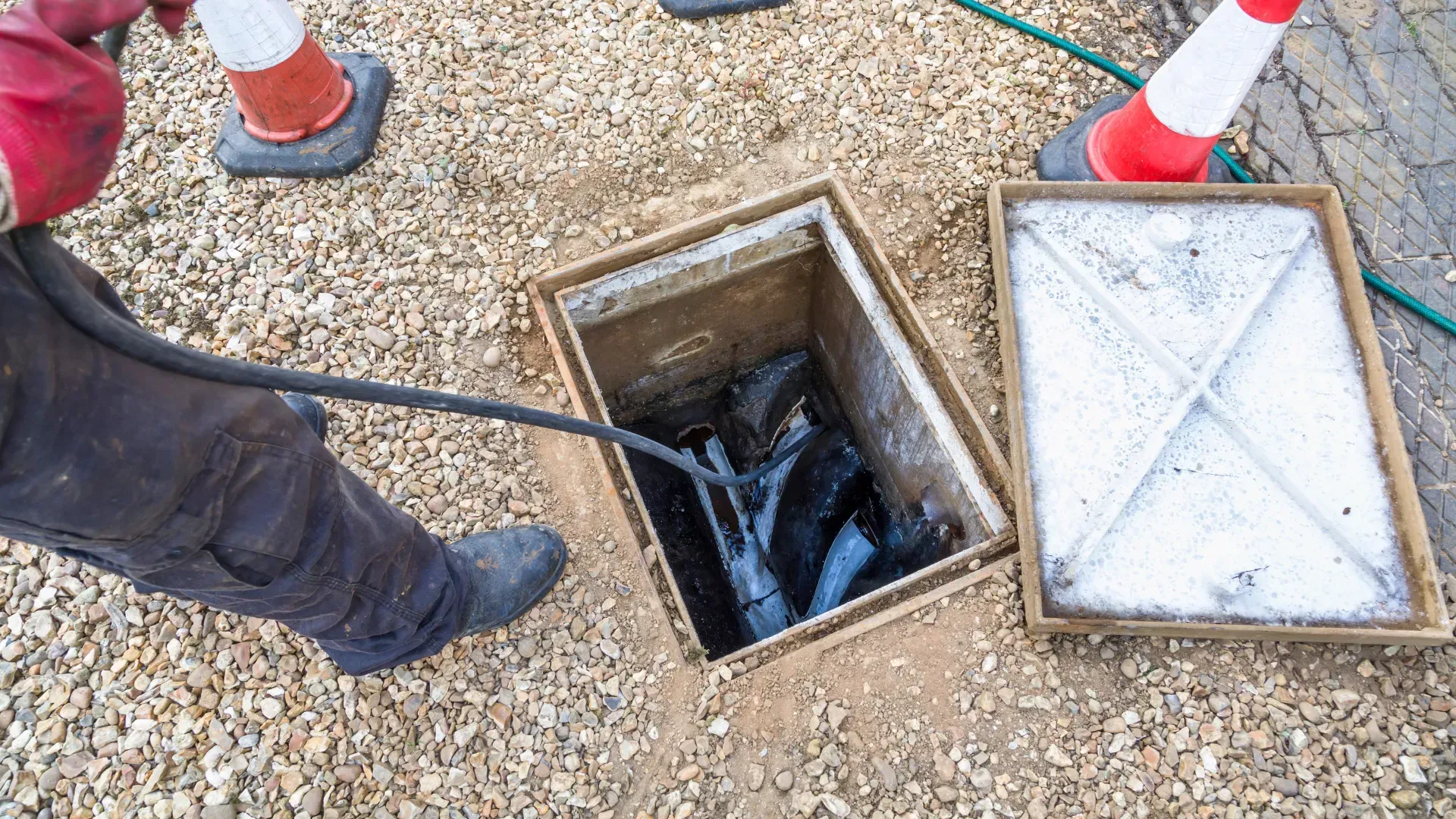
Camera inspection where indicated For sewer lines, underground sections, or when visual inspection of accessible areas raises questions about hidden pipe runs — camera inspection confirms what's happening in sections that can't be seen directly.


Honest repair vs. replace assessment:

Pipe Condition Service Source Recommendation
Isolated section damage, otherwise sound system Targeted repair or section replacement
Galvanized steel throughout, 50+ years old Full repiping — the system is at or past end of life
Polybutylene anywhere in the system Replacement regardless of current condition — failure risk is too high to defer
Copper with isolated pitting, good wall thickness elsewhere Monitor and targeted repair of failed sections
Copper with widespread pitting or acidic water conditions Full repiping assessment — isolated repair may not be worth the investment

Don't wait for a burst pipe or a flooded crawl space to find out what your pipes are actually doing. Contact Service Source Plumbing today to schedule your pipe inspection in Yacolt and Clark County.


Schedule Your Pipe Inspection →

Read: Water Softener Installation in Yacolt WA →

Read: Emergency Plumbing Services in Yacolt WA →

Read: Whole Home Plumbing Inspection Yacolt WA →

See All Plumbing Services in Yacolt WA →


why choose

service source plumbing?

Get in Touch Today

Homeowners and businesses in Battle Ground, Duluth, Hockinson, Vancouver, Orchards, and Walnut Grove rely on us for our:

  • 24/7 emergency services – We’re always ready to assist with urgent plumbing issues.
  • Experienced professionals – Our team is trained in advanced drain cleaning techniques.
  • State-of-the-art equipment – We use the latest tools to ensure safe and effective unclogging.
  • Commitment to customer satisfaction – We deliver reliable, long-term plumbing solutions.
  • Preventative inspections – We don’t just fix the issue; we help you prevent future problems.


Recent Posts

Gloved hands using a wrench to adjust a pipe valve in an industrial setting
May 13, 2026
Sump pump failing in Yacolt WA? Service Source Plumbing explains how to tell if repair or replacement is the right call — and what to do when it fails mid-storm.
Trenched dirt yard leading to a house, with a white pipe running along the ground.
April 29, 2026
Slow or clogged drain in Yacolt WA? Service Source Plumbing explains what's causing it, when DIY works, and when it's a sign of a bigger problem in Clark County homes.
Plumber tightening a pipe under a sink with a wrench in a tiled bathroom or kitchen.
April 21, 2026
Clark County well water can be hard on your plumbing, appliances, and fixtures. Service Source Plumbing explains whether a water softener makes sense for your Yacolt WA home.
Copper plumbing valve connected to white plastic piping in a crawlspace with insulation.
April 15, 2026
Plumbing emergency in Yacolt WA? Service Source Plumbing covers what to do first, the most common Clark County emergencies, and how to prevent them before they happen.
A gas meter, utility box, and two green rectangular access covers are set against the side of a light-colored home.
April 9, 2026
An annual plumbing inspection catches problems before they become emergencies. Service Source Plumbing covers what Clark County WA homeowners should check every year.
Sump pump with a black discharge pipe centered in a concrete basement floor against a block wall.
April 1, 2026
Clark County's wet winters make sump pumps essential. Service Source Plumbing covers installation, maintenance, and repair for Yacolt and Clark County WA homeowners.
A wall-mounted white tankless water heater in a garage, connected to copper water pipes, a gas line, and white exhaust vents.
March 25, 2026
Tank or tankless? Service Source Plumbing helps Yacolt and Clark County WA homeowners choose the right water heater replacement — and installs it right the first time.
Water heater repair vs replacement Yacolt WA Service Source Plumbing
March 18, 2026
Not sure whether to repair or replace your water heater? Service Source Plumbing breaks down costs, lifespan & the 50% Rule for Yacolt WA homeowners.
A professional plumber repairing a kitchen sink while a customer observes.
March 11, 2026
Winter water leaks in Washington can escalate fast. Service Source Plumbing in Yacolt WA helps homeowners identify, prevent, and fix winter plumbing problems before they get worse.
Learn how heavy rain impacts sewer lines in Vancouver and surrounding WA. Protect your home with pro
March 4, 2026
Learn how heavy rain impacts sewer lines in Vancouver and surrounding WA. Protect your home with professional sewer inspection and repair.