Sump Pump Repair vs. Replacement in Yacolt WA: How to Know What Your System Actually Needs
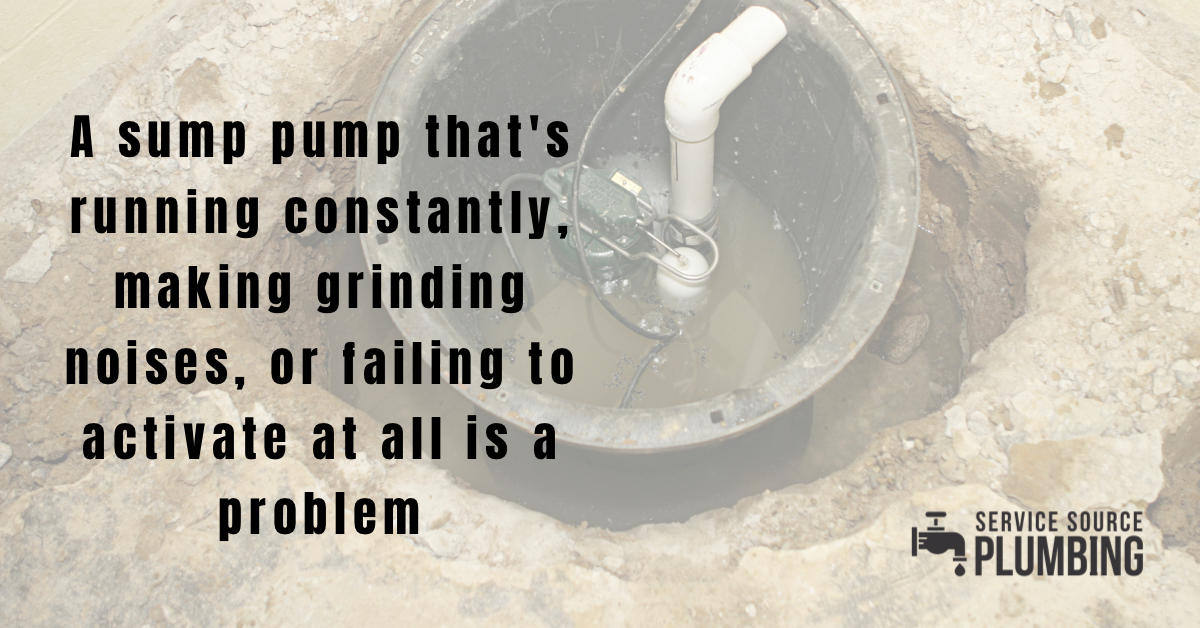
A sump pump that's running constantly, making grinding noises, or failing to activate at all is a problem that gets more serious with every inch of rain. In Clark County — where the wet season runs from October through May and significant storm events can drop several inches in 24 hours — a compromised sump pump isn't a "get to it eventually" situation. It's a crawl space flood waiting to happen, usually at 2am during the worst storm of the season. Service Source Plumbing handles sump pump repair and replacement throughout Yacolt and Clark County. This guide gives you the diagnostic framework to understand what your system is actually telling you — and when repair is the right call versus when replacement is the smarter investment.
The new season is a great reason to make and keep resolutions. Whether it’s eating right or cleaning out the garage, here are some tips for making and keeping resolutions.
Lists are great ways to stay on track. Write down some big things you want to accomplish and some smaller things, too.
Check the list regularly
Don’t forget to check in and see how you’re doing. Just because you don’t achieve the big goals right away doesn’t mean you’re not making progress.
Reward yourself
When you succeed in achieving a goal, be it a big one or a small one, make sure to pat yourself on the back.
Think positively
Positive thinking is a major factor in success. So instead of mulling over things that didn’t go quite right, remind yourself of things that did.

How to Tell If Your Sump Pump Is Failing — Warning Signs to Watch For
These symptoms indicate something is wrong — how serious depends on which combination you're seeing and how old the system is:
Unusual sounds A healthy sump pump runs with a consistent hum. Grinding, rattling, or loud mechanical noise during operation indicates damaged impellers, failed bearings, or debris caught in the intake. These are not sounds that resolve on their own — they indicate mechanical wear that will progress to failure.
Running constantly without cycling off A pump that runs continuously even when it hasn't rained recently indicates either a stuck float switch that can't signal the pump to shut off, or a pump that's working at full capacity and still can't keep up with incoming water. The first is often repairable. The second may indicate an undersized system for your property's water table.
Not activating when the pit is full A pump that fails to turn on when the basin fills indicates a dead motor, power supply failure, or a stuck float switch preventing activation. Run the diagnostic checklist below before calling — some of these have simple causes.
Visible rust or corrosion on the casing Surface rust on older cast iron units is expected. Active corrosion affecting the casing integrity, or rust-colored water in the pit that indicates internal component breakdown, suggests the unit is deteriorating from the inside out.
Irregular cycling — frequent short runs A pump that activates and deactivates repeatedly in quick succession rather than running a full cycle is typically experiencing float switch problems or is undersized for the water volume it's managing.
Longer run times than normal If the pump is taking significantly longer to empty the pit than it used to, the impeller may be worn, the discharge line may have a partial obstruction, or the motor is losing efficiency — all signs of a system approaching end of life.
Quick diagnostic checklist before calling:
- Confirm the pump is plugged in and the outlet has power
- Check the circuit breaker — a tripped breaker is a simple fix
- Check the GFCI outlet if the pump is plugged into one
- Manually lift the float — the pump should activate immediately
- Check the pit for debris — rocks, sediment, or buildup can jam the intake
- Check the exterior discharge pipe — frozen or blocked discharge is a common cause of pump failure that isn't the pump itself
- Pour a bucket of water into the pit — confirms whether the pump activates correctly under controlled conditions
Common Sump Pump Problems That Are Repairable
These issues don't require full system replacement — they're component failures on otherwise functional equipment:
Stuck or failed float switch The float switch is the trigger mechanism that activates the pump when water reaches a certain level. A tethered float can get tangled against the pit wall. A vertical float can get stuck by debris. Both can be cleared or repositioned without replacing the pump. If the switch itself has failed — replacement switches are inexpensive and the repair is straightforward.
Test: Manually lift the float. If the pump runs — the switch is the issue, not the motor.
Clogged discharge line A pump that runs but doesn't move water out of the pit has a discharge problem rather than a pump problem. Common causes in Clark County: mud and debris at the exterior pipe outlet, ice blockage during freeze events, or debris accumulation in the line. Check the exterior pipe first — many apparent pump failures are blocked discharge lines.
Fix: Clear the exterior outlet, use a plumber's snake for deeper obstructions. Confirm the check valve is oriented correctly — the arrow on the valve should point away from the pump.
Tripped breaker or GFCI A tripped breaker isn't a pump failure — it's an electrical circuit response. Reset the breaker and monitor. If it trips immediately on reconnection, the motor may be drawing excess current due to a jammed impeller or internal short — that warrants a Service Source assessment.
Important: Sump pumps should be on a dedicated circuit. A shared circuit that's tripping under load may need electrical work independent of the pump itself.
Stuck or failed check valve The check valve prevents water in the discharge line from flowing back into the pit when the pump shuts off — without it, the pump re-fills the pit immediately after emptying it and cycles constantly. Debris can jam the valve open. Replacement is inexpensive and straightforward.
When repair is the right call:
- Pump is under 5 to 7 years old
- Problem is isolated to a single component — switch, valve, or discharge line
- Motor runs cleanly with no grinding or burning smell
- No visible corrosion on casing or internal components
When Repair Isn't Worth It — The Replacement Decision Framework
There's a point at which repair cost and reliability risk make replacement the more economically rational choice:
Age over 7 to 10 years The average sump pump lifespan in the Pacific Northwest is shorter than national averages because PNW systems run harder — more frequently, for longer durations, through more storm cycles annually. A pump that's 8 to 10 years old in Clark County has worked significantly harder than an 8-year-old pump in a drier climate. At this age, repairing one component often means another fails within the same season.
Burned out or overheating motor A motor that fails to run, runs briefly and shuts down, or smells of burned insulation is at end of life. Motor replacement on most residential sump pumps costs more than a new mid-range unit — replacement is almost always the better investment.
Repeated failures within a short period A pump that has required two or more repairs within 12 to 18 months is demonstrating systemic
deterioration. Each repair extends the system's life briefly while the underlying decline continues.
Undersized for Clark County's rainfall A pump that runs continuously during significant storm events and still can't keep pace with incoming water isn't failing — it's undersized. No amount of repair addresses a capacity mismatch. Replacement with a correctly sized unit for your property's water table and drainage conditions solves the problem that repair cannot.
Visible structural corrosion Active corrosion affecting the pump body integrity, not just surface rust, indicates internal deterioration that makes the unit unreliable regardless of what specific component is replaced.
The repair cost threshold: If repair cost exceeds 50% of replacement cost — and the unit is over 5 years old — replacement typically delivers better value. You're investing heavily in extending a system that's already past its peak reliability period.
Sump Pump Lifespan in the Pacific Northwest — What to Expect
Clark County homeowners should calibrate lifespan expectations to PNW conditions specifically — not national averages:
Why PNW pumps work harder: During a significant Clark County storm event, a sump pump may cycle every 2 to 10 minutes for days at a stretch. That duty cycle — the ratio of running time to rest time — is dramatically higher than what the same pump experiences in a drier climate. Motor heat accumulates, impellers wear faster, and float switches cycle thousands more times per year than manufacturers' testing accounts for.
Clark County's groundwater also carries fine silt and sediment that accumulates in the pit and can damage impellers over time — an issue less common in areas with cleaner soil profiles.
Expected lifespan by quality tier in the PNW:
| Quality Tier | Expected PNW Lifespan | Notes |
|---|---|---|
| High-end cast iron or stainless | 10–15 years | Heavy-duty motors, superior seals, better float mechanisms |
| Mid-range metal/plastic hybrid | 7–10 years | Standard residential — adequate with annual maintenance |
| Low-end plastic units | 2–5 years | Prone to overheating under continuous PNW storm duty cycles |
Proactive replacement scheduling: Given PNW duty cycles, Service Source recommends assessing replacement proactively at 7 to 8 years for mid-range units — before the pump dictates the timing with a failure during a storm event.
Battery Backup — Why It's Non-Negotiable in Clark County
The scenario where your sump pump is most needed is the same scenario most likely to cause a power outage: a significant storm event with heavy rainfall and high winds. Without battery backup, the primary pump goes down at exactly the moment the water table is highest and incoming water volume is greatest.
What battery backup provides:
- Immediate automatic activation when grid power fails — no intervention required, effective even when you're not home
- Hours of continuous operation during the outage window
- Redundancy if the primary pump fails mechanically — runs independently on its own float switch
- Quiet operation requiring no fuel — unlike generators, safe for indoor installation
Battery backup is not optional in Clark County. Service Source installs battery backup systems on every new sump pump installation and recommends retrofitting backup to existing systems that don't have it. The cost of a backup system is a fraction of the cost of a single crawl space flood remediation.
What Does Sump Pump Repair or Replacement Cost in Yacolt WA?
What Does Sump Pump Repair or Replacement Cost in Yacolt WA? Here are realistic cost ranges for Clark County in 2026:
| Service | Cost Range | Notes |
|---|---|---|
| Float switch replacement | $150–$300 | Component and labor |
| Check valve replacement | $100–$250 | Simple repair |
| Discharge line clearing or repair | $150–$400 | Depends on obstruction location and access |
| Full repair — complex issues | $300–$750 | Motor assessment, multiple component repairs |
| Pedestal pump replacement | $300–$600 | $300–$600 Less common in PNW crawl space applications |
| Submersible pump replacement | $500–$1,200 | Standard for Clark County applications — quieter, more efficient |
| Battery backup system addition | $400–$1,000 | Unit plus installation |
| Complete system with backup | $900–$2,200 | New submersible unit plus battery backup installation |
What drives cost in Clark County specifically:
- Crawl space access difficulty — tight or low crawl spaces add labor time
- Existing discharge line condition — if the discharge needs rerouting or repair as part of the project
- Battery backup integration on existing plumbing
- Emergency vs. scheduled timing — Service Source recommends scheduled replacement over emergency response whenever the warning signs appear before failure
What to Do Right Now If Your Sump Pump Has Failed Mid-Storm
If you're reading this during an active failure — here's the immediate action sequence:
Step 1 — Safety first Do not enter standing water in a crawl space or basement without first cutting power at the breaker box. Water and active electrical circuits are a life-safety risk. Confirm power is off before any physical access to the space.
Step 2 — Quick diagnostic With power off and safe access confirmed:
- Check if the pump is still plugged in and the outlet has power
- Check the circuit breaker
- Check the exterior discharge pipe for blockage — this is a common cause of apparent pump failure
Step 3 — Manual water removal if accessible A wet/dry vacuum, portable pump, or buckets remove water from accessible spaces. This buys time and limits damage while Service Source responds.
Step 4 — Temporary measures If a battery backup pump is available — connect it. Check that the exterior discharge pipe is clear so any backup system can function.
Step 5 — Document everything Photograph the pit, the pump, and any water accumulation before any cleanup begins. This documentation supports insurance claims.
Step 6 — Call Service Source Plumbing For a mid-storm pump failure in Yacolt or Clark County — call Service Source Plumbing immediately. For full emergency plumbing response guidance,
read our
emergency plumbing services guide →
Service Source Plumbing: Sump Pump Repair and Replacement Throughout Yacolt and Clark County
Clark County's wet season doesn't give sump pump problems time to wait. A pump that's showing warning signs in October is a crawl space flood risk by November — and an emergency call in a storm costs significantly more than a scheduled assessment before the season starts.
Service Source Plumbing provides sump pump repair, replacement, and battery backup installation throughout Yacolt, Clark County, and surrounding North Clark County communities — with the PNW-specific expertise that Clark County's rainfall demands.
What every Service Source sump pump service includes:
| Service Component | What It Means for Your Home |
|---|---|
| Complete diagnostic assessment | We identify the actual problem before recommending repair or replacement — no unnecessary upsell |
| Honest repair vs. replace recommendation | If repair is the right call for your system's age and condition, we'll say so |
| Correct sizing for your property | Replacement units matched to your property's actual water table and drainage conditions |
| Battery backup installation | Battery backup installation Standard recommendation on every new installation — and retrofit option for existing systems |
| Discharge line assessment | Confirmed clear, correctly routed, and freeze-protected before project close |
| Clark County expertise | We know the rainfall patterns, soil conditions, and crawl space configurations common in this market |
| Emergency response | Mid-storm failures are urgent — Service Source responds accordingly |
| Connection to full plumbing services | If the sump pump assessment reveals related issues — whole home inspection, corroding pipes, drainage problems — Service Source handles the complete scope |
Don't wait for a storm to tell you what your sump pump can't handle.
Contact Service Source Plumbing today for your Clark County sump pump assessment.
Schedule Your Sump Pump Assessment →
Read: Sump Pump Installation in Yacolt WA →
Read: Emergency Plumbing Services in Yacolt WA →
why choose
service source plumbing?
Get in Touch Today
Homeowners and businesses in Battle Ground, Duluth, Hockinson, Vancouver, Orchards, and Walnut Grove rely on us for our:
- 24/7 emergency services – We’re always ready to assist with urgent plumbing issues.
- Experienced professionals – Our team is trained in advanced drain cleaning techniques.
- State-of-the-art equipment – We use the latest tools to ensure safe and effective unclogging.
- Commitment to customer satisfaction – We deliver reliable, long-term plumbing solutions.
- Preventative inspections – We don’t just fix the issue; we help you prevent future problems.