Water Softener Installation in Yacolt WA: Does Clark County's Hard Water Require One?
If you're noticing white crusty buildup around your faucets, spots on glasses coming out of the dishwasher, soap that won't lather properly, or a water heater that seems to be working harder than it should — your Yacolt or Clark County home likely has a hard water problem. Clark County's groundwater, particularly in rural areas like Yacolt that rely on private wells, contains mineral content that compounds quietly — building scale inside pipes, reducing appliance efficiency, and shortening the lifespan of equipment that isn't cheap to replace. Service Source Plumbing installs and services water softener systems throughout Yacolt and Clark County. This guide tells you what you're actually dealing with, whether a softener makes sense for your specific situation, and what the installation process involves.
The new season is a great reason to make and keep resolutions. Whether it’s eating right or cleaning out the garage, here are some tips for making and keeping resolutions.
Lists are great ways to stay on track. Write down some big things you want to accomplish and some smaller things, too.
Check the list regularly
Don’t forget to check in and see how you’re doing. Just because you don’t achieve the big goals right away doesn’t mean you’re not making progress.
Reward yourself
When you succeed in achieving a goal, be it a big one or a small one, make sure to pat yourself on the back.
Think positively
Positive thinking is a major factor in success. So instead of mulling over things that didn’t go quite right, remind yourself of things that did.
Does Clark County WA Have Hard Water — And Does It Affect Your Home?
The honest answer for Clark County is: it depends on your water source — but for Yacolt homeowners on private wells, hard water is a genuine and common issue.
Clark County water hardness by source:
| Water Source | Typical Hardness | Context |
|---|---|---|
| Clark County PUD municipal water | 55–125 PPM (moderate) | Sourced primarily from the Columbia River and treated — generally moderate hardness |
| Private well water in rural Yacolt area | Variable — often higher than municipal | Sourced from local aquifers including the Troutdale formation — mineral content varies significantly by location and depth |
| Portland, OR comparison | ~22 PPM (very soft) | Clark County water is noticeably harder than Portland's — many homeowners who moved from Portland notice the difference immediately |
Why well water in Yacolt specifically: Yacolt and surrounding rural Clark County communities sit over groundwater systems that draw from local aquifer formations. These aquifers pick up calcium, magnesium, and in some cases iron and manganese from surrounding geology — resulting in water that can be significantly harder than Clark County municipal supplies. The only way to know your specific well's hardness level is a water test — which Service Source Plumbing provides as part of every softener assessment.
Is hard water safe? Yes — Clark County's hard water is safe to drink and meets all health standards. The concern isn't health — it's the long-term cumulative effect on your plumbing system, appliances, and fixtures.
Signs You Have Hard Water in Your Yacolt Home
These are the most common indicators Clark County homeowners notice before they know what's causing them:
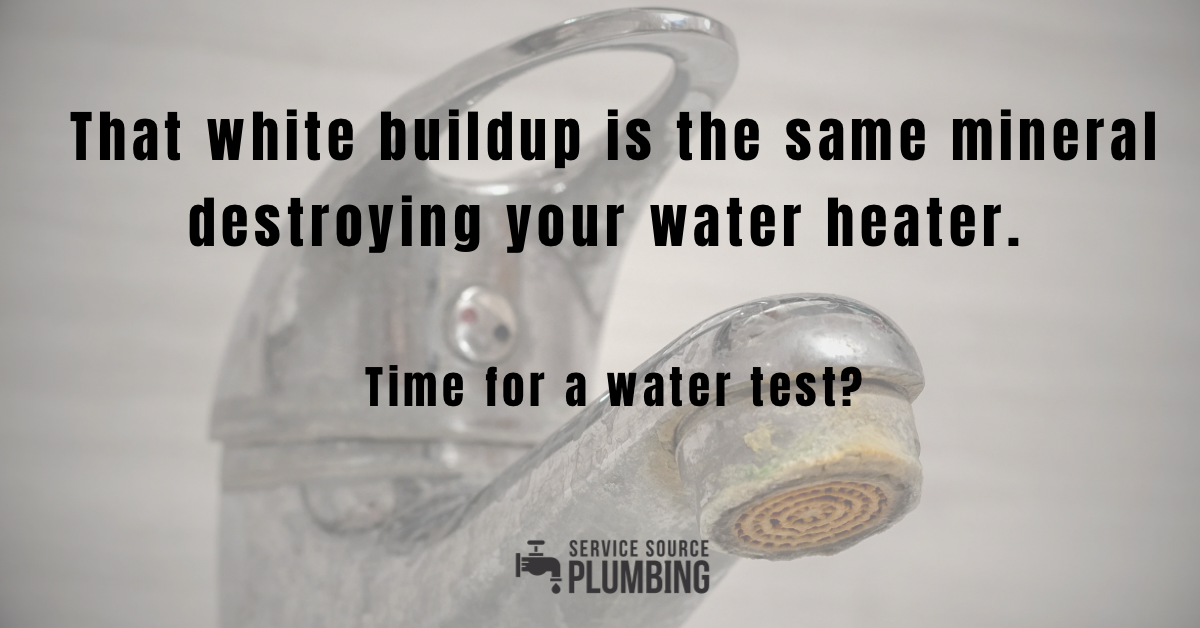
Visible scale and mineral deposits White or gray crusty buildup around faucet aerators, showerheads, and sink drains is the most obvious sign. Cloudy films on shower doors, white ring deposits in toilets, and chalky residue on chrome fixtures all indicate calcium and magnesium mineral deposits from hard water.
Soap and shampoo performance Hard water interferes with soap chemistry — calcium and magnesium react with soap to form soap scum rather than allowing it to lather and rinse cleanly. If you notice a sticky or filmy feeling after showering, soap scum that's difficult to remove from tubs and shower walls, or shampoo that doesn't produce much lather — these are consistent hard water symptoms.
Dishes and laundry quality Glasses and dishes coming out of the dishwasher with spots or a cloudy film, laundry that feels stiff or looks dingy after washing, and towels that lose softness quickly — all consistent with hard water running through the appliances.
Reduced water pressure Gradual pressure reduction throughout the home — particularly noticeable at showers and faucets — can indicate mineral scale accumulating inside pipes and restricting flow diameter over time.
The simple DIY test: Fill a clear bottle halfway with water from your tap, add a few drops of dish soap, cap it, and shake vigorously. If the water turns cloudy with very few bubbles — you likely have hard water. If it produces abundant, lasting suds with clear water beneath — your water is probably soft.
What Hard Water Does to Your Plumbing System Over Time
The visible signs are inconvenient. The invisible ones are expensive:
Scale buildup inside pipes Calcium and magnesium deposits accumulate on interior pipe walls — gradually narrowing the effective diameter and restricting flow. In homes with moderate to high hardness and older metal pipes, this process accelerates into meaningful pressure and flow reduction over years of exposure.
Accelerated fixture and valve wear Mineral deposits wear down valve seats, seals, and cartridges — causing faucets and fixtures to drip, leak, and fail earlier than they otherwise would. The Clark County homes that require the most frequent faucet and fixture repairs are often the ones with the hardest untreated water.
Water heater damage — the most costly hard water consequence: Hard water's impact on water heaters is significant and consistent:
- Sediment accumulates at the bottom of tank water heaters — acting as an insulating layer that forces the heating element to work harder to achieve the same temperature
- Homes with hard water need water heater flushing every 3 to 6 months rather than the standard annual interval — without this maintenance, sediment buildup progresses to tank damage
- Hard water shortens water heater lifespan meaningfully — replacing a $1,500 water heater several years earlier than necessary is the most quantifiable hard water cost for most Clark County homeowners
For a complete guide to water heater maintenance in Clark County's conditions, read our water heater repair and maintenance guide →
- What a whole home inspection reveals: When Service Source Plumbing conducts a whole home plumbing inspection, hard water evidence is often visible throughout — limescale on fixtures, reduced flow rates at multiple points, and water heater sediment indicators. A softener installation at inspection time addresses these findings proactively. For more on what a whole home inspection covers,
read our Clark County whole home plumbing inspection guide →
How Water Softeners Work — Salt-Based vs. Salt-Free Systems
Understanding the two main approaches helps Clark County homeowners make the right choice for their specific water chemistry:
Salt-based ion exchange softeners (how they work): Hard water enters a tank filled with resin beads containing sodium ions. Calcium and magnesium ions in the water attach to the resin, releasing sodium ions in exchange — producing soft water. When the resin becomes saturated with hardness minerals, a salt brine solution flushes through the tank, regenerating the resin and flushing the captured minerals to drain. The cycle repeats automatically on a programmed schedule.
Salt-free conditioner systems (how they work): Salt-free systems use Template Assisted Crystallization (TAC) to change the structure of mineral ions — preventing them from forming scale deposits without actually removing them from the water. The minerals stay in the water but don't adhere to surfaces the same way.
Side-by-side comparison for Clark County homeowners:
| Feature | Salt-Based Softener | Salt-Free Conditioner |
|---|---|---|
| How it works | Removes hardness minerals via ion exchange | Conditions minerals to prevent scale without removing them |
| Scale prevention | Excellent — minerals removed at source | Good — prevents new buildup but doesn't remove existing deposits |
| Water feel | Noticeably smoother — some describe as "slippery" | Natural feel — no slippery sensation |
| Maintenance | Monthly salt replenishment required | Low — no salt needed |
| Best for | Moderate to high hardness — Clark County well water | Mild hardness — light scale prevention without ion exchange |
| Wastewater | Small amount during regeneration cycle | None |
| Upfront cost | Higher | Generally lower |
Which is right for Yacolt and Clark County well water: For Yacolt homeowners on private wells with confirmed moderate to high hardness — salt-based ion exchange is the standard recommendation. Well water hardness in this region can be high enough that salt-free conditioning provides incomplete protection. Service Source Plumbing tests your water before making a recommendation — we don't sell one solution to every customer.
What Size Water Softener Does a Clark County Home Need?
Undersizing is the most common water softener mistake — and it leads to the exact problems the system was supposed to prevent: constant regeneration cycling, high salt consumption, and premature resin failure.
Sizing by household:
| Household Size | Recommended Capacity |
|---|---|
| 1–2 people | 24,000–32,000 grains |
| 3–4 people | 32,000–48,000 grains |
| 5+ people | 48,000–64,000+ grains |
How to calculate your specific need: The formula: (number of people) × (gallons per person per day — assume 75 to 80) × (water hardness in grains per gallon) = daily grain removal requirement.
For a family of 4 with Clark County well water testing at 20 GPG: 4 × 80 × 20 = 6,400 grains per day
Choose a system that handles 5 to 7 days of this load between regeneration cycles — meaning a 32,000 to 48,000 grain capacity system for this household.
Clark County-specific sizing adjustments:
- If your well water has elevated iron — add 4 to 5 GPG to your hardness total when sizing. Iron interferes with resin performance and requires a larger effective capacity
- If you have 5+ people or high water usage — size up rather than hitting the exact minimum
- If hardness is unknown — Service Source Plumbing tests your water before recommending a system size. Never size a softener from a guess
The Water Softener Installation Process — What Service Source Does
Here's exactly what Service Source Plumbing completes during a water softener installation in Yacolt and Clark County:
Step 1 — Water testing and system sizing We test your water for hardness (grains per gallon), iron, manganese, and total dissolved solids before selecting or sizing any system. Clark County well water varies enough from property to property that testing first is non-negotiable — a system sized for one well may be undersized for the next one down the road.
Step 2 — Location selection The softener is installed at the main water supply entry point — before the water heater — so both hot and cold lines receive treated water. The location needs to be level, dry, protected from freezing temperatures, accessible for maintenance, near a 120V electrical outlet, and connected to a floor drain or standpipe for regeneration wastewater. In Clark County homes with crawlspaces or utility rooms, we assess the best placement during the site evaluation.
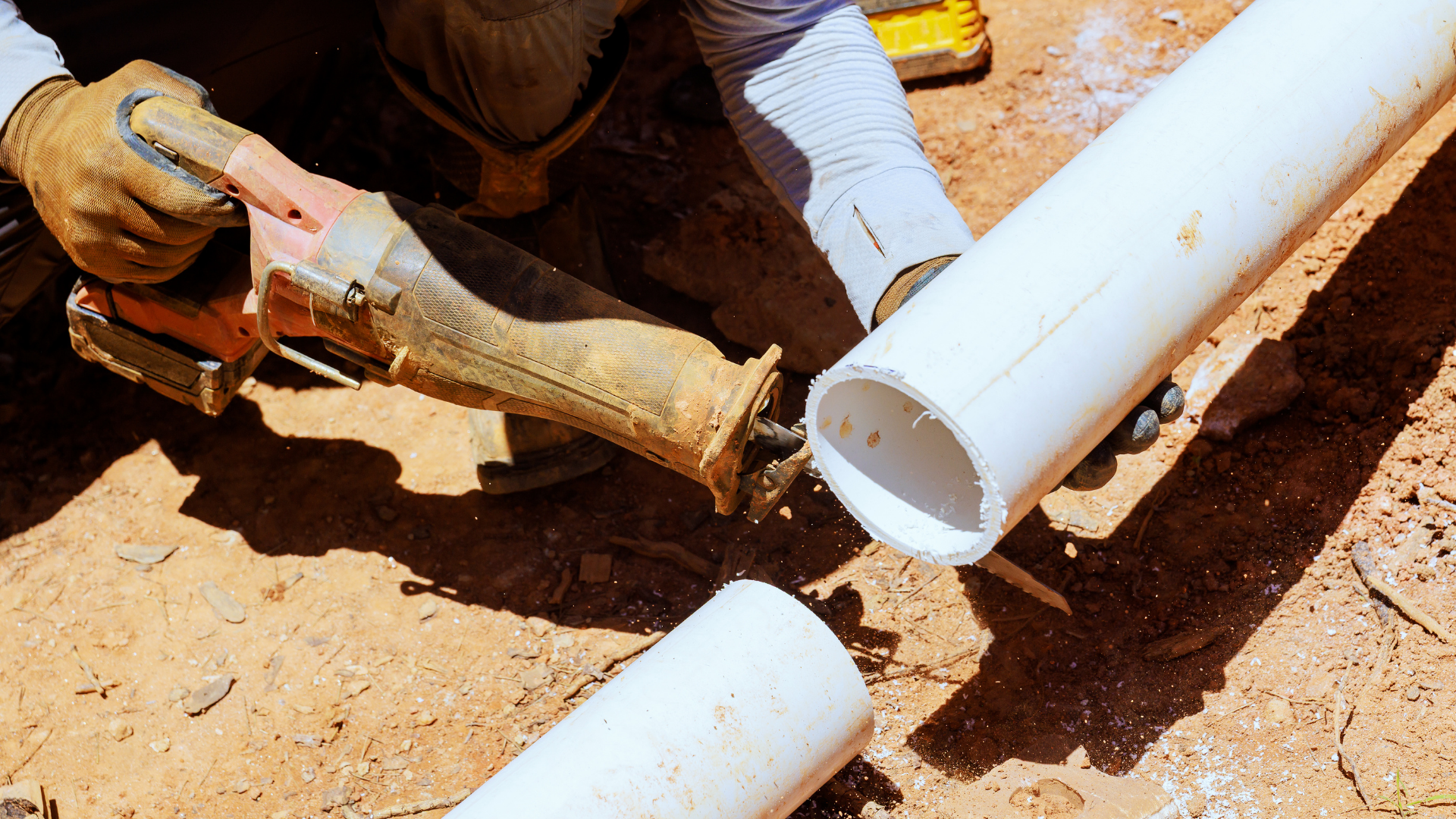
Step 3 — Main line connection The main water supply is shut off, faucets are opened to drain the lines, and the cold water pipe is cut to install the softener's inlet and outlet adapters. Flexible supply tubes connect the plumbing to the softener for easier future service access.4
Step 4 — Bypass valve installation A bypass valve is installed at the softener's inlet and outlet ports — allowing water to be routed around the softener when needed. This is essential for lawn irrigation (no need to soften outdoor water), during system maintenance, and if the unit ever needs servicing without cutting off water to the home.
Step 5 — Programming and initial startup The brine tank is filled with salt, the system is slowly pressurized, and the control valve is programmed with your water hardness level and regeneration schedule — typically set to run at 2:00 AM to avoid interfering with household water use. An initial regeneration cycle is run to flush the resin and confirm all connections are leak-free before we leave the site.
Water Softener Maintenance in the Pacific Northwest — What to Expect
One of the most common questions before installation: how much ongoing work is this? The honest answer for a Clark County system is very little — roughly 3 hours per year total:
Ongoing maintenance tasks:
| Task | Frequency | Estimated Cost | Time |
|---|---|---|---|
| Salt replenishment | Monthly — check level, add as needed | $60–$120/year | 15 min/month |
| Resin bed cleaner | Annually — add to brine tank | $20–$50/year | 10 min/year |
| Brine tank cleaning | Every 1–2 years | DIY or included in service | 10 min/year |
| Professional service check | Annually | $150–$300 | 1 hour |
| Annual total | - | $230–$470 | ~3 hours |
Clark County and Yacolt well water specifics:
- Well water with elevated iron requires iron-removing salt pellets rather than standard pellets — and more frequent resin cleaning (every 6 months rather than annually) to prevent iron fouling that reduces softening efficiency
- Salt usage varies by hardness level — Yacolt well water at higher GPG will consume salt faster than a lower-hardness municipal supply
- Resin beds last 7 to 10 years with proper maintenance — replacement cost runs $200 to $400 when the time comes
The most important maintenance habit: Keep salt level at least half-full at all times and ensure it stays several inches above the water line in the brine tank. Running low on salt allows hardness minerals to pass through untreated — partially defeating the system's purpose until salt is replenished and a full regeneration cycle completes.
Service Source Plumbing: Water Softener Installation Throughout Yacolt and Clark County WA
Hard water in Yacolt and Clark County isn't a dramatic emergency — it's a quiet, cumulative problem that shows up in scale on your fixtures, spots on your dishes, dry skin after showering, and a water heater that needs replacing years earlier than it should. A properly sized and installed water softener addresses all of it at the source.
Service Source Plumbing provides water softener assessment, installation, and service throughout Yacolt and Clark County — with the well water expertise that matters for rural properties where hardness varies significantly from one property to the next.
What every Service Source water softener installation includes:
| Service Component | What It Means for You |
|---|---|
| On-site water testing | Hardness, iron, and mineral content tested before any system is recommended — no guesswork sizing |
| Right-sized system selection | Capacity calculated for your household size and actual water hardness — not a one-size-fits-all recommendation |
| Full installation | Main line connection, bypass valve, brine tank setup, programming, and initial startup all completed by Service Source |
| Clark County well water expertise | We know the difference between Yacolt well water and municipal supply — and size systems accordingly |
| Connection to your existing plumbing system | We assess how softener installation coordinates with your water heater, pipes, and overall plumbing condition |
| Maintenance guidance | Ongoing salt, resin, and service schedule specific to your water quality — not generic manufacturer instructions |
| Warranty | Installation and equipment backed by warranty |
If you're seeing scale on your fixtures, spots on your dishes, or a water heater that seems to be working harder than it should — a water test is the right first step. Contact Service Source Plumbing to schedule your Clark County water quality assessment today.
Schedule Your Water Quality Assessment →
Read: Whole Home Plumbing Inspection in Yacolt WA →
why choose
service source plumbing?
Get in Touch Today
Homeowners and businesses in Battle Ground, Duluth, Hockinson, Vancouver, Orchards, and Walnut Grove rely on us for our:
- 24/7 emergency services – We’re always ready to assist with urgent plumbing issues.
- Experienced professionals – Our team is trained in advanced drain cleaning techniques.
- State-of-the-art equipment – We use the latest tools to ensure safe and effective unclogging.
- Commitment to customer satisfaction – We deliver reliable, long-term plumbing solutions.
- Preventative inspections – We don’t just fix the issue; we help you prevent future problems.
Recent Posts