Tankless Water Heater Maintenance in Yacolt WA: How to Keep Your System Running Efficiently
A tankless water heater is a significant investment — and in most of the country, annual maintenance is sufficient to protect it for its rated 20-year lifespan. In Yacolt and Clark County, particularly for homes on private well water, that assumption doesn't hold. Clark County's groundwater carries calcium and magnesium mineral content that deposits inside tankless heat exchangers with every gallon of water the system processes. Without regular descaling, that scale accumulates — reducing efficiency, increasing energy costs, triggering error codes, and eventually causing heat exchanger failure years ahead of the system's rated lifespan. Service Source Plumbing maintains tankless water heaters throughout Yacolt and Clark County. This guide covers the specific maintenance requirements for this market — not generic tankless advice, but what your system actually needs in Clark County's hard water environment.
The new season is a great reason to make and keep resolutions. Whether it’s eating right or cleaning out the garage, here are some tips for making and keeping resolutions.
Lists are great ways to stay on track. Write down some big things you want to accomplish and some smaller things, too.
Check the list regularly
Don’t forget to check in and see how you’re doing. Just because you don’t achieve the big goals right away doesn’t mean you’re not making progress.
Reward yourself
When you succeed in achieving a goal, be it a big one or a small one, make sure to pat yourself on the back.
Think positively
Positive thinking is a major factor in success. So instead of mulling over things that didn’t go quite right, remind yourself of things that did.
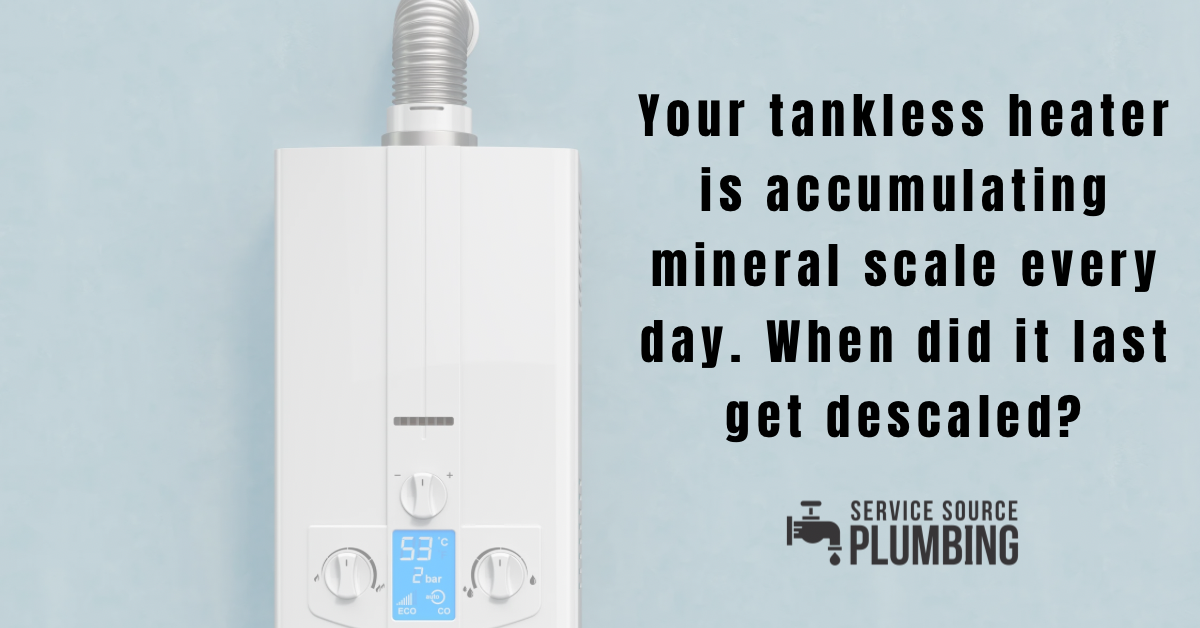
Why Tankless Water Heater Maintenance Matters More in Clark County
Tankless water heaters work by passing cold water through a heat exchanger — a series of small tubes or channels — where it's rapidly heated on demand. That heat exchanger is the most critical and most expensive component in the system. It's also the direct target of Clark County's hard water mineral content.
What happens inside the heat exchanger: Every gallon of hard water that passes through the system deposits a microscopic layer of calcium and magnesium carbonate on the interior surfaces of the heat exchanger. The deposits are invisible in early stages — but they accumulate continuously. Scale is a thermal insulator. As it builds on the heat exchanger walls, the system has to work harder to transfer heat through the insulating layer to reach the target water temperature. The harder it works, the more energy it consumes and the more mechanical stress it experiences.
Why Clark County is more demanding than most PNW markets: The Pacific Northwest is generally associated with soft water — and most of western Washington's municipal water supplies are relatively soft. Clark County is the exception. The groundwater in Yacolt and surrounding rural communities draws from sources with significantly higher mineral content than western Washington municipal averages. Homes on private wells in North Clark County frequently have water hardness levels that would be considered "very hard" — accelerating scale accumulation significantly compared to homes on softer municipal supplies.
The efficiency degradation timeline without maintenance:
- Year 1–2: Scale deposits are thin. Efficiency impact is minimal and undetectable.
- Year 3–4: Measurable scale accumulation. Hot water output begins to reduce slightly. System starts working harder to reach temperature.
- Year 5–6: Significant scale buildup. Energy consumption increases noticeably. Error codes start appearing during peak demand. Hot water wait times increase.
- Year 7+: Heat exchanger under sustained thermal stress from insulating scale layer. Component damage accelerates. System fails significantly ahead of rated lifespan.
Annual descaling interrupts this progression at year one — keeping the heat exchanger clean, the efficiency at rated performance, and the system on track for its full service life.
How Often Should a Tankless Water Heater Be Serviced in Yacolt WA?
The right service interval depends primarily on your water source — not just on your system's age:
City water — annual service Homes connected to municipal water supplies in Clark County typically receive treated water with lower mineral content than private well sources. Annual descaling and inspection is the appropriate standard for these properties — sufficient to prevent meaningful scale accumulation between service visits.
Private well water — every 6 to 9 months Yacolt and rural North Clark County homes on private wells frequently have elevated mineral hardness that deposits scale at a significantly faster rate than city water. For these homes, annual service may not be frequent enough to prevent the efficiency loss that occurs between visits. Service Source recommends testing your well water hardness — the result determines whether annual or semi-annual service is appropriate for your specific water chemistry.
How to determine your water hardness: A simple water hardness test kit (available at hardware stores for under $20) provides a grains per gallon (GPG) reading:
- Under 7 GPG — moderately hard, annual service appropriate
- 7 to 10 GPG — hard, annual service minimum, consider semi-annual
- Over 10 GPG — very hard, semi-annual service recommended, water softener assessment warranted
The indicator that your service interval needs adjustment: If your system is throwing error codes, producing reduced hot water output, or requiring more time to reach temperature before its scheduled service date — the service interval needs to shorten. These are signs that scale is accumulating faster than the current schedule manages.
The Annual Descaling Process — What It Involves and Why It's Critical
Descaling is the core maintenance procedure that removes accumulated mineral scale from the heat exchanger. Here's exactly what the process involves:
What descaling accomplishes:
- Dissolves and flushes calcium and magnesium carbonate deposits from heat exchanger surfaces
- Restores heat transfer efficiency to near-original performance
- Reduces energy consumption back to rated levels
- Removes the abrasive scale particles that cause wear on internal components
- Extends heat exchanger service life by eliminating the thermal stress of operating through an insulating scale layer
The descaling process step by step:
- System isolated from the water supply — inlet and outlet shut-off valves closed
- Descaling pump and hoses connected to the service ports (isolation valves with hose connections installed at the time of system installation — if your system doesn't have these, Service Source can install them during the service visit)
- Food-grade white vinegar or a citric acid solution circulated through the heat exchanger for 45 to 90 minutes — the acid dissolves the calcium and magnesium carbonate deposits
- Scale-laden solution flushed from the system
- Fresh water flushed through to remove all descaling solution residue
- System reconnected and function verified — temperature output, flow rate, and error code status confirmed
What happens without annual descaling: Scale accumulation is not a reversible problem beyond a certain threshold. Light to moderate scale deposits respond well to descaling and restore efficiency fully. Heavy scale deposits — particularly in systems that have gone 3 to 5 years without service in hard water conditions — may not fully dissolve, leaving residual restrictions that permanently limit performance. In the most severe cases, scale accumulation causes heat exchanger failure that requires replacement of the most expensive component in the system — often at a cost that approaches the price of a new unit.
The investment comparison: Annual descaling service typically runs $100 to $200. Heat exchanger replacement runs $500 to $1,500 depending on the unit. Premature full system replacement runs $1,500 to $3,500 installed. The math on regular maintenance is consistently favorable.
Filter Cleaning and Inlet Screen Maintenance
This is the most commonly skipped maintenance task on tankless water heaters — and one that homeowners can partially handle themselves between professional service visits:
The cold water inlet filter screen: Every tankless water heater has a filter screen at the cold water inlet that catches sediment before it enters the heat exchanger. In Clark County's well water environment — where sediment content can be significant — this screen accumulates material faster than in cleaner water sources. A clogged inlet screen restricts flow into the system, reduces output, and can trigger flow-rate error codes that appear to be system malfunctions but are actually a dirty filter.
How to clean the inlet filter screen:
- Turn off the cold water supply to the unit
- Locate the inlet filter — typically a small screen in the cold water inlet port at the base of the unit
- Remove the filter carefully — it threads out or pulls out depending on the unit model
- Rinse under running water and use a soft brush to remove sediment
- Reinstall and restore water supply
- Run hot water at a faucet to confirm normal flow has been restored
This is a task homeowners can perform every 3 to 4 months — between professional service visits — to maintain optimal flow and prevent false error codes.
The hot water outlet filter: Many units also have a filter screen at the hot water outlet. Check your system's manual for its location and the same cleaning process applies.
The air intake filter (gas units): Gas-fired tankless units have an air intake that can accumulate dust and debris — particularly in utility spaces with poor air circulation. A blocked air intake causes combustion problems and can trigger safety shutdowns. Check and clean annually at minimum.
Signs Your Tankless Water Heater Needs Professional Service Now
These indicators mean the system needs attention before the next scheduled maintenance visit:
Error codes on the display Tankless water heaters have diagnostic systems that display error codes when they detect operational problems. Common codes and what they indicate:
- Flow-related codes — inlet screen blocked, water supply restriction, or flow sensor issue
- Temperature codes — scale buildup in heat exchanger, thermistor failure, or temperature sensor malfunction
- Ignition codes (gas units) — combustion problem, gas supply issue, or igniter failure
- Venting codes — vent obstruction or pressure switch issue
Any displayed error code warrants a Service Source assessment — the code identifies the system category of the problem but diagnosing the specific cause requires inspection.
Reduced hot water output If your system used to provide adequate hot water for two simultaneous showers and now struggles with one — the heat exchanger is scale-compromised, the flow sensor is malfunctioning, or the system is undersized for a changed demand pattern. Scale accumulation is the most common cause in Clark County's hard water environment.
Longer wait times to reach temperature A system that used to deliver hot water at a faucet within 30 seconds now taking 90 seconds or more indicates reduced heat exchanger efficiency — almost always scale-related in this market.
Unusual sounds during operation Popping, crackling, or rumbling sounds during heating cycles indicate scale deposits on heat exchanger surfaces — the same phenomenon as scale buildup in a tank water heater creating popping sounds. This is an audible indicator that descaling is overdue.
Inconsistent temperature — hot, then cold, then hot Temperature fluctuation during a single use can indicate scale restricting flow through portions of the heat exchanger, a failing flow sensor, or a thermistor problem. Any of these warrants professional diagnosis.
Visible corrosion or moisture at connections Any external moisture, corrosion at fittings, or visible water staining around the unit indicates a connection or component issue requiring immediate assessment.
How Clark County's Hard Water Affects Tankless Systems Specifically
he connection between Clark County's water chemistry and tankless water heater performance is direct — and understanding it explains why maintenance requirements here differ from general tankless guidance:
The scale formation process in your specific system: Cold well water enters the heat exchanger at ambient temperature — typically 45 to 55°F in Clark County during cooler months. As it's rapidly heated to 120°F or above, the temperature change causes calcium and magnesium carbonate to precipitate out of solution and deposit on the heat exchanger surfaces. The faster the temperature rise, the more aggressive the precipitation — which is exactly what a tankless system does by design.
Why tankless systems scale faster than tank heaters from the same water supply: A tank water heater heats water slowly, sits at temperature, and the scale deposits gradually over time. A tankless system heats water rapidly on every demand cycle — creating the temperature differential that drives mineral precipitation dozens of times per day. The same water hardness level produces scale in a tankless system at a higher rate than in a tank heater.
The water softener connection: A water softener installed on the main water supply line — before water reaches the tankless heater — removes calcium and magnesium through ion exchange before the water enters the system. This eliminates the source of scale formation rather than removing accumulated scale after the fact. For Clark County homes on well water with confirmed hardness above 7 GPG, a water softener upstream of the tankless unit is the most cost-effective long-term maintenance investment available.
With a softener in place:
- Annual descaling is typically sufficient regardless of water source
- Heat exchanger scale accumulation drops dramatically
- System lifespan approaches or meets the manufacturer's rated 20-year projection
- Efficiency stays at rated levels between service visits
Without a softener on well water above 7 GPG:
- Semi-annual descaling is recommended
- Heat exchanger scale accumulates significantly between service visits
- System efficiency degrades more rapidly between services
- System lifespan may be 30 to 40% shorter than rated
For more on water softener options for Yacolt and Clark County well water, read our
water softener installation guide →
DIY Maintenance vs. Professional Service — What Homeowners Can Handle
Tankless water heater maintenance divides clearly into tasks homeowners can perform and tasks that require professional equipment and expertise:
Homeowners can handle:
✅ Inlet and outlet filter screen cleaning — every 3 to 4 months as described above ✅ Air intake filter cleaning — annually on gas units ✅ Visual inspection — checking for moisture, corrosion, or unusual sounds during operation ✅ Error code logging — writing down any error codes that appear with dates — this information is valuable for the Service Source technician ✅ Water hardness testing — annual well water test to monitor whether hardness levels are changing
Service Source Plumbing handles:
🔧 Annual descaling — requires descaling pump, appropriate acid solution, and proper flushing procedure. Incorrect descaling can damage seals and components — professional execution is the standard.
🔧 Gas line and combustion assessment — burner inspection, combustion analysis, and gas pressure verification on gas-fired units require professional equipment and certifications.
🔧 Venting inspection — checking for blockage, corrosion, and proper draft on gas units.
🔧 Component testing — flow sensor, thermistors, igniter, and control board function testing requires diagnostic equipment.
🔧 Isolation valve installation — if your system doesn't have service isolation valves installed, Service Source can add them during a service visit, making all future descaling easier and faster.
🔧 Error code diagnosis — identifying the specific cause behind a displayed error code rather than just noting the code category.
The honest schedule:
- Every 3 to 4 months — homeowner filter cleaning
- Every 6 months (well water above 7 GPG) or annually (city water or softer well) — Service Source professional service including descaling, filter inspection, component testing, and system verification
Service Source Plumbing: Tankless Water Heater Maintenance Throughout Yacolt and Clark County WA
Clark County's hard well water makes tankless water heater maintenance a more specific, more consequential service than general national advice accounts for. The service interval, the descaling frequency, and the water softener assessment are all market-specific determinations that require knowledge of the local water chemistry — not just general tankless maintenance protocols.
Service Source Plumbing has maintained plumbing systems throughout Yacolt and Clark County for years — with the hard water expertise and tankless service experience that this specific market requires.
What every Service Source tankless maintenance service includes:
| Service Component | What It Covers |
|---|---|
| Full system inspection | Venting, gas connections, electrical, and external condition — complete visual and operational assessment |
| Heat exchanger descaling | Citric acid or white vinegar flush — full cycle with post-flush verification of flow and temperature |
| Inlet and outlet filter cleaning | All accessible filter screens cleaned and inspected |
| Air intake inspection | Gas unit combustion air supply confirmed clear |
| Error code diagnostic review | Any stored fault codes identified and assessed |
| Temperature and pressure verification | System confirmed operating within manufacturer specifications |
| Flow rate confirmation | Output flow rate measured against rated specifications — identifies heat exchanger restriction |
| Hard water assessment | Evaluation of whether current service interval is appropriate for your specific water hardness |
| Water softener recommendation | Honest assessment of whether a softener upstream would extend system lifespan for your water source |
| Written service record | Date, service performed, and findings documented for warranty and future service reference |
Service scheduling recommendation: Book annual tankless maintenance in late summer or early fall — before the cold season when hot water demand peaks and any efficiency loss from scale accumulation becomes most noticeable. For well water properties with confirmed hardness above 7 GPG, schedule the first service at 6 months and assess the scale accumulation found to determine the ongoing interval.
Contact Service Source Plumbing today to schedule your Clark County tankless water heater maintenance.
Schedule Your Tankless Service →
Read: Water Softener Installation in Yacolt WA →
Read: Tank vs. Tankless Water Heater in Yacolt WA →
why choose
service source plumbing?
Get in Touch Today
Homeowners and businesses in Battle Ground, Duluth, Hockinson, Vancouver, Orchards, and Walnut Grove rely on us for our:
- 24/7 emergency services – We’re always ready to assist with urgent plumbing issues.
- Experienced professionals – Our team is trained in advanced drain cleaning techniques.
- State-of-the-art equipment – We use the latest tools to ensure safe and effective unclogging.
- Commitment to customer satisfaction – We deliver reliable, long-term plumbing solutions.
- Preventative inspections – We don’t just fix the issue; we help you prevent future problems.
Recent Posts