6 Plumbing Problems That Always Get Worse When You Wait Too Long
Every plumbing problem has a window. There is the window when it is a minor repair, quick to fix, inexpensive to address, and containable in scope. And then there is what happens after that window closes.
A dripping faucet becomes a failed valve. A slow drain becomes a burst pipe from internal pressure. A running toilet becomes a foundation moisture issue. A pinhole leak becomes black mold in the wall cavity. The progression is not dramatic or sudden. It is quiet and consistent, happening in walls, under floors, and behind fixtures where Vancouver WA homeowners cannot see it until the damage has already multiplied.
Between 2019 and 2023, approximately 22.6 percent of home insurance claims were due to water damage or freezing, second only to wind or hail damage, with the average claim for water damage or freezing costing over $15,000. The majority of those claims originated from problems that were present and identifiable before they became emergencies.
The six plumbing problems in this guide are the ones Service Source Plumbing encounters most often in Vancouver WA, Clark County, Battle Ground, and Woodland where the repair scope at the time of the call is significantly larger than it would have been if the homeowner had acted earlier. Each one has a specific progression, a specific cost consequence, and a specific point past which calling a same day plumber is no longer optional.
The new season is a great reason to make and keep resolutions. Whether it’s eating right or cleaning out the garage, here are some tips for making and keeping resolutions.
Lists are great ways to stay on track. Write down some big things you want to accomplish and some smaller things, too.
Check the list regularly
Don’t forget to check in and see how you’re doing. Just because you don’t achieve the big goals right away doesn’t mean you’re not making progress.
Reward yourself
When you succeed in achieving a goal, be it a big one or a small one, make sure to pat yourself on the back.
Think positively
Positive thinking is a major factor in success. So instead of mulling over things that didn’t go quite right, remind yourself of things that did.
1. A Slow Drain: The Warning Nobody Takes Seriously Enough
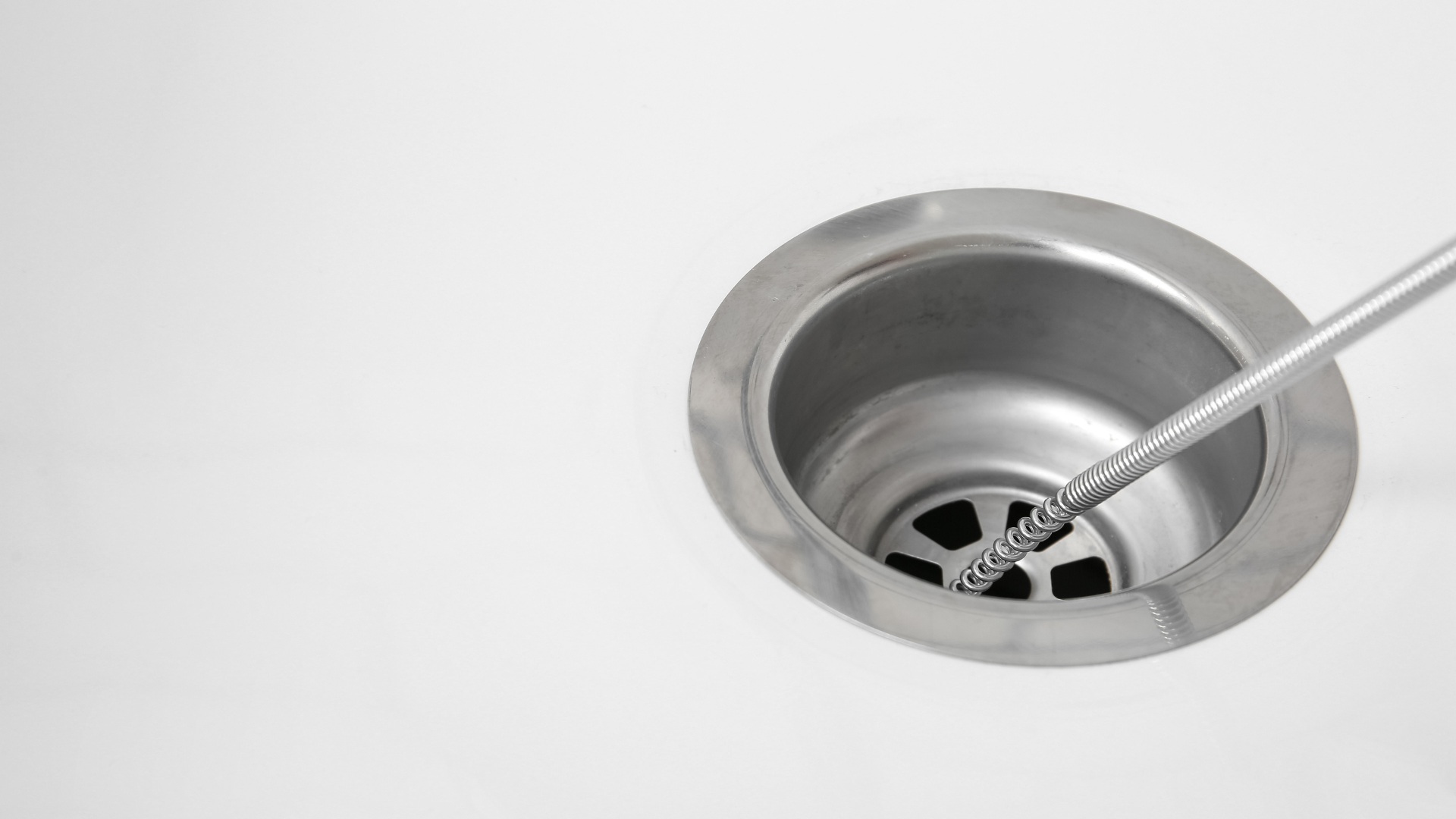
A slow drain is the plumbing problem most commonly dismissed as a minor inconvenience rather than a developing failure. Water still drains. It just takes longer. The homeowner pours a bottle of retail drain cleaner down it, it clears temporarily, and the cycle repeats for months or years until something more serious happens.
What is actually happening inside a slow drain is a gradual blockage accumulation that progressively narrows the pipe interior and increases the internal pressure the system must generate to move waste through. As the blockage grows, the pressure increases. As pressure increases, the stress on pipe joints, seals, and older pipe material increases proportionally.
What happens when a slow drain is not addressed:
- Partial blockages become complete blockages: A drain that runs slowly is not a drain that will stay slow indefinitely. The same material that is restricting flow continues accumulating. The drain that took two minutes to clear in February does not take two minutes in June. It stops entirely, typically during high-use periods like houseguests or holiday gatherings.
- Pressure buildup cracks older pipe joints: In Vancouver WA homes with older galvanized or clay sewer lines, the sustained pressure from a partial blockage accelerates joint failure. A joint that was managing minor seepage begins actively leaking into the surrounding soil or, in the case of interior pipes, into wall cavities and subfloor assemblies.
- Sewage backups into multiple fixtures: When a main line blockage develops from an ignored slow drain, the backup does not stay isolated to one fixture. It affects every fixture connected to that branch of the drain system, producing raw sewage backups that require professional remediation in addition to the plumbing repair.
The cost difference: Early intervention almost always costs significantly less than dealing with water damage, mold remediation, or pipe replacement later. A professional drain cleaning that addresses the blockage before it becomes a complete stoppage or a pipe failure typically runs $150 to $300. A sewage backup cleanup and pipe repair runs significantly more, and if mold has established in wall cavities from a leaking joint, remediation adds $500 to $3,500 on top.
2. A Running Toilet: The Silent Water Bill and the Hidden Damage Below It
A running toilet is the plumbing problem that most homeowners decide to live with because it does not cause immediate visible damage. The water runs into the bowl, not onto the floor. The sound is annoying but manageable. The fix can wait.
What cannot wait is the water consumption. According to the EPA, a running toilet can waste up to 200 gallons of water per day. For Vancouver WA homeowners on municipal water, that is a utility bill consequence that compounds every day the toilet continues running. For homes on private wells in Clark County, Battle Ground, or Woodland, it means the well pump is cycling constantly, accelerating wear and increasing energy costs.
What a running toilet does over time beyond the water bill:
- Internal flapper and fill valve wear compounds: The running condition is typically caused by a failed flapper seal or a fill valve that will not close properly. These components are inexpensive to replace when addressed early. A fill valve that runs continuously does not maintain a steady failure mode. It wears against the valve seat, eventually requiring replacement of both the valve and the seat rather than just the valve.
- Continuous water movement keeps the wax ring under stress: The wax ring that seals the toilet base to the floor flange handles normal intermittent use. Continuous water cycling from a running toilet keeps the toilet in a state of minor vibration and temperature fluctuation that stresses the wax ring over time. A compromised wax ring leaks at the base, directing water under the toilet and into the subfloor below.
- Subfloor damage from a leaking wax ring: Water that reaches the subfloor under a toilet does not evaporate quickly. It soaks into the wood, begins to soften it, and creates conditions for mold and structural rot that can require subfloor replacement. What started as a $15 flapper replacement can progress to a subfloor repair that runs $1,000 to $3,000 or more depending on the extent of damage.
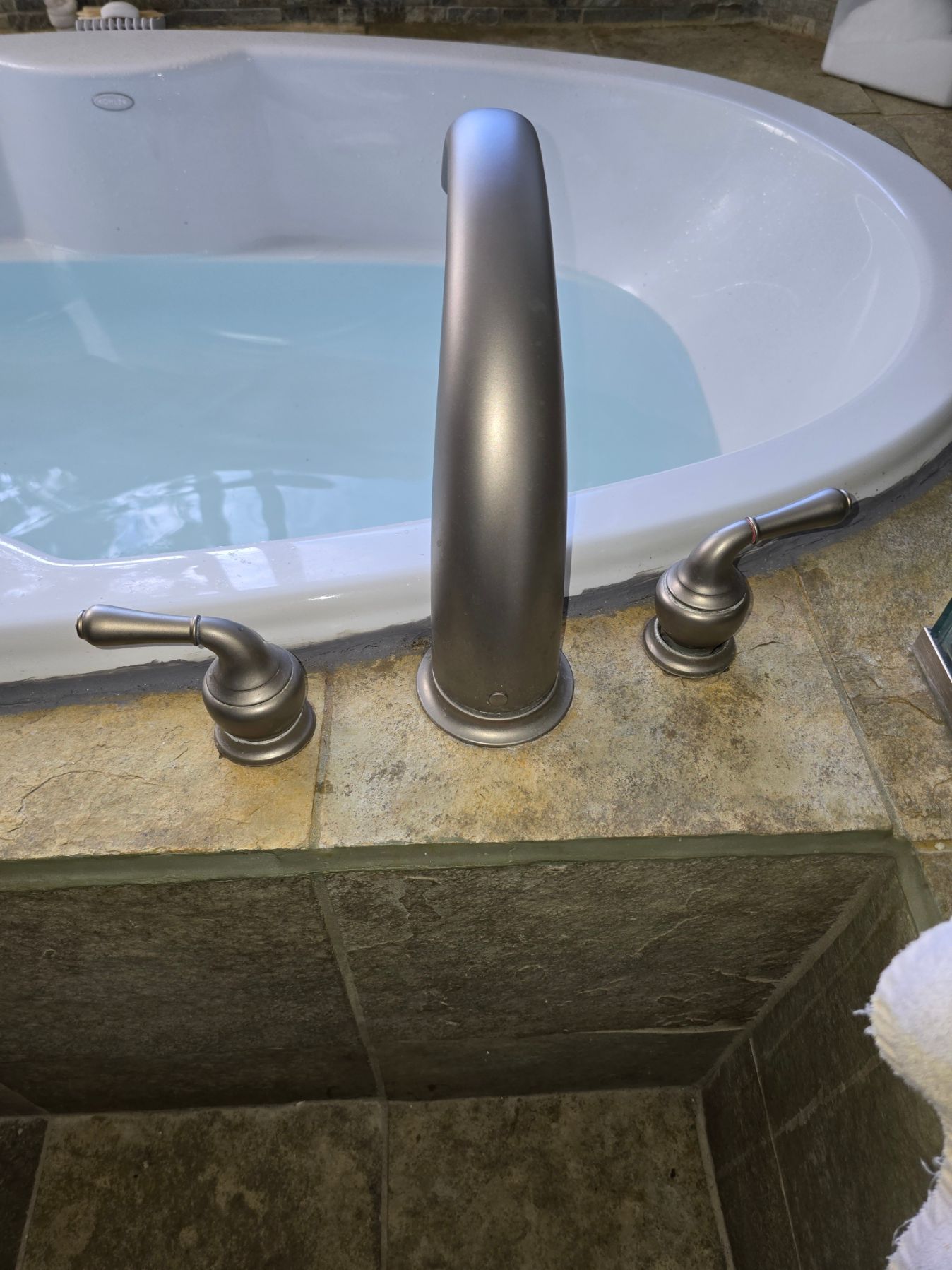
3. A Dripping Faucet: The Leak That Rotates Its Damage
A dripping faucet wastes water and money in measurable amounts. According to the EPA, a faucet dripping at one drip per second wastes approximately 3,000 gallons of water per year. That is enough water to run 180 showers. For Vancouver WA homeowners, that volume shows up in the utility bill every single month the drip continues.
But the more significant consequence of an ignored dripping faucet is what it does to the plumbing components around it.
The progression of a dripping faucet:
- The drip indicates a worn internal component: A faucet drips because a washer, O-ring, cartridge, or valve seat has worn to the point where it no longer creates a complete seal. That worn component is under water pressure every moment the faucet is connected to the supply. The same water pressure that is pushing water past the failed seal is also pushing against every other sealing surface in the assembly.
- The leak migrates: Water that drips from a faucet into the sink is visible and contained. Water that finds a secondary path through a failed supply connection behind the wall, through a corroded supply line fitting, or through a cabinet base that has been repeatedly wetted by drip splash is not visible until it has caused damage to the cabinet, the subfloor, or the wall behind the fixture.
- The valve seat scores and requires replacement: When a worn washer or cartridge is left in place against a valve seat, the irregular contact between the two surfaces scores the valve seat. A valve seat that was smooth and could have been repaired by replacing only the washer now requires replacement of the seat itself, increasing the repair scope significantly.
Cost consequence: The average cost to repair a plumbing leak is around $500, but more severe leaks, such as slab leaks or basement floods, can cost upward of $15,000 including water damage repairs. A dripping faucet addressed early is a $100 to $200 repair. The same dripping faucet that has scored the valve seat and allowed water to reach the cabinet subfloor becomes a $500 to $1,500 repair once the full scope is assessed.
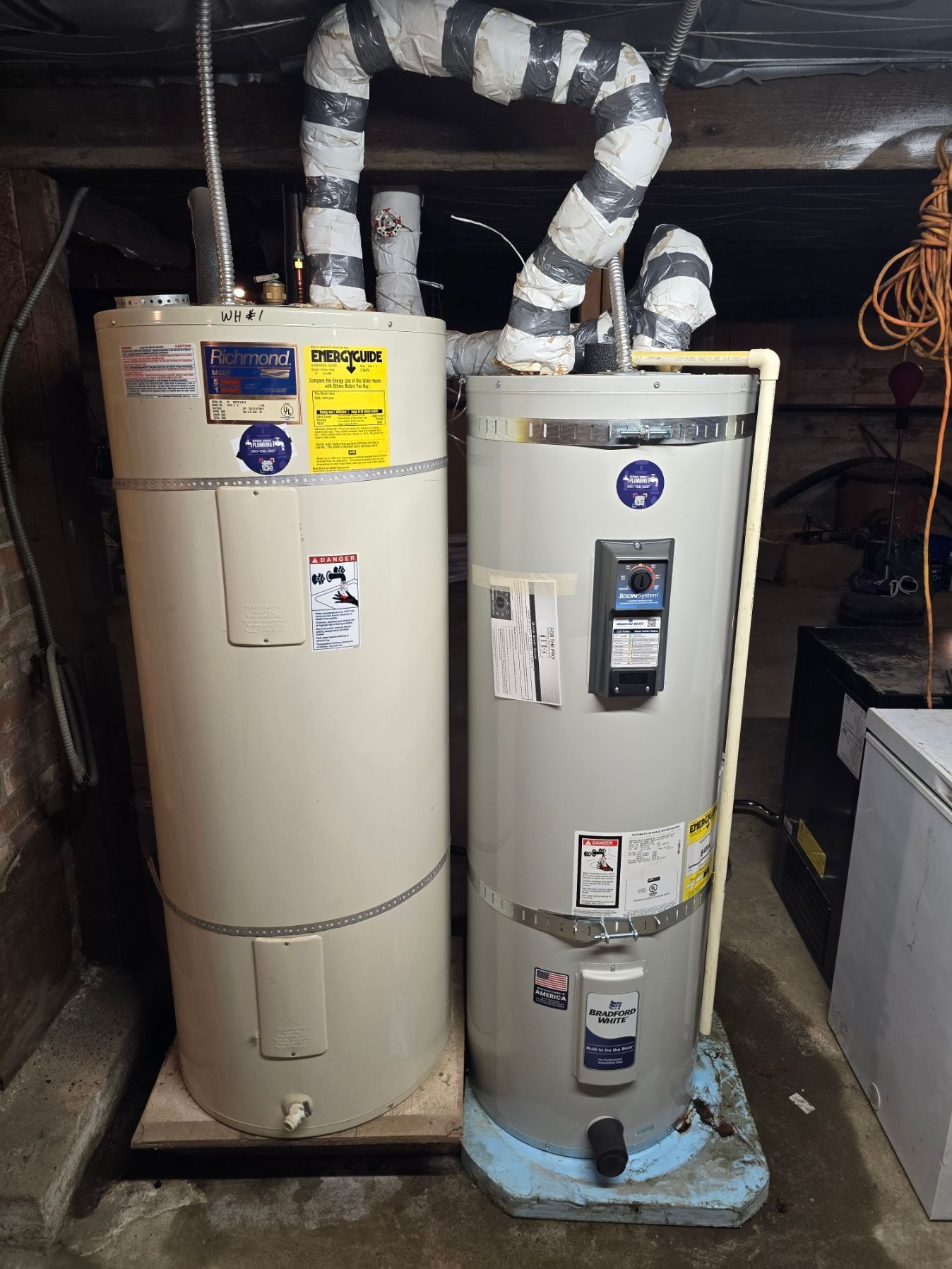
4. A Water Heater Making Noise: The Warning Before the Flood
Water heaters announce problems before they fail. The homeowners who end up with flooded utility rooms are, in most cases, homeowners who heard the noise, noticed the discoloration in the hot water, or saw the minor pooling at the base and decided it could wait.
Water heaters in Vancouver WA and Clark County homes operate in conditions that accelerate sediment buildup. The Columbia River basin water supply that serves the Vancouver area carries dissolved minerals that precipitate as calcium and magnesium deposits inside the water heater tank as water is repeatedly heated and cooled. This sediment accumulates on the tank floor, forces the heating element to work harder, produces the popping and rumbling sounds that homeowners report, and progressively degrades the tank interior.
The progression from noise to failure:
- Sediment buildup reduces efficiency and accelerates corrosion: The sediment layer insulates the heating element from the water above it, forcing it to overheat to reach the set temperature. Overheating accelerates corrosion of the tank lining and anode rod. An anode rod that has been consumed by corrosion leaves the tank walls unprotected against the electrolytic corrosion that the rod was designed to prevent.
- The pressure relief valve begins cycling: As sediment buildup reduces the effective capacity of the tank and the heating element overworks, pressure and temperature irregularities cause the pressure relief valve to open and close more frequently. A T&P valve that cycles repeatedly begins to fail to reseat completely, creating a minor but continuous drip that signals the valve needs replacement and that the system conditions causing the cycling need to be addressed.
- Tank failure produces rapid water release: When a water heater tank fails from corrosion, it does not fail slowly. The failure point is typically a corrosion perforation in the tank wall that expands rapidly under the water pressure inside. The resulting water release from a 40 or 50 gallon tank in an uncontained utility space can produce significant flooding of the surrounding area within minutes.
Cost consequence: Water heater repair, including flushing, anode rod replacement, and T&P valve service when caught early, typically runs $150 to $400. Water heater replacement when the tank has failed runs $900 to $2,500 installed. Water heater replacement plus water damage cleanup from a tank failure that was not caught in time runs significantly higher.
5. Low Water Pressure: The Symptom That Points to a Larger System Problem
Gradual water pressure reduction is one of the plumbing problems that homeowners adapt to rather than address. The pressure is lower than it used to be, but the fixtures still run, the showers still work, the dishwasher still fills. The change happened slowly enough that the new baseline becomes normal.
What the gradually reducing pressure is indicating is a change somewhere in the supply system that does not improve on its own.
What causes gradual pressure reduction in Vancouver WA homes:
- Mineral buildup in supply lines: In areas served by water with higher mineral content, galvanized steel supply lines accumulate internal scale deposits that progressively narrow the interior diameter. A pipe that is partially occluded by scale passes less water at lower pressure. This condition only worsens over time as scale continues accumulating. Homes in Clark County with original galvanized supply lines from the 1960s or earlier may have pipes that are occluded by 50 percent or more of their original interior diameter.
- Pressure regulator failure: Most Vancouver WA homes have a pressure reducing valve on the main supply line that regulates incoming municipal water pressure to a safe level for household fixtures. A PRV that is failing can produce either gradually increasing or gradually decreasing pressure symptoms. A PRV that has failed completely and is stuck in the reduced position can drop household pressure to non-functional levels. PRV replacement runs $250 to $600 installed.
- A developing leak somewhere in the system: A supply line that is actively leaking somewhere in the system loses pressure at the leak point, reducing the pressure available at fixtures downstream. Low pressure that develops suddenly rather than gradually is a more urgent indicator of an active leak that may be occurring inside a wall or under a slab.
The connection to emergency plumbing: Low water pressure that develops gradually is a maintenance issue when caught early. Low water pressure that develops rapidly, particularly in combination with unexplained wet spots, elevated water bills, or the sound of running water when no fixtures are in use, is a potential emergency situation indicating an active supply line failure. Service Source Plumbing provides 24 hour emergency plumbing services throughout Vancouver WA and Clark County for pressure loss situations that indicate an active leak.
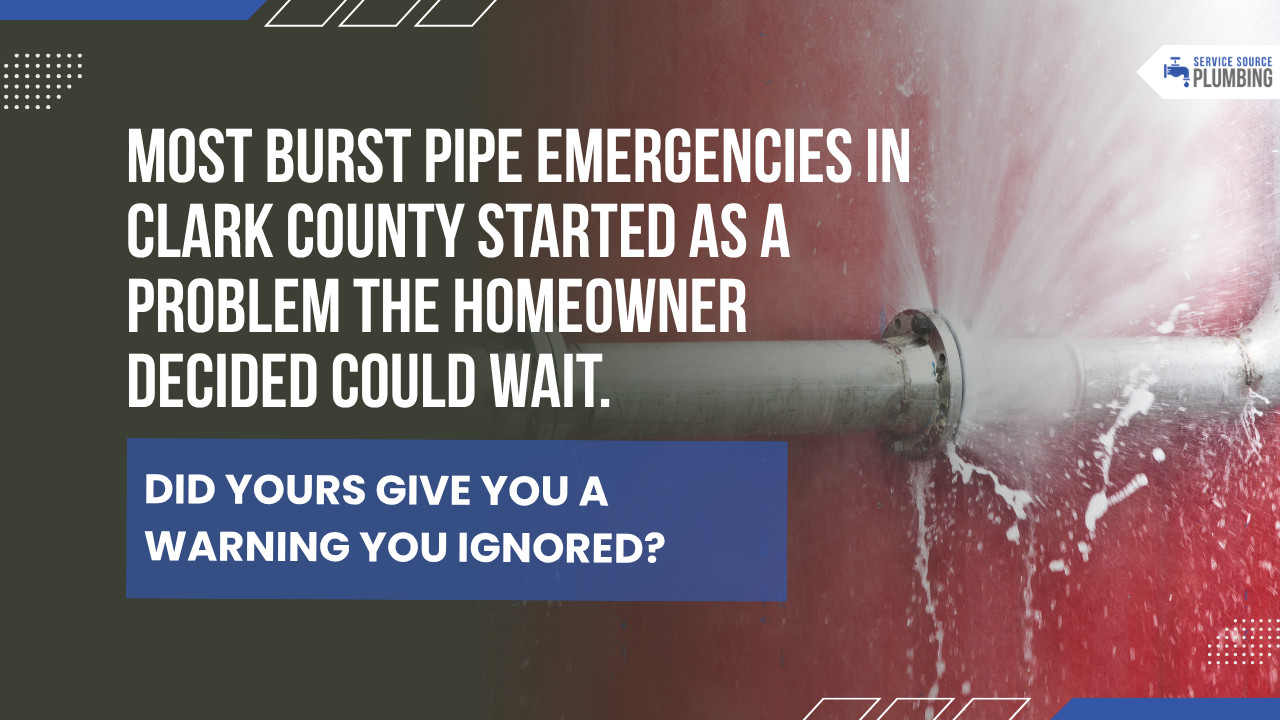
6. A Burst Pipe: When Waiting Is No Longer an Option
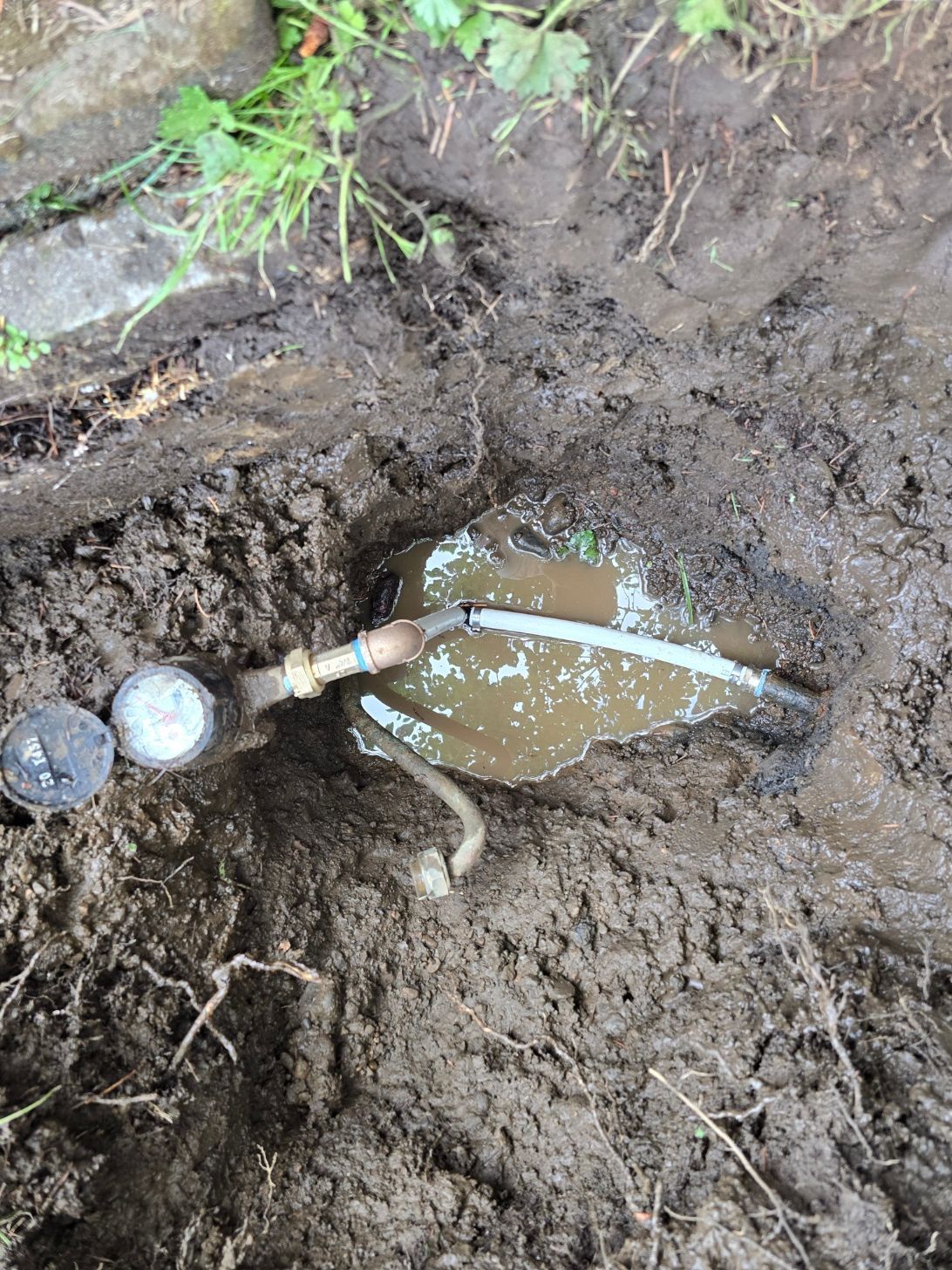
A burst pipe is not a problem that announces itself gradually in most cases. It is the result of conditions that developed gradually, whether from a freeze event, from pipe corrosion that reached a failure point, from water hammer stress that finally exceeded the pipe's tolerance, or from a pre-existing pinhole leak that expanded under sustained pressure.
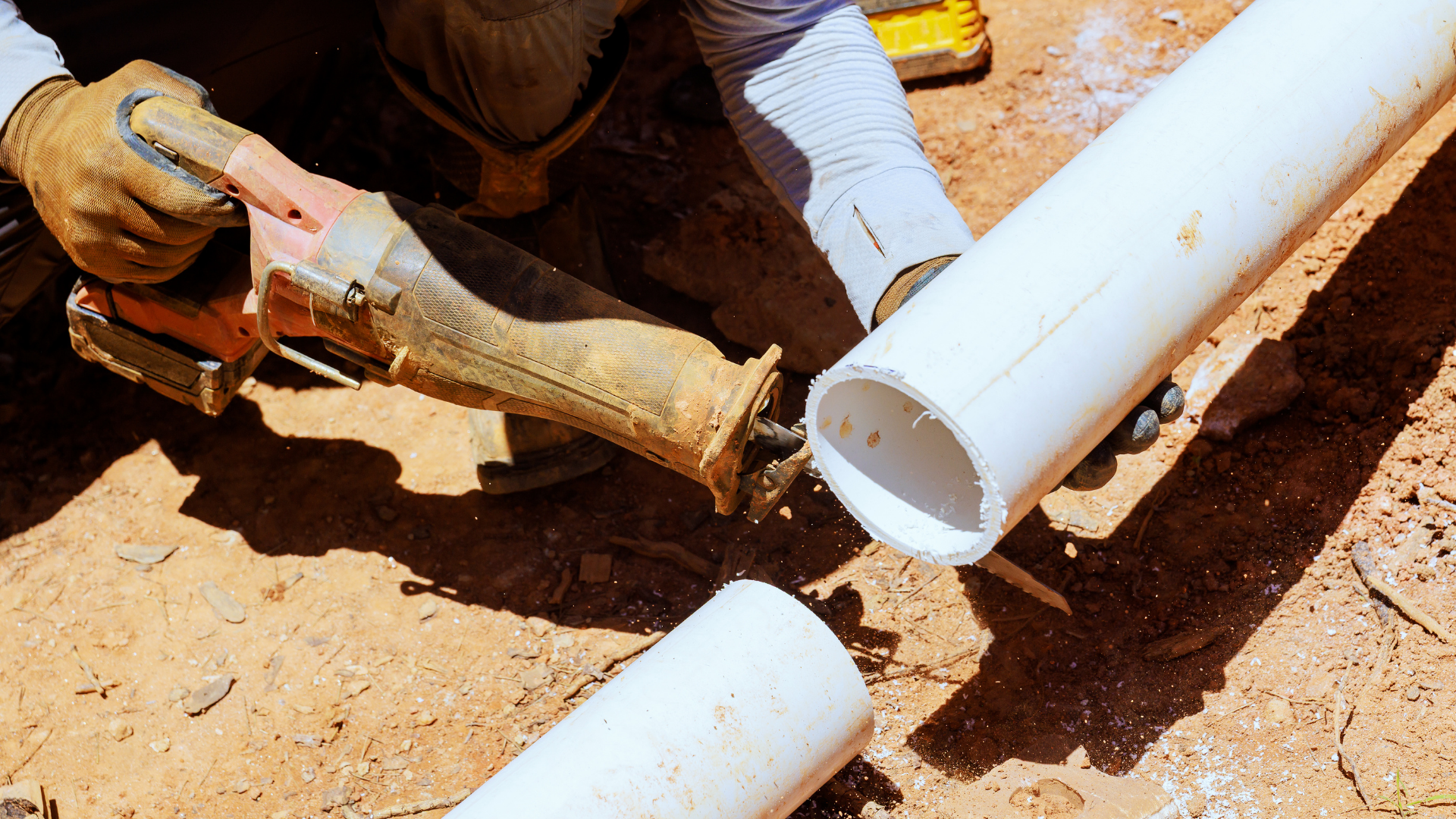
Burst pipe repair costs $150 to $250 per linear foot to fix, with a typical job costing $400 to $1,500, plus an additional $1,000 to $2,000 for water damage cleanup. Those figures represent a pipe failure that is caught quickly and addressed by an emergency plumber in Vancouver WA before the water reaches structural materials in volume. Total cleanup costs for burst pipe water damage can reach $5,000 to $70,000 or more depending on the extent of flooding.
What determines how severe a burst pipe situation becomes:
- Time from failure to shutoff: Every minute between pipe failure and main water shutoff is additional water volume entering the structure. The main water shutoff location should be known to every adult in the household before a pipe failure occurs.
- Location of the failure: A burst pipe in an accessible location with waterproof flooring is a contained situation. A burst pipe inside a wall cavity, under a slab, or in an attic space allows water to reach structural materials, insulation, and finished surfaces before the source is located.
- Pre-existing vulnerabilities: Homes in Clark County, Battle Ground, and Woodland with older galvanized supply lines, with supply lines running through uninsulated exterior walls or unconditioned crawl spaces, or with water hammer conditions that have been present for years are at higher risk of burst pipe events. These are conditions that a plumbing assessment can identify and address before a failure occurs.
What to do when a pipe bursts: Locate and close the main water shutoff immediately. If the shutoff location is unknown, contact an emergency plumber near you before attempting to locate it on your own in a flooding situation. Open the lowest faucet in the home to drain the pressure from the supply lines and reduce the volume of water continuing to flow from the failure point. Document the damage with photos before any cleanup begins for insurance purposes. Contact Service Source Plumbing for same day emergency plumbing service throughout Vancouver WA and Clark County.
The Pattern Behind All Six Problems
Every plumbing problem above follows the same pattern: it starts small, it costs less to fix when it is small, and it costs more with every week that passes without attention. The homeowners who call Service Source Plumbing for the least expensive repairs are not lucky. They are the ones who called when the problem was still in the repair window rather than after it crossed into emergency territory.
Service Source Plumbing provides plumbing repair, drain cleaning, water heater service, pipe repair, and 24 hour emergency plumbing services throughout Vancouver WA, Clark County, Battle Ground, Woodland, and the surrounding communities. For any of the six problems described in this guide, same day service is available for situations that cannot wait for a scheduled appointment.
why choose
service source plumbing?
Get in Touch Today
Homeowners and businesses in Battle Ground, Duluth, Hockinson, Vancouver, Orchards, and Walnut Grove rely on us for our:
- 24/7 emergency services – We’re always ready to assist with urgent plumbing issues.
- Experienced professionals – Our team is trained in advanced drain cleaning techniques.
- State-of-the-art equipment – We use the latest tools to ensure safe and effective unclogging.
- Commitment to customer satisfaction – We deliver reliable, long-term plumbing solutions.
- Preventative inspections – We don’t just fix the issue; we help you prevent future problems.
Recent Posts