Preventing Summer Clogs in Yacolt WA
Summer in Yacolt brings longer days, more meals at home, more guests, more backyard barbecues, and more food moving through your kitchen sink than at any other time of year. It also brings one of the most predictable spikes in plumbing service calls that Service Source Plumbing sees across Clark County: clogged drains and jammed garbage disposals, most of them caused by the same handful of habits that homeowners repeat every summer without realizing what is accumulating inside their pipes.
Preventing summer clogs in Yacolt WA is not complicated. It comes down to understanding what actually causes blockages, what your garbage disposal can and cannot handle, and which warning signs mean the problem is still minor versus which ones mean it has already moved past the reach of a plunger. This guide covers all of it.
The new season is a great reason to make and keep resolutions. Whether it’s eating right or cleaning out the garage, here are some tips for making and keeping resolutions.
Lists are great ways to stay on track. Write down some big things you want to accomplish and some smaller things, too.
Check the list regularly
Don’t forget to check in and see how you’re doing. Just because you don’t achieve the big goals right away doesn’t mean you’re not making progress.
Reward yourself
When you succeed in achieving a goal, be it a big one or a small one, make sure to pat yourself on the back.
Think positively
Positive thinking is a major factor in success. So instead of mulling over things that didn’t go quite right, remind yourself of things that did.

Why Summer Is the Peak Season for Drain Clogs
The connection between summer activity and drain clogs is direct. Kitchens that handle a regular weeknight dinner load are operating at a different capacity than kitchens processing holiday weekend meals, barbecue prep, and summer produce in volume.
More cooking means more fats, oils, and grease entering the drain system. More food prep means more scraps going through the garbage disposal. More guests mean more use of every fixture in the house over shorter windows of time. Each of these individually is manageable. Combined, they load the drain system at a rate that reveals whatever buildup has been accumulating since winter.
Summer heat adds another factor. Grease that gets poured down the drain solidifies against the cooler interior walls of the pipe as soon as it moves past the first few inches below the drain opening. According to plumbing industry sources, this cooling and solidification process begins within inches of the drain opening, where the pipe temperature is significantly lower than the liquid coming in. In warmer weather, that grease layer becomes more adhesive, trapping food particles more readily and accelerating the buildup that leads to a blockage.
The result is that summer is when drain systems that have been slowly accumulating grease and debris since fall finally reach the threshold where flow slows or stops entirely.
The Garbage Disposal: What It Can Handle and What It Cannot
The garbage disposal is the most misunderstood appliance in the kitchen when it comes to drain health. It grinds food waste, which homeowners naturally interpret as meaning it can handle any food. It cannot. The distinction between what a disposal handles well and what damages or clogs it is worth understanding clearly, because the mistakes that cause summer clogs are almost always the same ones.
What causes garbage disposal clogs and damage:
Fats, oils, and grease are the single most damaging category. Pouring cooking grease, bacon drippings, or pan drippings down the disposal may seem fine in the moment because they flow easily when warm. But as they cool inside the drain line, they solidify against the pipe walls, trapping other food waste and narrowing the drain passageway with every cooking session. No amount of running hot water prevents this. Hot water moves the grease slightly further down the pipe before it solidifies, which often makes the resulting blockage harder to reach and clear.
Fibrous vegetables create a different problem. Celery, corn husks, asparagus, artichoke leaves, and similar stringy produce do not grind cleanly. The fibers wrap around the disposal's impeller blades, tangling and jamming them rather than being cut. Summer produce in particular, with corn season running through Yacolt's warmer months, makes this a seasonally relevant issue for Clark County households.
Starchy foods expand and paste. Potato peels, pasta, rice, and similar starchy items form a thick, paste-like consistency when they mix with water inside the drain. That paste coats the interior of the drain line and sets up a surface that other debris sticks to. Potato peels are especially problematic because they move through the disposal quickly but swell significantly once they enter the wet pipe environment.
Eggshells and coffee grounds are commonly believed to be harmless or even beneficial to disposals. This is a myth. Eggshells create fine granular particles that combine with grease to form a gritty, adhesive paste inside the drain line. Coffee grounds accumulate in the trap and lower drain segments, building up over time into a dense, slow-draining mass.
Bones and fruit pits are not designed for residential disposals. Dense, hard items like cherry pits, peach stones, or chicken bones can crack disposal components or jam the impeller, requiring professional service to clear.
What your disposal actually needs to function well:
Always run cold water before, during, and for at least 30 seconds after using the disposal. Cold water keeps fats solid while they pass through the grinding chamber, allowing them to be expelled as solid particles rather than liquid grease that coats the drain line. Hot water does the opposite: it melts fat into liquid form that flows into the pipe and then solidifies downstream.
Feed food waste gradually rather than in large batches. The disposal motor is designed for continuous light feeding, not for processing a plate full of scraps in one push. Overloading it overheats the motor and creates conditions where food bypasses the grinding mechanism and enters the drain partially intact.
The FOG Problem: Why Grease Is the Root Cause of Most Kitchen Clogs
FOG stands for fats, oils, and grease, the category of substances that plumbing professionals consistently identify as the leading cause of residential kitchen drain blockages. Understanding how FOG behaves inside a drain line explains why so many homeowners are surprised by a clog that seems to appear suddenly after months of apparent normalcy.
Grease buildup is cumulative. No single meal creates a blockage. What creates a blockage is the same habit repeated across dozens or hundreds of cooking sessions: a pan rinsed without wiping first, a small amount of cooking oil poured down the drain, a greasy plate run under the tap before loading the dishwasher. Each deposit is thin. Each one bonds to the layer before it. Over months, the interior diameter of the drain pipe narrows gradually and imperceptibly until one summer weekend of heavier-than-usual cooking reaches the threshold and the drain stops moving.
The practical prevention is straightforward. Allow cooking grease and pan drippings to cool and solidify, then scrape them into the trash. Wipe greasy pans with a paper towel before rinsing. Never pour cooking oil, bacon drippings, butter, or meat fat down the drain or disposal regardless of water temperature.
For existing buildup, a monthly flush with baking soda followed by vinegar and then hot tap water (not boiling water, which can soften PVC drain pipes) can help maintain flow in mildly affected lines. This approach works as light maintenance but will not clear a drain line where significant grease buildup has already formed. That requires professional drain cleaning.
Bathroom Drains: The Summer Factor Most Homeowners Overlook
Kitchen drains get most of the attention, but bathroom drains contribute to summer clog calls in Clark County in a specific and predictable way.
More guests in the house means more hair, more soap residue, and more product going down bathroom drains over shorter time periods than the system usually processes. Hair and soap scum are the primary culprits in bathroom drain clogs. Hair forms a mesh that catches other debris, and soap scum binds the mesh together into a blockage that restricts flow gradually until the drain slows noticeably.
The practical prevention here is a drain strainer in every shower and tub. A simple mesh strainer catches hair before it enters the drain and takes about ten seconds to clean after each use. This single step eliminates the majority of bathroom drain clog risk and costs almost nothing compared to a service call.
For bathroom sinks, toothpaste residue, hair, and hand soap accumulate in the P-trap and lower drain segment over time. Removing and cleaning the P-trap annually, or at the first sign of slow drainage, keeps this from developing into a full blockage.
Warning Signs That the Clog Has Already Started
Catching a drain problem in its early stage means the solution is simpler and less expensive. These are the signs that something is building up before the drain stops entirely:
Slow drainage is the first and most reliable indicator. A kitchen sink that used to drain in seconds and now takes a minute or two to clear is showing the early stages of buildup in the drain line or trap.
Gurgling sounds from the drain after water clears indicate air displacement in the line, which happens when partial blockages trap air pockets as water moves past them.
Unpleasant odors from the drain, particularly in warm weather, indicate decomposing food waste or grease deposits that have built up to the point where bacteria are actively breaking them down.
Water backing up into the sink, even briefly, when the disposal runs indicates that the drain line downstream from the disposal is partially blocked and cannot handle the volume of water being pushed through it.
Any of these signs warrants attention before they progress. A slow drain that gets ignored through July and August rarely stays slow. It becomes a stopped drain, typically at the worst possible moment.
When to Call Service Source Plumbing
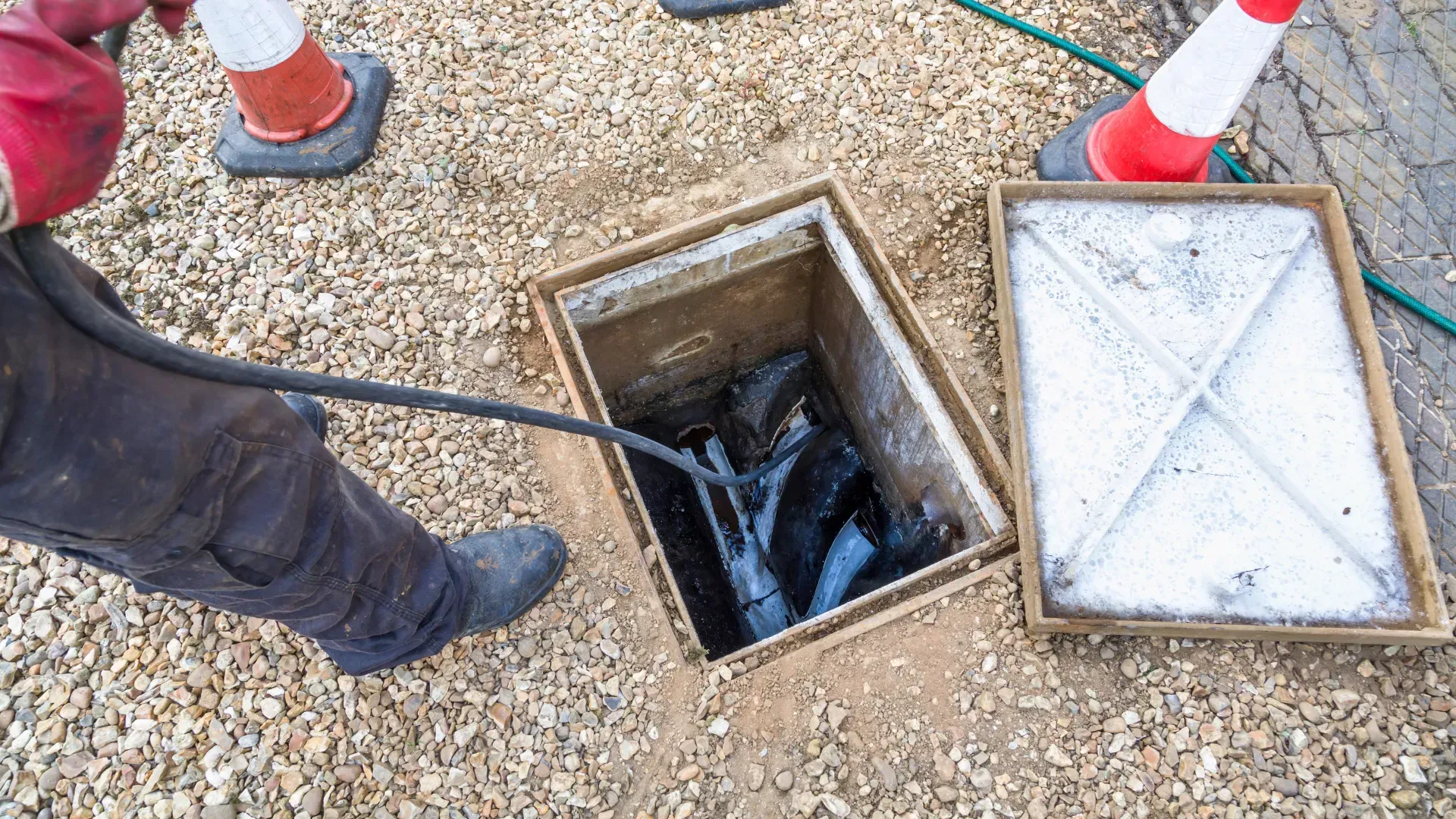
Some clogs respond to a plunger or a drain snake applied at the fixture. Others are located further down the drain line, in the P-trap, the branch drain, or the main line, where no household tool can effectively reach them.
Call a plumber rather than continuing DIY attempts when the drain is completely stopped and the plunger has not cleared it after a reasonable effort. When multiple fixtures are slow or stopped at the same time, which indicates a blockage in a shared drain line rather than an individual fixture. When a foul odor persists after clearing the visible trap area. When the garbage disposal hums but does not spin, which indicates a jammed impeller that requires professional service to clear safely.
Service Source Plumbing provides drain cleaning, garbage disposal service, and clog removal throughout Yacolt, Clark County, and surrounding communities. Same-day availability for blocked drains that cannot wait.
why choose
service source plumbing?
Get in Touch Today
Homeowners and businesses in Battle Ground, Duluth, Hockinson, Vancouver, Orchards, and Walnut Grove rely on us for our:
- 24/7 emergency services – We’re always ready to assist with urgent plumbing issues.
- Experienced professionals – Our team is trained in advanced drain cleaning techniques.
- State-of-the-art equipment – We use the latest tools to ensure safe and effective unclogging.
- Commitment to customer satisfaction – We deliver reliable, long-term plumbing solutions.
- Preventative inspections – We don’t just fix the issue; we help you prevent future problems.