Outdoor Plumbing Maintenance in Yacolt WA: Hose Bibs, Irrigation, and What to Check Before Summer
Every spring in Yacolt and Clark County, the same discovery happens thousands of times across rural properties — a homeowner unrolls the garden hose, turns on the outdoor water for the first time since fall, and finds out what winter did to their outdoor plumbing. A hose bib that drained slowly all winter with no visible sign of damage. A cracked irrigation fitting that was filled with ice for four months. A well pump house component that overheated silently over the winter. These are the outdoor plumbing failures that reveal themselves in June — not because anything new went wrong, but because turning the water back on applies pressure to damage that's been sitting frozen and invisible since November. Service Source Plumbing handles outdoor plumbing inspection, hose bib repair, and irrigation startup throughout Yacolt and Clark County. This guide covers exactly what to check before summer outdoor water use begins — and what the findings typically mean for your system.
The new season is a great reason to make and keep resolutions. Whether it’s eating right or cleaning out the garage, here are some tips for making and keeping resolutions.
Lists are great ways to stay on track. Write down some big things you want to accomplish and some smaller things, too.
Check the list regularly
Don’t forget to check in and see how you’re doing. Just because you don’t achieve the big goals right away doesn’t mean you’re not making progress.
Reward yourself
When you succeed in achieving a goal, be it a big one or a small one, make sure to pat yourself on the back.
Think positively
Positive thinking is a major factor in success. So instead of mulling over things that didn’t go quite right, remind yourself of things that did.
Why Summer Is When Clark County Homeowners Discover Winter's Plumbing Damage
The pattern repeats predictably across Clark County every June — and understanding why it happens explains how to prevent it:
The trapped water problem Frost-free hose bibs are designed to drain themselves after use — the shutoff point is located 6 to 12 inches inside the wall where temperatures stay above freezing, allowing residual water to drain out the back of the fixture after the handle is turned off. This design works correctly only when the garden hose is disconnected.
When a garden hose is left attached over winter — which happens on more Clark County properties than most homeowners realize — it traps water in the fixture. The frost-free drainage mechanism can't function with a hose attached. Water sits in the hose bib and exposed supply line section through the freeze events that Yacolt's elevation and Cascade foothills location delivers.
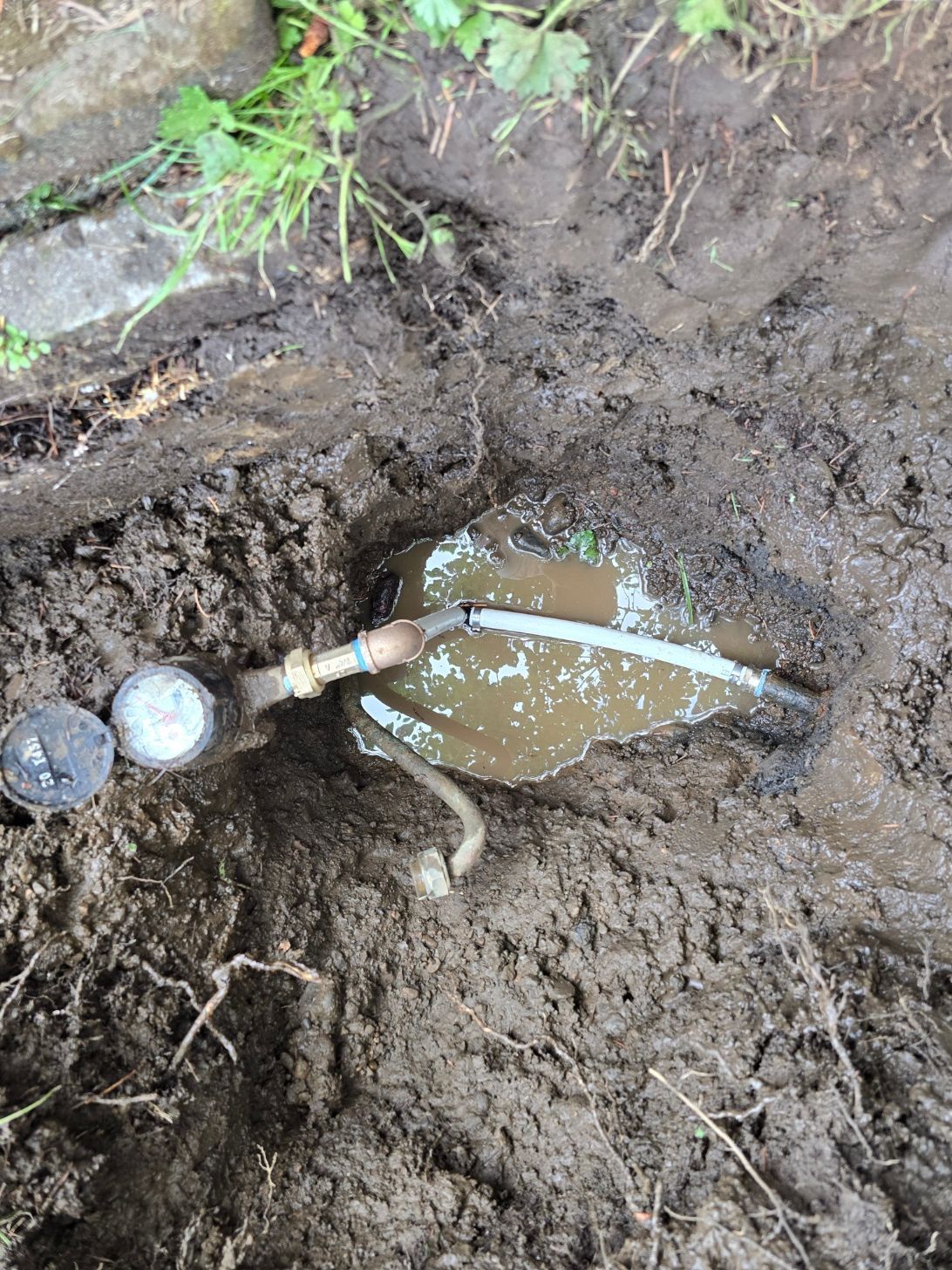
The hidden damage period When trapped water freezes, it expands — cracking the copper, brass, or PVC components inside the hose bib. Because the main supply to the hose bib is typically off during winter and the crack is sealed with ice, nothing leaks visibly. The damage is invisible for months.
The June reveal When the homeowner turns the main outdoor supply valve on in June and the ice melts, water pressure hits the cracked components for the first time. The result ranges from a visible spray at the hose bib body to water flooding inside the wall cavity — where it saturates framing before any interior stain makes the problem visible.
The prevention that eliminates this entirely:
- Disconnect all garden hoses before the first freeze event — every fall, every year
- Turn off the interior shutoff valve to each hose bib
- Open the exterior spigot handle and let it drain fully before closing
- Cover exterior spigot with an insulated cover as a backup measure
For well system properties — confirm that all above-ground supply components are protected before Clark County's first hard freeze. For more on winter plumbing protection,
read our frozen pipes guide →
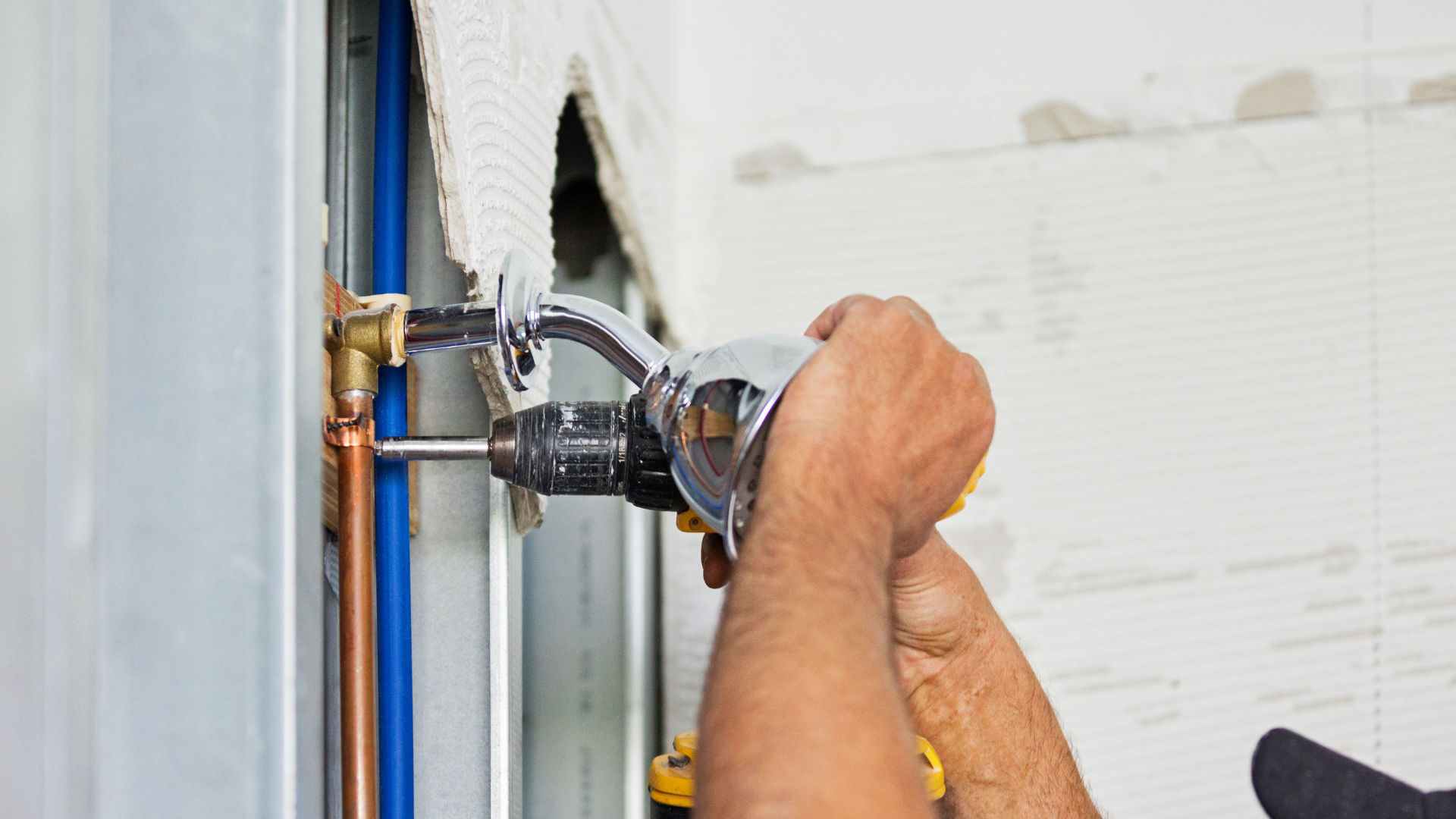
The Hose Bib Inspection — What to Check Before First Use
Before connecting a garden hose or turning on any outdoor water supply for the season — run through this inspection:
Signs of freeze damage:
- Cracked body — visible splits or bulging in the metal housing of the spigot, particularly at the section that protrudes from the exterior wall
- Interior wall dampness — after turning the water on, check the interior wall or crawl space adjacent to the hose bib for hissing, moisture, or soft drywall. A pipe that cracked inside the wall cavity has been running water into the framing since the moment pressure was restored.
- Weep hole activity — frost-free hose bibs have a small weep hole that drains residual water. Continuous dripping from the weep hole after the handle is fully closed indicates internal damage.
Proper valve operation: Turn the handle through its full range — from fully closed to fully open — confirming it moves smoothly without grinding or catching. Turn the spigot fully on and place your thumb over the end to check pressure. Weak flow with normal indoor pressure indicates a restriction or leak between the interior shutoff and the exterior spigot.
Common failure modes to check:
- Packing nut leak — water dripping from behind the handle when the faucet is open indicates a loose or worn packing nut. The packing nut is the fitting immediately behind the handle — tighten it a quarter turn with an adjustable wrench as a first step.
- Vacuum breaker malfunction — water sputtering or spraying from the small anti-siphon cap on top of the spigot indicates internal mineral buildup or broken seals in the backflow prevention component.
DIY vs. Service Source:
| Situation | DIY or Call Service Source? |
|---|---|
| Loose packing nut — drip behind handle | DIY — quarter-turn tightening with adjustable wrench |
| Worn internal washer — drip from spout when closed | DIY — washer or O-ring replacement after shutting off main supply |
| Vacuum breaker cap spraying | DIY — unscrew and replace the anti-siphon cap |
| Cracked hose bib body | Service Source — replacement requires work behind the wall |
| Water sound or staining inside the wall | Service Source — shut off main supply immediately and call |
| Stripped or seized components | Service Source — risk of damaging the entire fixture body |
Irrigation System Startup — The Clark County Checklist
Clark County's freeze events crack irrigation components the same way they crack hose bibs — and the first startup of the season is when the damage reveals itself. A systematic startup sequence prevents the pipe ruptures and flooding that come from pressurizing a damaged system all at once:
Step 1 — Pre-startup property walk Before touching any valve, walk the entire irrigation system area:
- Check for cracked pipes, split fittings, and damaged or missing sprinkler heads — any visible surface damage indicates underground components may have been affected by the same freeze event
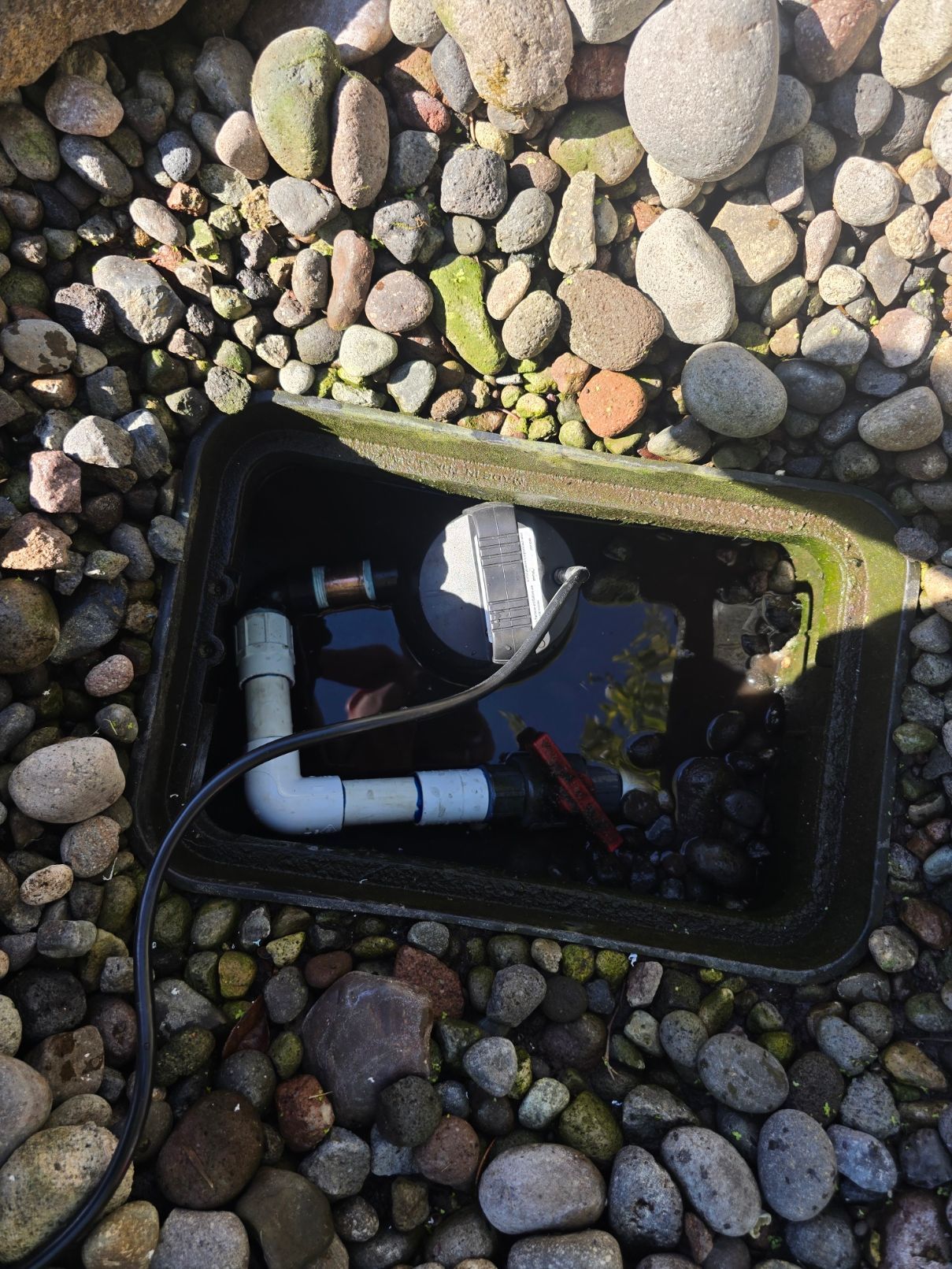
- Clear debris from all valve boxes — dirt and vegetation that accumulated over winter can block valve operation
- Mark any soggy or abnormally green areas of lawn — these indicate underground leaks that were present before winter and will be visible immediately on pressurization
Step 2 — Backflow preventer and main valve preparation Clark County PUD and Washington state plumbing code require backflow prevention on residential irrigation systems. Before opening the main supply:
- Confirm all manual drain valves and zone valves are closed
- If your system has a Pressure Vacuum Breaker (PVB) — confirm the test cocks are closed and the inlet and outlet ball valves are fully shut
- Clark County requires annual backflow assembly testing by a certified technician — if this hasn't been performed in the past 12 months, schedule it before the system goes into full seasonal use
Step 3 — Gradual system charging Never open the main irrigation shutoff fully and immediately — the pressure surge through a system that may have cracks, split fittings, or debris in the lines can cause failures that wouldn't otherwise occur:
- Open the main shutoff approximately one quarter of the way
- Allow water to slowly fill and charge the main lines — listen for the system pressurizing
- Bleed trapped air by opening a single downstream zone valve until water flows steadily
- Once air is purged and flow is steady — open the main shutoff to fully open position gradually
Step 4 — Zone testing Cycle through each zone one at a time using the controller or manual bleed screws:
- Watch for pooling water at the surface — indicates an underground pipe break in that zone
- Watch for unusually low pressure in one zone compared to others — indicates a crack or partial blockage in that zone's supply line
- Confirm each sprinkler head pops up fully, stands upright, and delivers coverage in the intended direction — adjust heads that have shifted over winter
- Clean clogged nozzles — Clark County's hard well water scale accumulates in drip emitters and spray nozzles over the dormant season
Outdoor Shower and Utility Connections — Seasonal Activation Guide
For Yacolt and Clark County properties with outdoor utility sinks, garden connections, or secondary supply lines — the summer activation sequence follows the same logic as hose bib and irrigation startup:
Supply line activation: Open interior shutoff valves to outdoor lines slowly — listen for pressure surges and check the interior wall connection for drips before proceeding. Open all outdoor faucets fully before attaching any sprayers or fixtures — this bleeds trapped air and flushes any sediment or debris that accumulated in the line over winter. Allow water to run for several minutes and confirm pressure is consistent throughout.
Hose bib and faucet checks:
- Inspect all washers and gaskets at every hose connection — dry or cracked rubber causes immediate leaks under pressure and is a $2 repair before activation vs. a water damage repair after
- Check frost-free hydrant weep holes for continuous dripping after the handle is closed — indicates internal cracking from winter freeze
- Confirm anti-siphon valves at each hose bib are sealing correctly when water is turned off
Outdoor utility sinks:
- Inspect the P-trap beneath outdoor utility sinks — winter temperatures crack PVC and loosen slip-joint connections
- Run the sink for 2 to 3 minutes and check for leaks at the basin base, supply lines, and hose connection point
- Check drain lines for debris accumulation from winter
Garden hose inspection: Unroll every hose that was stored outdoors over winter before connecting it to anything. Check for soft spots, bulging, or visible cracks — a hose that failed internally will burst under pressure rather than holding. A cracked hose connected to an already-fragile hose bib compounds the damage.
Drainage and compliance: Confirm that catch basins, French drains, and dry wells serving outdoor utility areas are clear of winter debris before high-volume summer use begins. Washington state greywater disposal requirements apply to outdoor utility sink drainage — confirm your drainage system directs water appropriately and doesn't create standing water near the foundation.
Well System Outdoor Components — The Yacolt-Specific Check
Rural Yacolt properties on private wells have outdoor plumbing components that city water homes don't — and these components need both a post-winter assessment and a pre-summer preparation:
Pressure tank inspection: The pressure tank is the most important component to check before summer demand increases — a waterlogged tank causes rapid pump cycling that dramatically shortens pump motor lifespan.
- The knock test — tap the tank from top to bottom. The upper portion should sound hollow (air cushion), the lower portion should sound dull (water). A tank that sounds uniformly dull throughout is waterlogged and needs service.
- The Schrader valve test — briefly press the air valve on top of the tank. Water squirting out indicates a ruptured bladder — the tank requires replacement.
- Air pre-charge check — turn off power to the well pump, open a hose bib to relieve system pressure completely, then check tank air pressure with a standard tire gauge. Target pressure should be 2 PSI below the system's cut-in pressure — for a 40/60 PSI pressure switch, the tank should hold 38 PSI. Use an air compressor to correct if needed.
Above-ground riser pipe condition: The Clark County damp climate and Yacolt's freeze cycle creates specific corrosion and stress conditions for above-ground well components:
- Inspect all visible galvanized steel, copper, or PVC riser pipes from wellhead to pressure tank for rust, flaking, and stress cracks
- Check pitless adapters and threaded joints for condensation or seepage — these indicate seal failure that will worsen under summer water demand
- Inspect heat tape and pipe insulation condition — summer is the time to identify and replace compromised insulation before next winter's freeze season
Well house ventilation for summer: An unventilated well house in summer traps heat and humidity — causing pressure switches to malfunction and creating mold and electrical corrosion conditions:
- Verify all intake and exhaust vents are unblocked and screens are intact — rodent and insect exclusion is important as warm weather increases activity around well houses
- Confirm the well house has adequate passive or active ventilation — a thermostatically controlled exhaust fan for well houses with poor natural airflow prevents the heat buildup that damages electrical components
- Wipe down any condensation on pipes and components — persistent condensation indicates a ventilation problem that needs to be corrected before peak summer heat
The complete rural property outdoor plumbing checklist:
- Well casing extends at least 12 inches above grade — surface runoff must not be able to enter
- Well cap is securely fastened, watertight, and crack-free
- Ground slopes away from the wellhead in all directions
- Wellhead perimeter is clear of leaves, mulch, and debris
- No potential contaminants — fuel, pesticides, fertilizers — stored near the wellhead
Hard Water Scale on Outdoor Fixtures — What Clark County Homeowners See Every Summer
Clark County's groundwater mineral content — calcium and magnesium carbonate — deposits scale on outdoor fixtures at accelerated rates during summer because evaporation concentrates the minerals. The same hard water that affects indoor tankless water heaters and pipes affects outdoor fixtures in ways that become visible each summer:
What to look for:
- Hose bibs and faucets — chalky white or off-white crust at threading, handle bases, and around the spigot opening
- Irrigation heads — reduced spray radius, uneven coverage patterns, or white crystalline buildup visible around nozzles
- Outdoor sink aerators — reduced flow or splashing that indicates mineral particles are blocking the aerator screen
Cleaning methods:
- Removable components — unscrew aerators and irrigation nozzles and soak in undiluted white vinegar for 1 to 2 hours. Scrub with a soft brush and reinstall.
- Non-removable fixtures — soak a rag in white vinegar, wrap it around the scaled area, secure with a plastic bag, and leave for 1 to 2 hours before scrubbing
- Heavy buildup — commercial scale removers like CLR work for deposits that vinegar alone can't clear
Summer maintenance: Wipe outdoor fixtures down weekly with a 50/50 water and vinegar solution — prevents minerals from hardening in the summer heat before they become significant buildup. A water softener upstream eliminates the source of outdoor scale formation the same way it protects indoor tankless water heaters. For more on water softener options for Clark County well water,
read our water softener installation guide →
When Outdoor Plumbing Issues Indicate a Larger Problem
Some outdoor plumbing findings during summer startup are isolated to the outdoor component. Others are the visible symptom of a larger system issue that needs indoor assessment:
Low outdoor pressure with normal indoor pressure Weak flow at hose bibs or sprinklers while indoor pressure is normal indicates a problem between the interior shutoff and the outdoor fixture — typically a cracked supply line, a partially closed shutoff, or a backflow preventer restriction. Weak flow throughout the entire outdoor system when indoor pressure is also reduced indicates a main supply line issue.
Discolored or foul-smelling outdoor water Water that appears cloudy, discolored, or has an odor at outdoor fixtures indicates a cross-connection, backflow event, or contamination issue that needs immediate professional assessment. Do not use the water until Service Source has diagnosed the source.
Consistently soggy areas over irrigation line paths Green, abnormally lush areas of lawn or soft soil over underground irrigation lines indicates an ongoing underground leak. Left unaddressed, underground irrigation leaks saturate the soil around the foundation — contributing to the soil movement that damages indoor drain and sewer lines over time.
The outdoor-to-indoor connection: Outdoor plumbing issues that involve the main supply line, the pressure system on a well property, or underground irrigation infrastructure are connected to the same system that serves every indoor fixture. A summer outdoor plumbing assessment that identifies these conditions protects the indoor plumbing system from the secondary damage that develops when outdoor issues are treated as isolated problems.
If any of these conditions appear during summer startup — shut off the outdoor supply valve, note the symptoms, and contact Service Source for a full outdoor and indoor system assessment. For a comprehensive look at what a whole-home plumbing inspection covers,
read our whole home inspection guide →
Service Source Plumbing: Outdoor Plumbing Inspection and Repair Throughout Yacolt and Clark County
The Clark County homeowners who don't have a June outdoor plumbing surprise are the ones who either winterized correctly in fall or had their system assessed before summer use began. Service Source Plumbing provides outdoor plumbing inspection, hose bib repair and replacement, irrigation startup service, and well system assessment throughout Yacolt and Clark County — with the rural property expertise and hard water knowledge that this specific market requires.
What every Service Source outdoor plumbing service includes:
| Service Component | What It Covers |
|---|---|
| Hose bib inspection and testing | All exterior faucets assessed for freeze damage, valve operation, and failure mode identification |
| Hose bib repair or replacement | Cracked fixtures replaced, packing nut adjustment, vacuum breaker service |
| Irrigation startup service | Gradual pressurization, zone testing, head adjustment, backflow preventer confirmation |
| Well system outdoor assessment | Pressure tank testing, riser pipe inspection, well house ventilation check |
| Hard water scale assessment | Outdoor fixture scale identification with water softener recommendation where warranted |
| Outdoor-to-indoor connection check | Confirming outdoor symptoms aren't indicating larger main line or supply system issues |
| Written findings report | What was found, what was repaired, what to monitor before next winter |
| Winterization guidance — at summer service | What to do differently this fall to prevent next June's discoveries |
Contact Service Source Plumbing today to schedule your Yacolt or Clark County outdoor plumbing summer startup assessment.
Schedule Your Outdoor Plumbing Assessment →
Read: Frozen Pipes in Yacolt WA — Prevention and Emergency Response →
Read: Water Softener Installation in Yacolt WA →
why choose
service source plumbing?
Get in Touch Today
Homeowners and businesses in Battle Ground, Duluth, Hockinson, Vancouver, Orchards, and Walnut Grove rely on us for our:
- 24/7 emergency services – We’re always ready to assist with urgent plumbing issues.
- Experienced professionals – Our team is trained in advanced drain cleaning techniques.
- State-of-the-art equipment – We use the latest tools to ensure safe and effective unclogging.
- Commitment to customer satisfaction – We deliver reliable, long-term plumbing solutions.
- Preventative inspections – We don’t just fix the issue; we help you prevent future problems.
Recent Posts