Frozen Pipes in Yacolt WA: How to Prevent Them and What to Do When They Burst
Most Pacific Northwest homeowners assume frozen pipes are a problem for colder climates. Yacolt and North Clark County homeowners know better. The combination of Cascade foothills geography, rural property exposure, older construction, and well systems with above-ground components creates frozen pipe vulnerability that hits this specific community harder than most of western Washington. When a freeze event arrives — and in Yacolt it can arrive fast, stay for days, and drop temperatures significantly below what the Portland-Vancouver metro experiences — unprepared properties pay for it. Service Source Plumbing handles frozen and burst pipe emergencies throughout Yacolt and Clark County. This guide covers both sides of the problem: how to prevent frozen pipes before a freeze event and exactly what to do if one bursts.
The new season is a great reason to make and keep resolutions. Whether it’s eating right or cleaning out the garage, here are some tips for making and keeping resolutions.
Lists are great ways to stay on track. Write down some big things you want to accomplish and some smaller things, too.
Check the list regularly
Don’t forget to check in and see how you’re doing. Just because you don’t achieve the big goals right away doesn’t mean you’re not making progress.
Reward yourself
When you succeed in achieving a goal, be it a big one or a small one, make sure to pat yourself on the back.
Think positively
Positive thinking is a major factor in success. So instead of mulling over things that didn’t go quite right, remind yourself of things that did.
Why Yacolt and Clark County Are More Vulnerable to Frozen Pipes Than Most PNW Communities
The Portland-Vancouver metro area sits at low elevation with relatively mild winters. Yacolt is not that climate:
Cascade foothills geography and Gorge wind exposure North Clark County sits near the Cascade foothills where cold air drainage from the Columbia River Gorge creates temperature drops that can be significantly more severe than what Vancouver or Portland experiences during the same event. A freeze event that produces 28°F in downtown Vancouver may produce sustained temperatures of 15 to 20°F in Yacolt — held for multiple days rather than overnight. That sustained cold is what allows frost to penetrate deeper into the ground and allows pipe temperatures in uninsulated spaces to drop far enough to freeze and burst.
Older construction with inadequate pipe protection Yacolt's housing stock includes a significant number of older homes, modular buildings, and outbuildings where pipes run along exterior walls, through uninsulated crawl spaces, or across unheated garage and utility spaces. These configurations were often adequate for mild western Washington winters but become freeze vulnerabilities when multi-day hard freeze events arrive.
Well system exposure Homes on private wells in rural Yacolt have above-ground components — pressure tanks, pressure switches, and exposed riser pipes — that city water homes don't. A frozen pressure switch stops water flow to the entire home. A frozen riser pipe from well head to house cracks under ice expansion. These are failure points that municipal water customers don't face and that require specific winterization attention.
Sustained freeze duration Single-night freezes rarely cause pipe damage — the thermal mass of a structure keeps pipe temperatures above freezing even when outdoor temperatures drop temporarily. Multi-day hard freezes are the events that produce burst pipes in Clark County — the sustained cold eventually overcomes the thermal protection that a building's structure provides, reaching pipes in crawl spaces, exterior walls, and unheated outbuildings.
The Pipes Most Likely to Freeze on Your Yacolt Property
Not all pipes are equally at risk. Here's the location-specific guide for Clark County properties:
Well pump houses and above-ground well components — highest risk The pressure tank, pressure switch, and riser pipe connecting the well to the home are typically housed in structures that aren't heated by the home's HVAC system. During a sustained freeze event, temperatures inside an uninsulated pump house follow outdoor temperatures. A frozen pressure switch produces immediate loss of water pressure throughout the home. A frozen riser pipe that cracks produces a complete loss of water supply and potential flooding when it thaws.
Prevention: Insulate the pump house structure itself — seal gaps around doors and windows. Install thermostatically controlled heat cable on exposed above-ground pipe runs and pressure tank. On extreme freeze nights, a thermostatically controlled space heater rated for utility use placed inside the pump house provides backup thermal protection.
Crawl space pipe runs Cold air settles into crawl spaces rapidly during freeze events. Pipes running through uninsulated crawl spaces — particularly supply lines near the perimeter of the foundation — lose heat to the surrounding cold air progressively over the duration of a freeze event.
Prevention: Foam pipe insulation sleeve on all exposed crawl space pipe runs. Seal crawl space vents during hard freeze events to prevent cold air circulation. Heat tape on the most exposed sections.
Pipes in exterior walls Supply lines routed through exterior wall cavities are surrounded by wall insulation on one side and outdoor temperatures on the other. In older construction with inadequate wall insulation, these pipes can reach freezing temperatures during sustained cold events.
Prevention: Open cabinet doors under kitchen and bathroom sinks located on exterior walls — allows warm household air to circulate around the pipe space. Allow a slow drip from those faucets during the coldest nights.
Garage and unheated utility spaces Washing machine supply lines, utility sink connections, and hose bib supply lines running through unheated garages are among the most common freeze failure points in Clark County.
Prevention: Keep the garage door closed during freeze events. Disconnect and drain any washing machine supply lines in unheated garages before sustained freeze periods.
Outdoor irrigation systems and hose bibs Any water left in outdoor irrigation lines or attached garden hoses will freeze and can crack both the line and the interior hose bib valve.
Prevention: Disconnect and drain all garden hoses before the first freeze. Shut off the main irrigation supply valve inside the house and drain residual water from the lines. Use compressed air to blow out underground irrigation systems before freeze season.
How to Prevent Frozen Pipes Before a Clark County Freeze Event
The prevention window is the week before a freeze event — not the night it arrives. Here's the complete checklist by property type:
All Clark County properties:
- Wrap exposed pipes in unheated spaces with foam insulation sleeve — crawl space, garage, utility spaces
- Apply thermostatically controlled heat tape to highest-risk sections — well pump house, exterior wall pipes, crawl space perimeter runs
- Open cabinet doors under exterior wall sinks — kitchen, bathroom, laundry
- Disconnect and store all garden hoses — leaving a hose attached traps water in the hose bib and causes interior valve failure
- Shut off and drain outdoor irrigation system
- Set thermostat no lower than 55°F if leaving the property — even for an extended period
- Know the location of your main water shutoff valve before the freeze event — not during it
Properties with private wells:
- Inspect pump house for gaps, cracks, and draft points — seal all penetrations
- Confirm heat tape on above-ground well components is functional — test before freeze season, not during
- Install or confirm thermostatically controlled heat source in pump house
- Insulate pressure tank and exposed riser pipe with pipe insulation and heat tape combination
- Know the location of the well disconnect switch in case of emergency
Older homes and mobile/manufactured homes:
- Check skirting around the base for gaps that allow cold air into the crawl space — repair before freeze season
- Confirm heat tape on underbelly water lines is functioning — this is the highest failure point on manufactured homes in Clark County
- During extreme cold below 15°F — run multiple faucets at a slow steady stream rather than a single drip to maintain continuous water movement through exposed underbelly lines
During the freeze event:
- Drip technique — allow a slow trickle from faucets connected to exterior wall pipes during the coldest hours
- Leave interior doors open throughout the house — allows heat distribution to reach utility spaces and bathrooms on exterior corners
- Check the pump house temperature if you have a well — confirm the heat source is functioning
What to Do Right Now If Your Pipes Have Frozen
If you've lost water pressure or flow — here's the immediate action sequence:
Step 1 — Shut off the main water supply Locate your main water shutoff valve and turn it off before attempting any thawing. If a pipe has frozen and cracked without you knowing it, thawing will release water into the space. The main shutoff protects you from flooding during the thawing process.
In most Yacolt homes the main shutoff is located where the supply line enters the house — utility room, basement, or crawl space access. Well system homes also have a disconnect at the pressure tank. Know both locations before a freeze event occurs.
Step 2 — Open faucets connected to the frozen line Turn on both hot and cold handles at faucets connected to the suspected frozen section. This relieves pressure in the line and provides an exit path for water as ice melts. A faucet that begins dripping during thawing is a sign the process is working.
Step 3 — Locate the freeze point Inspect exposed pipes in unheated spaces — crawl space, pump house, garage, exterior wall cabinets. Signs of a freeze point: frost or ice on the pipe exterior, slight bulging or deformation of the pipe, or a section of pipe that feels significantly colder than the surrounding run.
Step 4 — Safe thawing methods for accessible pipes
- Hair dryer — the safest and most controlled method. Sweep warm air back and forth along the pipe starting closest to the open faucet and working back toward the freeze point.
- Warm wet towels — soak in hot water and wrap around the frozen section, replacing as they cool
- Portable electric space heater — positioned near the pipe section in the crawl space or utility area, kept safely away from flammable materials
- Electric heating pad — wrapped directly around the frozen section
What not to do — any of these can burst the pipe or start a fire:
🚫 Open flame — blowtorch, propane heater, lighter
🚫 Boiling water poured directly on the pipe — extreme temperature change cracks the pipe
🚫 High-heat heat guns — excessive concentrated heat
Step 5 — Call Service Source Plumbing immediately if:
- You cannot locate the freeze point
- The frozen section is inside a wall, ceiling, or under a slab
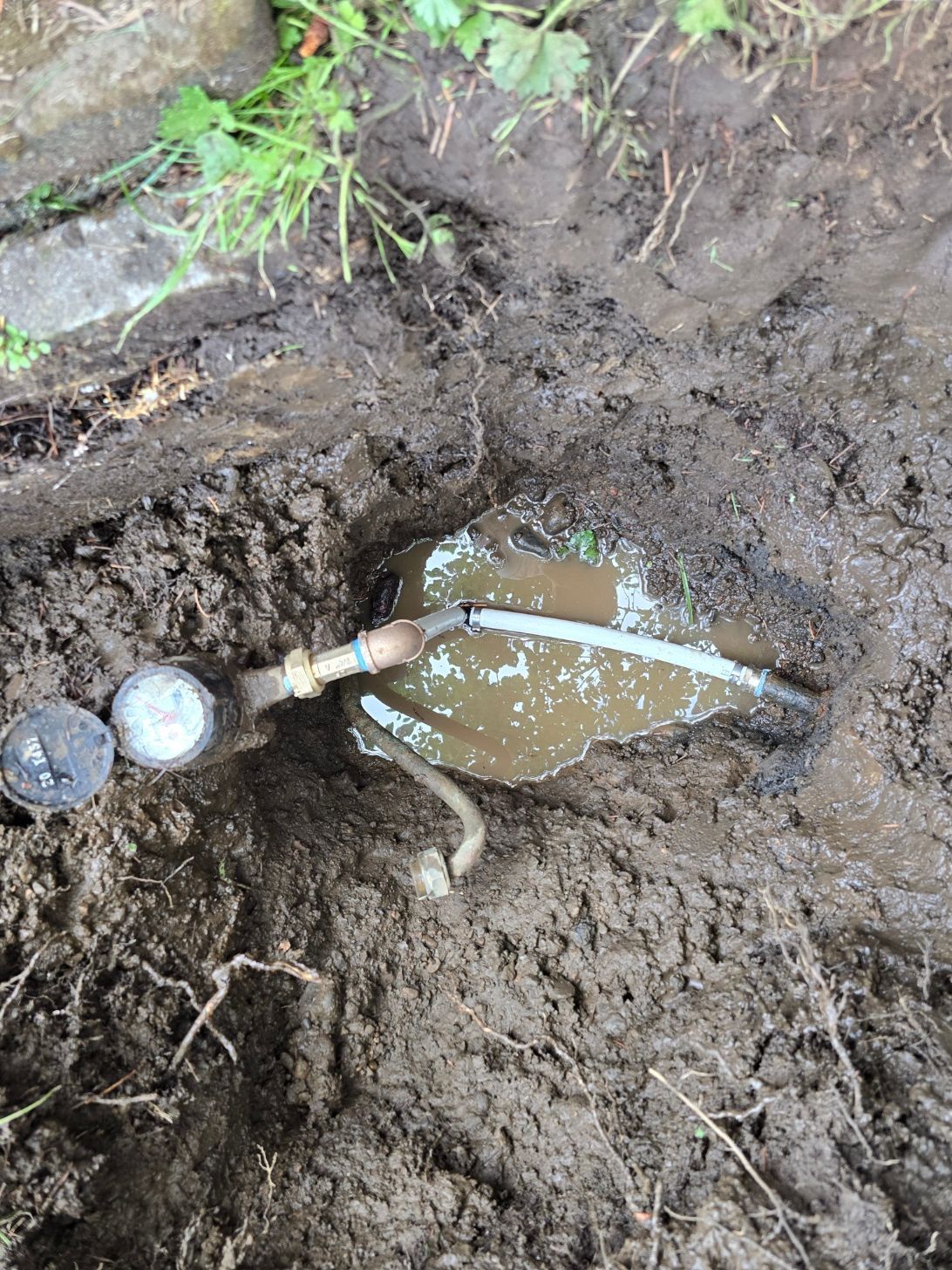
- You see active water or a visible crack in the pipe
- You have no water flow from any fixture in the house after thawing attempts
- The pipe appears deformed or severely bulging from ice expansion
What Happens When a Frozen Pipe Bursts — The First 10 Minutes
If a pipe has already burst — the first 10 minutes determine how much secondary damage occurs:
Minute 1 — Main shutoff, immediately Every second the water flows is more water in the structure. Get to the main shutoff valve and close it before anything else. In well system homes — also shut off the well pump disconnect at the pressure tank to prevent the pump from running dry.
After closing the main shutoff: open all faucets throughout the house — hot and cold — to drain remaining water from the lines and relieve pressure. This reduces the total water volume that can continue leaking from the burst location.
Minutes 2 through 5 — Electrical safety and damage documentation If water is pooling near electrical outlets, appliances, or your breaker panel — do not step in standing water until you've shut off the electrical circuits serving that area at the breaker panel. Water and active electrical circuits are a life-safety risk.
Once the area is electrically safe — begin documenting before any cleanup:
- Wide shots of the affected area showing flooding extent
- Close-up of the burst pipe location
- Photos of all damaged belongings, flooring, and walls
- Note the time the burst was discovered and the time the main shutoff was closed — your insurance adjuster will need this
Minutes 5 through 10 — Begin water mitigation
- Towels, mops, or a wet/dry vacuum to remove standing water before it soaks into subfloor and baseboards
- Move unaffected rugs, furniture, and valuables away from the wet area
- Open windows and set up fans if temperature allows — mold can begin establishing within 24 to 48 hours in wet conditions
- Keep all receipts for any emergency materials, temporary accommodations, or cleanup services — these are reimbursable under most homeowner's insurance policies
Temporary patch while waiting for Service Source: If the burst is minor and you need to wait for service, waterproof silicone repair tape or a pipe repair clamp can slow the leak temporarily. These are not permanent repairs — they're mitigation tools while professional repair is arranged.
Burst Pipe Repair vs. Pipe Replacement — What Service Source Assesses
Not every burst pipe is just a burst pipe. In Clark County's older housing stock, a freeze event sometimes reveals pipe system issues that warrant a broader look:
When targeted repair is the right call:
- The burst is isolated to a single accessible section of otherwise sound pipe
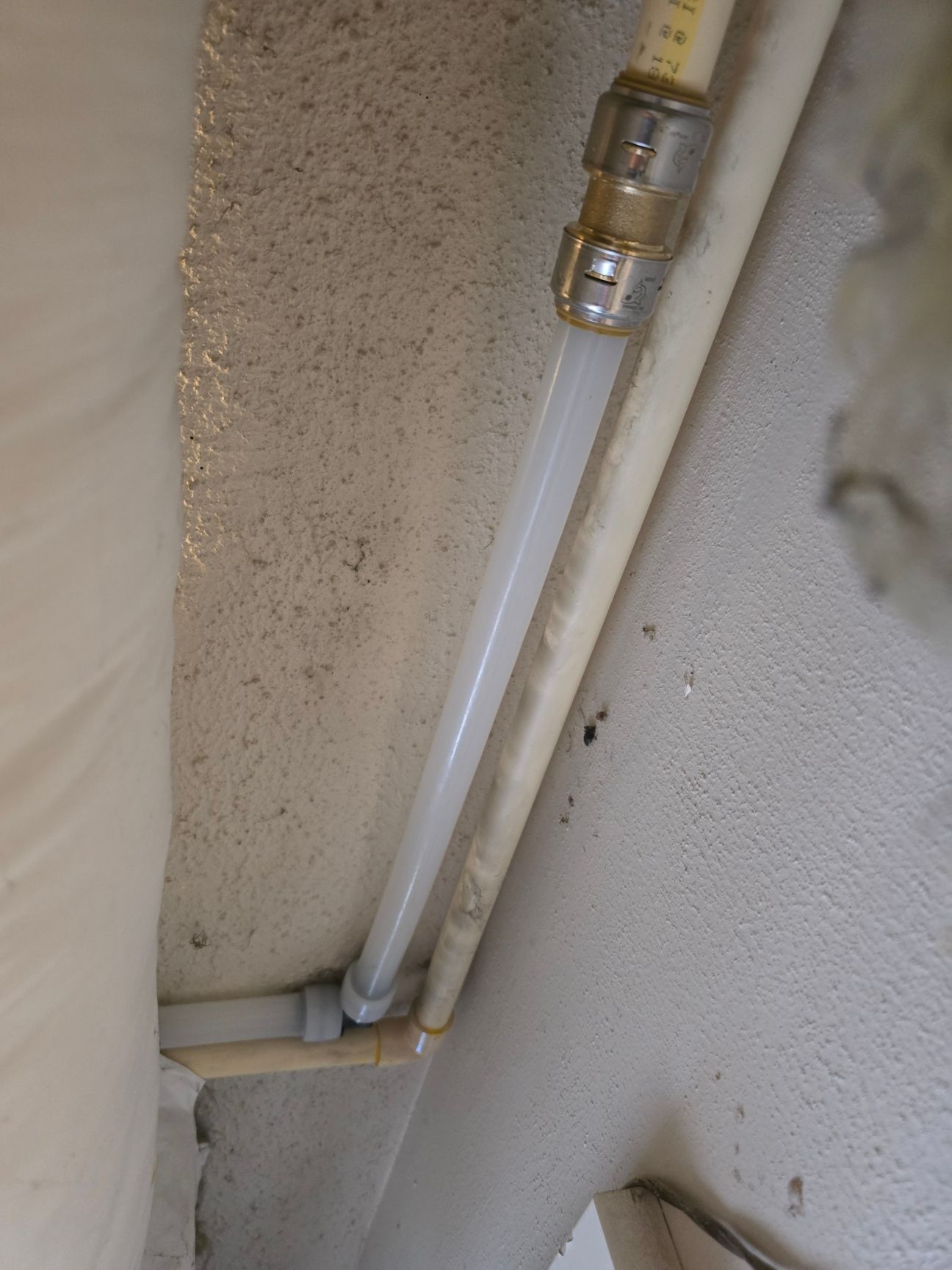
- The pipe material is modern — copper or PEX in good condition with no signs of systemic deterioration
- Pressure testing after repair confirms the rest of the system is intact
- No history of recurring pinhole leaks or pressure loss issues
When freeze damage warrants broader assessment:
- The burst pipe is galvanized steel showing significant internal corrosion — the freeze event cracked an already-weakened system
- Multiple failure points are identified during the freeze event — not a localized problem
- Polybutylene pipe is present anywhere in the system — a freeze event is often the event that reveals polybutylene that should have been replaced years earlier
- The repair cost on recurring freeze-related failures is approaching 50% of a full repiping cost — at that point replacement delivers better long-term value
The Service Source assessment process: Every Service Source emergency response to a burst pipe includes a full visual assessment of the pipe system in the affected area — not just the repair of the immediate failure point. If the inspection reveals conditions that warrant a broader conversation about pipe replacement, we tell you honestly — with the findings to support the recommendation. For more on pipe condition assessment,
read our corroding pipes guide →
How Clark County's Hard Water Makes Frozen Pipe Risk Worse
This is the Clark County-specific compounding factor that most general frozen pipe guides don't address:
Clark County groundwater — particularly from private wells in Yacolt and rural North Clark County — carries calcium and magnesium mineral content that deposits scale on interior pipe walls over time. That scale accumulation does two things that directly increase frozen pipe risk:
It narrows the effective pipe diameter Scale deposits progressively reduce the interior pipe diameter — slowing water flow. Slow-moving or stagnant water freezes significantly faster than water moving at full flow rate. A pipe that's been accumulating scale for years loses the flow velocity that would otherwise keep water temperatures above freezing during a brief cold event.
It acts as a thermal insulator Scale is a poor heat conductor. In a pipe running through an unheated crawl space or exterior wall, the warm indoor air that would normally transfer heat to the water inside is blocked by the insulating scale layer — allowing the water temperature to drop more rapidly toward freezing.
The practical result: A scale-narrowed pipe in a Yacolt crawl space is more likely to freeze at the same outdoor temperature than a clean pipe in the same location. The hard water that causes the scale buildup is also the reason the scale problem is more pronounced here than in softer water regions of western Washington.
What this means for your winterization: Hard water homes in Clark County should prioritize heat tape and pipe insulation on crawl space and exterior wall runs more aggressively than the general prevention guidance suggests — because the scale that's already there has reduced your margin before freezing occurs. A water softener upstream significantly slows the scale accumulation process going forward. For more on water softener options for Clark County well water, read our water softener installation guide →
Service Source Plumbing: Emergency Frozen and Burst Pipe Response Throughout Yacolt and Clark County A frozen pipe that's caught before it bursts is a service call. A burst pipe that's been flowing for 20 minutes before the main shutoff is found is a water damage restoration project.
The difference between those two outcomes is usually preparation — knowing where your shutoff is, having heat tape installed before the freeze arrives, and having Service Source's number saved before you need it.
Service Source Plumbing provides emergency frozen and burst pipe response throughout Yacolt, Clark County, and surrounding North Clark County communities — with the well system expertise, older construction familiarity, and Clark County hard water knowledge that this specific market requires.
What every Service Source frozen pipe response includes:
| Service Component | What It Means for Your Property |
|---|---|
| Emergency availability | Frozen and burst pipe calls handled with urgency — we understand the timeline matters |
| Full system assessment | We look beyond the immediate failure point to identify conditions that contributed to it |
| Well system expertise | Above-ground well components, pressure tank, and riser pipe assessment — not just household plumbing |
| Honest repair vs. replace assessment | If the freeze event reveals a broader pipe system issue — we tell you with the findings to support it |
| Hard water context | Clark County's specific water chemistry factored into every pipe condition assessment |
| Insurance documentation support | Written findings and documentation to support homeowner insurance claims |
| Connected to full plumbing services | If frozen pipe assessment reveals corroding pipes, water softener need, or whole home inspection is warranted — Service Source handles the complete scope |
Don't wait for a freeze event to find out where your shutoff valve is. Contact Service Source Plumbing today to schedule a pre-season frozen pipe prevention assessment for your Yacolt or Clark County property.
Read: Emergency Plumbing Services in Yacolt WA →
Read: Warning Signs Your Pipes Are Corroding →
why choose
service source plumbing?
Get in Touch Today
Homeowners and businesses in Battle Ground, Duluth, Hockinson, Vancouver, Orchards, and Walnut Grove rely on us for our:
- 24/7 emergency services – We’re always ready to assist with urgent plumbing issues.
- Experienced professionals – Our team is trained in advanced drain cleaning techniques.
- State-of-the-art equipment – We use the latest tools to ensure safe and effective unclogging.
- Commitment to customer satisfaction – We deliver reliable, long-term plumbing solutions.
- Preventative inspections – We don’t just fix the issue; we help you prevent future problems.
Recent Posts