The Yacolt Homeowner's Guide to Plumbing Upgrades That Actually Pay You Back
Most plumbing upgrades get framed as a home improvement project. A nicer showerhead. A more modern faucet. A cleaner-looking toilet. The aesthetic argument is real, but it is also the least important reason to upgrade the fixtures in a Yacolt WA home.
The more compelling case is financial. Older plumbing fixtures use significantly more water than their modern equivalents, and that gap shows up in your water bill every month. According to the U.S. Environmental Protection Agency's WaterSense program, the average family can save 2,700 gallons of water per year just by replacing a standard showerhead with a WaterSense-certified model. Replace the toilets too, and the EPA estimates savings of up to 13,000 gallons per year per household. Add low-flow faucet aerators and you add another 700 gallons annually.
These are not hypothetical projections. They are documented savings figures from third-party certified products tested against real household usage patterns. For Yacolt and Clark County homeowners on municipal water, those gallons translate directly into dollars off the utility bill. For homes on private wells, they translate into reduced pump run time, lower energy costs, and less stress on the well system.
This guide covers which plumbing fixture upgrades deliver the strongest return for Yacolt WA homes, what the WaterSense certification actually means, which upgrades can be handled as simple swaps and which ones benefit from a licensed plumber, and what to watch for in older Clark County homes where the plumbing itself may need attention before new fixtures perform correctly.
The new season is a great reason to make and keep resolutions. Whether it’s eating right or cleaning out the garage, here are some tips for making and keeping resolutions.
Lists are great ways to stay on track. Write down some big things you want to accomplish and some smaller things, too.
Check the list regularly
Don’t forget to check in and see how you’re doing. Just because you don’t achieve the big goals right away doesn’t mean you’re not making progress.
Reward yourself
When you succeed in achieving a goal, be it a big one or a small one, make sure to pat yourself on the back.
Think positively
Positive thinking is a major factor in success. So instead of mulling over things that didn’t go quite right, remind yourself of things that did.

Why Older Fixtures Cost More Than Homeowners Realize
The water cost of an aging fixture is invisible until you do the math. Most Yacolt homeowners have no reason to think about how many gallons their showerhead uses per minute. It just runs. But the difference between a standard showerhead installed a decade ago and a current WaterSense-certified model is measurable and ongoing.
Standard showerhead: 2.5 gallons per minute (gpm), per federal plumbing standards WaterSense showerhead: no more than 2.0 gpm, per EPA certification requirements
That 0.5 gpm difference means that a 10-minute shower uses 5 gallons more water with the older fixture than the certified one. Multiply that by the number of showers per week in a household of four, across a full year, and the EPA's documented 2,700 gallon per year savings figure becomes concrete.
Older toilets compound the difference further. Toilets installed before 1980 use approximately 5 gallons per flush, according to EPA data. Toilets installed between 1980 and 1994 use approximately 3.5 gallons per flush. The current federal standard is 1.6 gallons per flush. WaterSense-certified toilets use 1.28 gallons per flush or less. A household with pre-1994 toilets flushing at 3.5 gallons is using more than twice the water of a WaterSense model on every single flush, every single day.
For Yacolt homes with well water, there is an additional factor that utility bills do not capture: pump wear and energy consumption. A well pump that runs more frequently because of high household water demand wears faster and uses more electricity. Reducing household water consumption through fixture upgrades directly reduces pump cycling, extending the system's lifespan and lowering monthly energy costs.
Understanding WaterSense: What the Label Actually Guarantees
The EPA's WaterSense program, launched in 2006, works similarly to the Energy Star label for appliances. Manufacturers submit products for independent third-party testing, and products earn the WaterSense label only after meeting both efficiency and performance criteria. No product earns the label through self-reporting.
What the WaterSense label certifies for each fixture category:
- Showerheads: Maximum flow of 2.0 gpm, tested for spray force, spray coverage, and performance across a range of pressures. A WaterSense showerhead is not a low-pressure showerhead. It must deliver equal or better performance than conventional models to earn certification.
- Toilets: Maximum 1.28 gallons per flush, tested against a standardized flush performance test. The EPA specifies that toilets must clear the bowl adequately at the lower flush volume, addressing the performance concerns associated with early 1990s low-flow models that often required double flushing.
- Bathroom faucets: Maximum 1.5 gpm, down from the 2.2 gpm average of standard models. According to EPA data, a WaterSense faucet upgrade saves the average household up to 700 gallons of water per year.
The WaterSense certification matters for Yacolt homeowners for a practical reason: it removes the guesswork from product selection. A fixture displaying the label has been independently verified to use less water without compromising on performance. Choosing certified products means the savings figures are reliable, not marketing estimates.
Fixture Upgrades by Category: What to Expect in a Yacolt Home
Showerheads
Showerhead replacement is the most straightforward plumbing fixture upgrade available to homeowners. In most cases it requires only a wrench, plumber's tape, and the new fixture. No permit is required, and no licensed plumber is needed for a standard single-outlet shower with no pressure balance issues.
What to consider before selecting a replacement:
- Flow rate: Look for the WaterSense label and confirm the rated gpm. Models at 1.8 gpm or below deliver greater savings than the 2.0 gpm maximum while still meeting the certification's performance standards.
- Pressure compatibility: Homes with well systems or older municipal supply lines sometimes have lower water pressure than the 80 psi household standard. Some high-efficiency showerheads include a pressure-compensating flow restrictor that maintains consistent spray performance across a pressure range. Verify that the selected model performs adequately at your home's actual pressure.
- Existing supply line condition: If the supply arm coming out of the wall shows mineral buildup, corrosion, or is a galvanized pipe, address those issues before installing a new showerhead. The new fixture will not perform well on a compromised supply.
Faucets and Aerators
Kitchen and bathroom faucets can be upgraded to WaterSense-certified models, or existing faucets can be retrofitted with WaterSense-certified aerators, the small screw-on attachment at the faucet tip that controls flow rate. Aerator replacement is the most cost-effective water-saving upgrade available and takes less than five minutes per faucet with no tools required in most cases.
Standard faucet aerators flow at 2.2 gpm. WaterSense aerators flow at 1.5 gpm or less. For a kitchen faucet used multiple times daily, the reduction adds up across the year.
Full faucet replacement is warranted when:
- The existing faucet is leaking: A faucet dripping at one drip per second wastes approximately 3,000 gallons of water per year, according to the EPA. Repair or replacement eliminates that loss entirely.
- The fixture is corroded or has mineral buildup that affects flow: Galvanized supply connections and old compression valves can restrict flow to the point where a new efficient faucet cannot reach its rated performance without also addressing the supply side.
- The homeowner is remodeling the bathroom or kitchen: Full replacement during a renovation is more cost-effective than replacing the aerator now and the faucet body later.
Toilets
Toilet replacement delivers the largest single-fixture water savings of any plumbing upgrade in the home. The EPA estimates that replacing all old, inefficient toilets with WaterSense models can reduce water used for flushing by 20 to 60 percent, saving up to 13,000 gallons per household per year.
For Yacolt homes with toilets installed before 1994, the savings potential from replacement is substantial. The difference between a 3.5 gallon-per-flush toilet and a 1.28 gallon model represents a reduction of more than 60 percent per flush.
Toilet replacement is a job where a licensed plumber adds meaningful value:
- Supply line condition: Older supply lines connecting the toilet to the wall shutoff valve can be corroded or have compression fittings that are brittle with age. A plumber inspects and replaces the supply line as part of the installation, preventing a failure at the connection point that a DIY installer might miss.
- Floor flange condition: The floor flange that the toilet bolts to can corrode, crack, or sit at a height that does not accommodate current toilet base profiles. A plumber assesses the flange and addresses any issues before setting the new toilet.
- Shutoff valve function: The shutoff valve behind the toilet should be exercised and confirmed to be working correctly before a new toilet is installed. Valves that have not been operated in years can fail when turned, requiring replacement of the valve as well.
What Older Yacolt Homes May Need Before Fixture Upgrades
Clark County has a range of housing stock, and Yacolt in particular has homes that predate some of the plumbing materials and standards used in newer construction. Before installing new water-saving fixtures, it is worth understanding what the existing plumbing system consists of.
Galvanized steel supply lines: Homes built before the late 1960s in many Clark County communities used galvanized steel for interior supply lines. Galvanized pipe corrodes from the inside out over decades, progressively restricting flow and introducing rust particles into the water supply. A new showerhead or faucet installed on a galvanized supply system may not flow at its rated capacity and will continue to be affected by the ongoing corrosion in the pipes upstream.
Signs that galvanized supply lines may be present:
- Discolored water, particularly after periods of low use
- Low water pressure at fixtures despite adequate pressure at the meter or pressure tank
- Rust-colored staining inside fixtures or appliances
Polybutylene pipe: Some Yacolt and Clark County homes built between approximately 1978 and 1995 used polybutylene pipe, a gray plastic supply material that was later found to be prone to failure at fittings and connections. If polybutylene is present in a home being considered for fixture upgrades, a full plumbing assessment is advisable before investing in fixture replacement.
Pressure issues on well systems: Homes on private wells in the Yacolt area rely on a pressure tank and pressure switch to maintain consistent household water pressure. If the pressure tank is waterlogged or the pressure switch is set outside the correct range, fixture performance will be inconsistent regardless of what fixtures are installed. Service Source Plumbing can assess well system pressure as part of a fixture upgrade evaluation.
The Right Sequence for a Yacolt Home Fixture Upgrade
Getting the most from plumbing fixture upgrades in Yacolt WA means doing them in the right order and with the right assessment of what the existing system can support.
- Start with a supply system assessment: Confirm water pressure, supply line material, and shutoff valve condition before purchasing fixtures. This determines whether simple fixture swaps will work or whether upstream work is needed first.
- Address leaks before upgrades: Any existing leaks in supply lines, shutoffs, or fixtures should be repaired first. Installing a water-saving showerhead on a system with a dripping faucet elsewhere does not produce net savings.
- Upgrade highest-impact fixtures first: Toilets and showerheads deliver the largest documented water savings per fixture. Prioritize these before faucet aerators for the strongest return on investment.
- Confirm fixture compatibility with your water characteristics: Yacolt area water has moderate hardness. Fixtures with smaller orifices, including some high-efficiency showerhead designs, can be more susceptible to mineral buildup over time. Selecting fixtures with easy-clean nozzle designs reduces long-term maintenance.
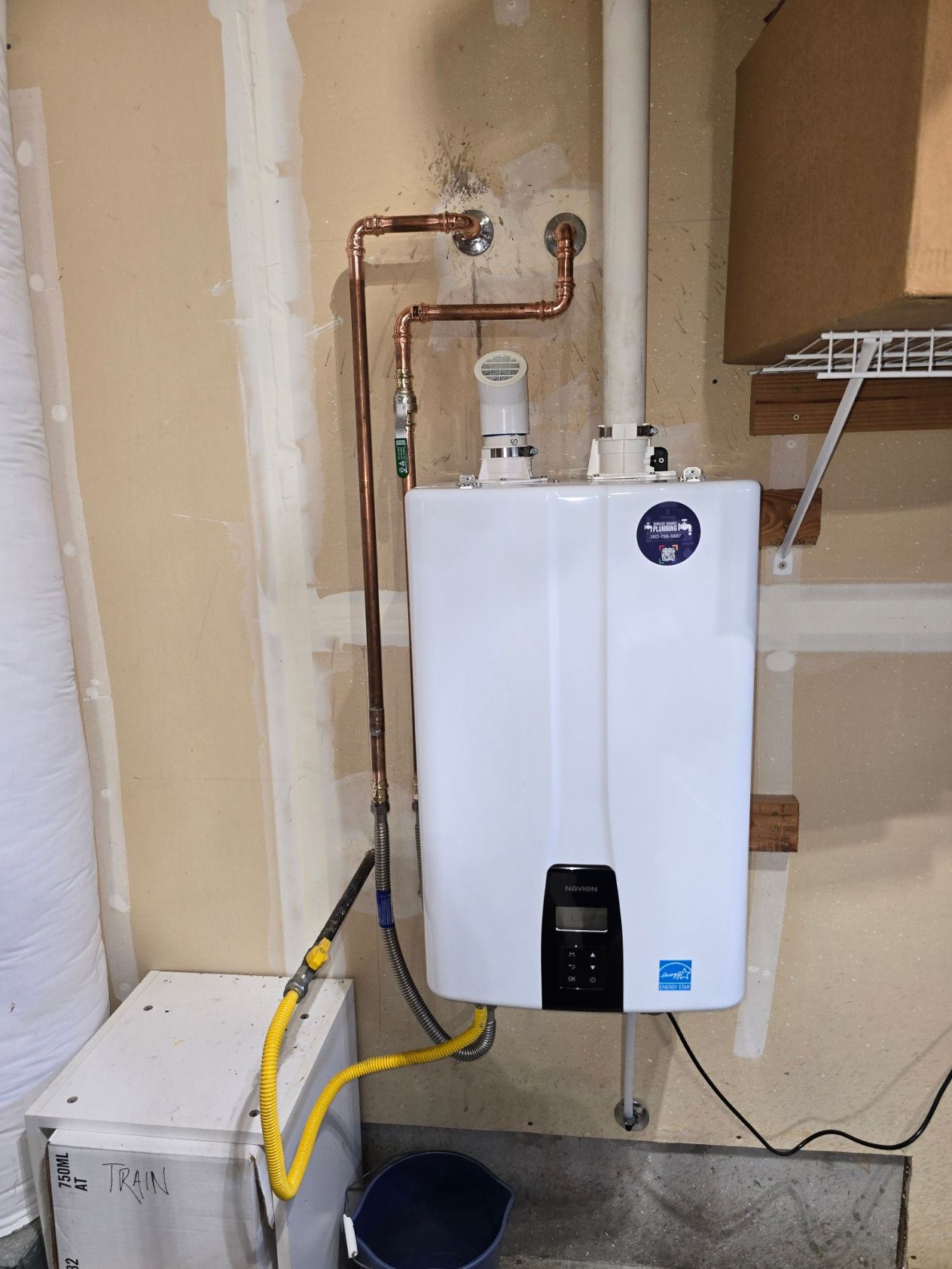
Service Source Plumbing serves Yacolt, Amboy, Battle Ground, La Center, Woodland, and the surrounding Clark County communities with fixture installation, supply line replacement, water heater services, and full plumbing system assessments. For homeowners planning a fixture upgrade, a pre-upgrade plumbing evaluation identifies what the existing system needs before new fixtures are installed and ensures the upgrades perform as intended.
why choose
service source plumbing?
Get in Touch Today
Homeowners and businesses in Battle Ground, Duluth, Hockinson, Vancouver, Orchards, and Walnut Grove rely on us for our:
- 24/7 emergency services – We’re always ready to assist with urgent plumbing issues.
- Experienced professionals – Our team is trained in advanced drain cleaning techniques.
- State-of-the-art equipment – We use the latest tools to ensure safe and effective unclogging.
- Commitment to customer satisfaction – We deliver reliable, long-term plumbing solutions.
- Preventative inspections – We don’t just fix the issue; we help you prevent future problems.