
5 Types of Sump Pumps for Home Use and Which One You Need
Clark County receives approximately 42 inches of rainfall per year, with the wettest months running from November through March. During those months, the water table rises, the ground saturates, and basements and crawl spaces without a functioning sump pump system become vulnerable to flooding events that cause significant and expensive damage.
Service Source Plumbing installs, repairs, and replaces sump pump systems throughout Vancouver, Battle Ground, Yacolt, Hockinson, Woodland, and the surrounding Clark County communities. The calls that involve the most damage are almost never the ones where the pump failed dramatically. They are the ones where the wrong pump was installed for the application, or where no backup existed when the power went out during the same storm that was driving water toward the foundation.
A sump pump is the primary mechanical protection against that outcome. But not every pump is the right pump for every home. This guide covers the five types of residential sump pumps, what each one does, when each one is the right choice, and how Service Source Plumbing determines which system a specific Clark County home actually needs.
The new season is a great reason to make and keep resolutions. Whether it’s eating right or cleaning out the garage, here are some tips for making and keeping resolutions.
Lists are great ways to stay on track. Write down some big things you want to accomplish and some smaller things, too.
Check the list regularly
Don’t forget to check in and see how you’re doing. Just because you don’t achieve the big goals right away doesn’t mean you’re not making progress.
Reward yourself
When you succeed in achieving a goal, be it a big one or a small one, make sure to pat yourself on the back.
Think positively
Positive thinking is a major factor in success. So instead of mulling over things that didn’t go quite right, remind yourself of things that did.

Why Sump Pump Selection Matters More in Clark County
Clark County's combination of heavy winter rainfall, high water tables in low-lying areas near the Columbia River and its tributaries, and frequent power outages during winter storms creates conditions where sump pump failure has immediate, expensive consequences.
| Clark County condition | Why it affects sump pump selection |
|---|---|
| 42 inches of annual rainfall concentrated November through March | High-volume periods test pump capacity and backup systems repeatedly |
| Frequent winter storm power outages | Primary electric pumps stop exactly when conditions are worst |
| Rural Yacolt, Hockinson, and Battle Ground properties on private wells | Eliminates water-powered backup as an option |
| Low-lying areas near waterways | Higher water table raises base moisture load on pump systems year-round |
| Crawl space housing stock throughout Clark County | Creates specific access and drainage requirements for pump placement |
Type 1: Submersible Sump Pump
The default recommendation for most Vancouver WA and Clark County homes
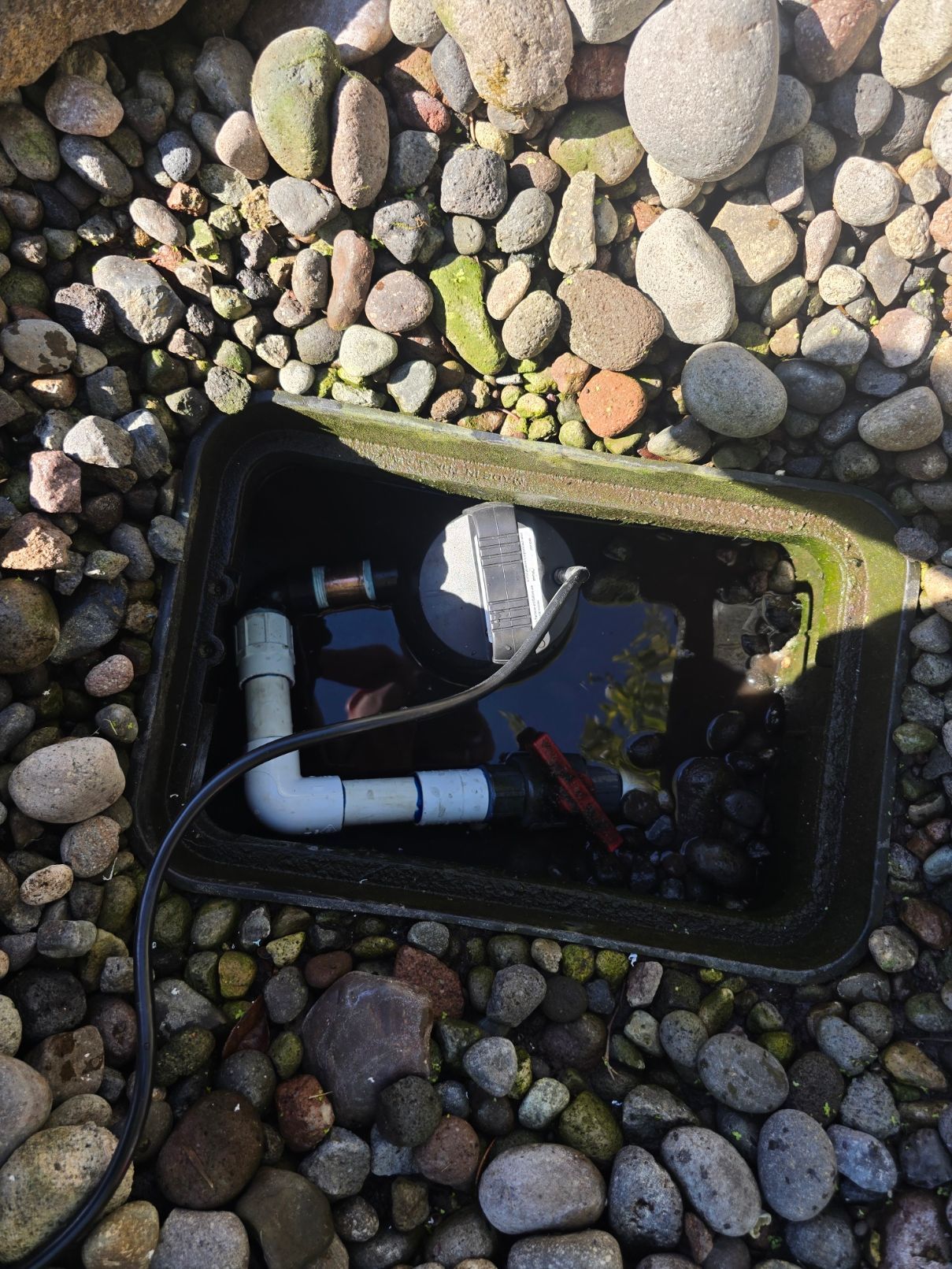
A submersible pump sits entirely inside the sump pit, submerged in water when the pit fills. The waterproof motor housing, float switch, and discharge line work together to activate automatically when water reaches a preset level and move it away from the foundation through the discharge pipe.
According to
Rheem's water heater and pump research, submersible pumps are the most common primary pump installed in residential homes because the water surrounding the motor serves as a natural cooling medium, contributing to quieter and more efficient operation than above-water designs.
| Performance factor | Submersible pump |
|---|---|
| Noise level | Quiet. Motor is submerged and sound-dampened |
| Capacity | Approximately 35 gallons per minute in standard configurations |
| Horsepower options | 1/3, 1/2, and 3/4 HP available for different water volume needs |
| Debris handling | Handles small particles and sediment common in Clark County groundwater |
| Space requirement | Entire unit sits within the pit, no above-floor footprint |
| Lifespan | 7 to 15 years with proper maintenance |
Best for: Standard residential applications in Vancouver, Battle Ground, and surrounding communities where quiet operation, automatic performance, and efficient water removal are the priorities.
Limitation: Stops completely if power is lost. Pairing with a backup system is the standard Service Source Plumbing recommendation for every submersible primary pump installation in Clark County.
Type 2: Pedestal Sump Pump
The right choice for narrow sump pits that cannot accommodate a submersible unit
A pedestal pump places the motor on a vertical column above the pit. Only the impeller that moves water sits below, inside the pit. The motor remains dry at all times, which can extend its service life in some conditions and makes it easier to service without entering the pit.
| Performance factor | Pedestal pump |
|---|---|
| Noise level | Louder than submersible. Motor operates above water |
| Space requirement | Motor column extends above pit edge |
| Best application | Narrow pits in older Clark County homes that cannot fit submersible dimensions |
| Cost | Lower upfront than submersible |
| Heat risk | More prone to overheating under sustained high-demand operation |
Best for: Older Vancouver and Woodland-area homes with narrow sump pits, budget-conscious replacements in moderate water intrusion applications, and situations where easier motor access for service is a priority.
Type 3: Battery Backup Sump Pump
Not optional for Clark County homes. This is what protects you during the storm that knocks out the power.
A battery backup pump is a secondary pump that operates independently of the electrical grid. It sits in the sump pit alongside the primary pump, connected to a rechargeable battery kept charged during normal power conditions. Its float switch is set slightly higher than the primary pump's float, so it only activates when the primary pump stops or when water volume exceeds the primary pump's capacity.
Service Source Plumbing installs battery backup systems on every new primary pump installation in Clark County. The reason is specific: the storms that produce the most water against Clark County foundations are the same storms that knock out power. A primary pump that stops the moment power is lost is not protecting the home during its most critical moments.
According to
The Basement Guide's 2026 sump pump research, modern LiFePO4 battery systems provide 12 to 72 hours of protection on a full charge, a significant improvement over earlier lead-acid systems.
| Battery type | Runtime | Replacement interval | Cost |
|---|---|---|---|
| Lead-acid | 5 to 10 hours typical | Every 3 to 5 years | Lower upfront |
| LiFePO4 (lithium iron phosphate) | 12 to 72 hours | Longer service life | Higher upfront |
Best for: Every Clark County home with a primary sump pump. Battery backup is not an upgrade. It is the standard.
Type 4: Water-Powered Backup Sump Pump
Unlimited runtime, but only for homes on municipal water, not wells
A water-powered backup pump uses the Venturi effect from pressurized municipal water flow to pull water from the sump pit and discharge it, requiring no electricity and no battery. As long as municipal water pressure is available, the system operates indefinitely.
The critical limitation for Clark County: this system requires municipal water supply. Properties in Yacolt, Hockinson, and rural Battle Ground on private wells cannot use water-powered backup because a power outage stops the well pump along with everything else, eliminating the water pressure source the backup depends on.
| Factor | Water-powered backup |
|---|---|
| Power requirement | None. Operates on municipal water pressure |
| Runtime | Unlimited as long as municipal water flows |
| Well property compatible | No. Requires municipal water only |
| Efficiency | Removes approximately 2 gallons of sump water per 1 gallon of city water used |
| Installation requirement | Licensed plumber required for backflow preventer installation |
Best for: Vancouver, Camas, and urban Clark County homes on municipal water supply where unlimited runtime during extended outages is the priority.
Not appropriate for: Yacolt, Hockinson, rural Battle Ground, and any Clark County property on a private well system.
Type 5: Combination Sump Pump System
Primary and backup integrated into one coordinated unit
A combination system includes both a primary submersible pump and a battery backup component in a single integrated unit, managed by one control panel that monitors system status, battery charge, and activation events.
Service Source Plumbing recommends combination systems for new installations and full system replacements where the homeowner wants complete primary and backup protection managed as a single coordinated unit rather than two independently selected systems.
| Factor | Combination system |
|---|---|
| Installation scope | Addresses primary and backup in one project |
| Compatibility | Designed and tested as an integrated unit. |
| Control | Single panel monitors both components. |
| Cost | Higher than primary pump alone, often comparable to two separate units |
| Pit space | Verify dimensions before specifying. Some units require wider pits. |
Best for: New sump installations, full system replacements in homes with active water intrusion history, and homeowners who want complete protection in one coordinated system.
Which Sump Pump Is Right for Your Clark County Home?
| Pump Type | Best For | Water Source | Backup? |
|---|---|---|---|
| Submersible | Standard homes, quiet operation | Any | Needs separate backup |
| Pedestal | Narrow sump pits, older homes | Any | Needs separate backup |
| Battery Backup | Every home as a secondary pump | Any | Is the backup |
| Water-Powered | Extended outage protection | Municipal only | Is the backup |
| Combination | New installs, full replacements | Any | Built in |
Which System Does Your Clark County Home Need?
| Your situation | Recommended system |
|---|---|
| Standard Vancouver or Battle Ground home, municipal water | Submersible primary plus battery backup |
| Older home with narrow sump pit | Pedestal primary plus battery backup |
| Rural property on private well | Submersible primary plus battery backup (water-powered not an option) |
| Urban home on municipal water, extended outage concern | Submersible primary plus water-powered backup |
| New installation or full replacement | Combination system |
| Active flooding history, highest protection priority | Combination system plus water-powered backup if on municipal water |
The four questions Service Source Plumbing asks before recommending any system:
- Water volume: How often does the pit fill and how fast?
- Water source: Municipal supply or private well?
- Power outage history: How long and how frequently does the property lose power?
- Pit condition: What dimensions and current equipment condition allow?
Frequently Asked Questions
How long do sump pumps last in Clark County homes?
Traditional tank-style submersible pumps typically last 7 to 15 years. Battery backup systems with lead-acid batteries need battery replacement every 3 to 5 years. LiFePO4 batteries last significantly longer. Annual inspection by Service Source Plumbing identifies components approaching end of service life before failure.
What happens if my sump pump fails during a storm?
A single basement flooding event causes an average of $10,000 to $50,000 in damage according to The Basement Guide's 2026 data. Battery backup systems exist specifically to prevent this scenario. Service Source Plumbing recommends backup systems on every primary pump installation.
Can I install a sump pump myself?
The pump itself can be placed in an existing pit by a capable homeowner. However, the discharge line routing, check valve installation, and backflow preventer required for water-powered systems all involve plumbing connections that benefit from professional installation to meet Clark County code and ensure correct function.
How do I know if my existing pump is sized correctly?
If the pit fills faster than the pump clears it during heavy rain, or if the pump runs continuously without keeping up with inflow, the system is undersized for the application. Service Source Plumbing can assess whether a higher-horsepower unit or an additional pump is the appropriate solution.
Does homeowner insurance cover sump pump failure damage?
Standard homeowner policies typically exclude flooding from groundwater, which is the scenario sump pumps address. Some policies offer optional water backup and sump pump failure endorsements. Service Source Plumbing recommends reviewing your specific policy and maintaining your pump system with documented service records.
If you're experiencing any of these plumbing issues in Vancouver, Battle Ground, Yacolt, Hockinson, or the surrounding Clark County communities, Service Source Plumbing can inspect the problem, explain your options, and recommend the most practical solution for your home.
Schedule a Service Call |
Sump Pump Services |
Emergency Plumbing |
Water Heater Services |
Read:
6 Plumbing Problems That Always Get Worse When You Wait
why choose
service source plumbing?
Get in Touch Today
Homeowners and businesses in Battle Ground, Duluth, Hockinson, Vancouver, Orchards, and Walnut Grove rely on us for our:
- 24/7 emergency services – We’re always ready to assist with urgent plumbing issues.
- Experienced professionals – Our team is trained in advanced drain cleaning techniques.
- State-of-the-art equipment – We use the latest tools to ensure safe and effective unclogging.
- Commitment to customer satisfaction – We deliver reliable, long-term plumbing solutions.
- Preventative inspections – We don’t just fix the issue; we help you prevent future problems.