How to Shut Off Your Water in a Plumbing Emergency in Vancouver WA
Most plumbing emergencies do not announce themselves in advance. A pipe bursts at 11pm. A supply line behind the washing machine gives way on a Saturday morning. A water heater connection fails while everyone is at work. By the time a homeowner in Vancouver, Battle Ground, Hockinson, or Yacolt realizes something is wrong, water is already moving through walls, floors, and ceilings.
The single most important thing a homeowner can do in those first minutes is not call a plumber. It is shut off the water.
Every minute a burst pipe runs uninterrupted, it can release hundreds of gallons into the structure. According to FEMA, just one inch of water inside a home can cause up to $25,000 in damage. The average insurance payout for water damage claims between 2019 and 2023 was over $15,000 per claim according to the Insurance Information Institute, and that figure assumes prompt response. The longer water runs before the supply is cut, the higher that number climbs.
Service Source Plumbing serves homeowners across Clark County, including Vancouver, Battle Ground, Yacolt, Hockinson, and surrounding communities. This is the step-by-step guide the team wants every household to read before a plumbing emergency happens, not during one.
The new season is a great reason to make and keep resolutions. Whether it’s eating right or cleaning out the garage, here are some tips for making and keeping resolutions.
Lists are great ways to stay on track. Write down some big things you want to accomplish and some smaller things, too.
Check the list regularly
Don’t forget to check in and see how you’re doing. Just because you don’t achieve the big goals right away doesn’t mean you’re not making progress.
Reward yourself
When you succeed in achieving a goal, be it a big one or a small one, make sure to pat yourself on the back.
Think positively
Positive thinking is a major factor in success. So instead of mulling over things that didn’t go quite right, remind yourself of things that did.

Why Clark County Homes Are Particularly Vulnerable
The Pacific Northwest climate creates specific plumbing vulnerability that homeowners in Vancouver, Battle Ground, and Yacolt deal with that homeowners in warmer regions do not face in the same way.
Clark County's winters regularly bring freezing temperatures that affect pipes in crawl spaces, exterior walls, garages, and anywhere else that lacks adequate insulation. Homes with crawl spaces, which are common throughout the rural areas around Yacolt and Hockinson, are especially susceptible to pipe freezing because the crawl space is often unheated and exposed to outdoor temperatures.
The wet season in Southwest Washington also means that soil movement and settling from sustained rain can stress underground supply lines and connections at the foundation. Supply lines that have been in place for twenty or thirty years in older neighborhoods throughout Vancouver and Battle Ground may be nearing the end of their service life, and that combination of age and seasonal stress makes unexpected failures more likely.
The speed at which a homeowner can cut the water supply in these situations determines how much of that damage is contained and how much becomes a full restoration project.
Finding Your Main Water Shutoff Valve
The main water shutoff valve controls all water entering your home. When it is closed, every faucet, toilet, appliance, and fixture in the house stops receiving supply. This is the valve that matters most in any significant plumbing emergency.
The challenge is that its location varies by home construction type. Every adult in a household should know where this valve is located before a problem occurs. A burst pipe is not the moment to start searching.
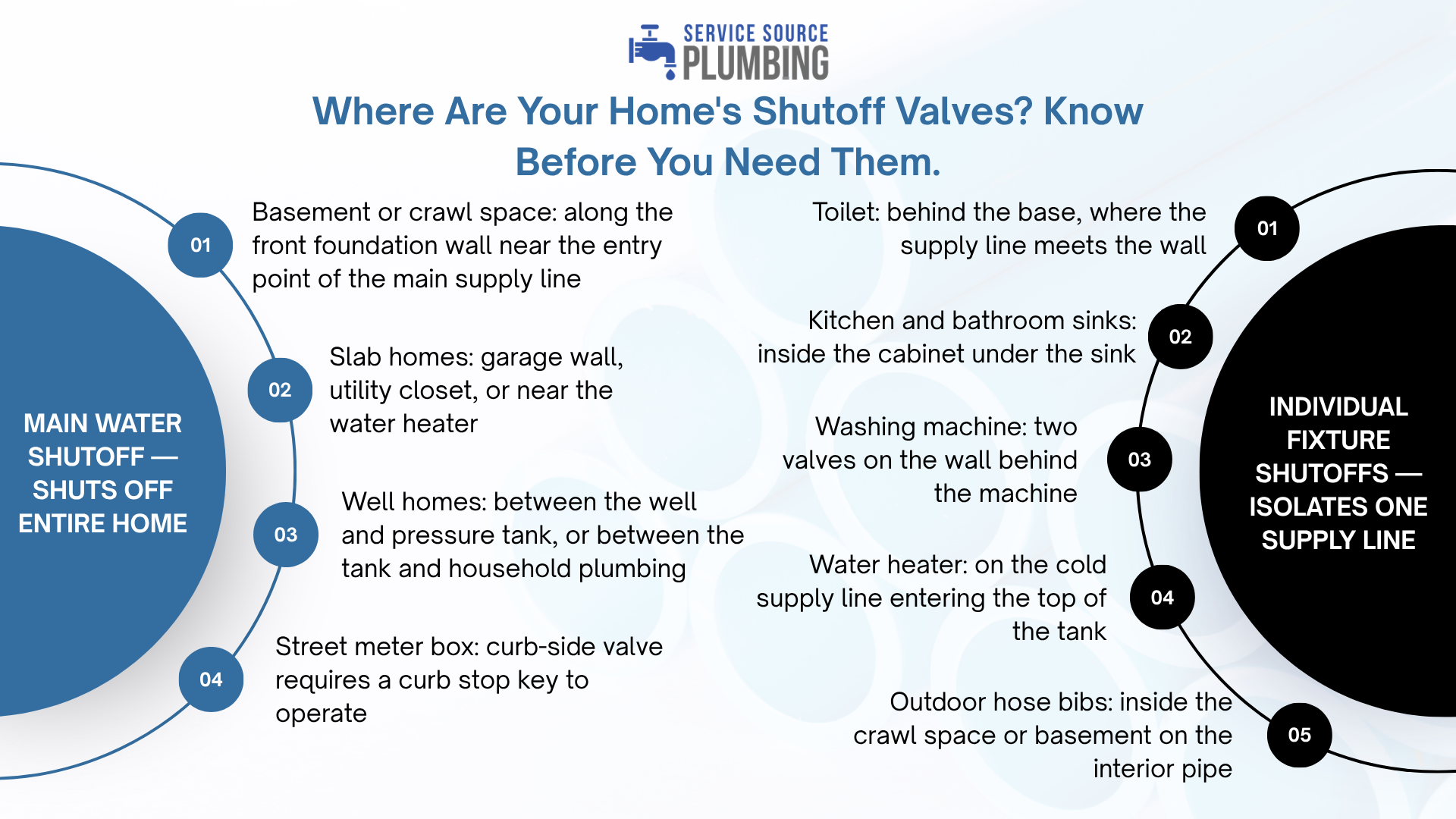
For homes with a basement or crawl space (common in older Vancouver and Battle Ground neighborhoods): The main shutoff valve is typically located along the front foundation wall, within three to five feet of where the main supply line enters the house. It will be on the wall closest to the street, near floor level, usually where you see the main water line coming through the concrete.
For homes built on a slab (common in newer Clark County subdivisions): Without a basement, the valve is most often found in the garage, a utility closet, or near the water heater. Check the garage walls and the mechanical room first.
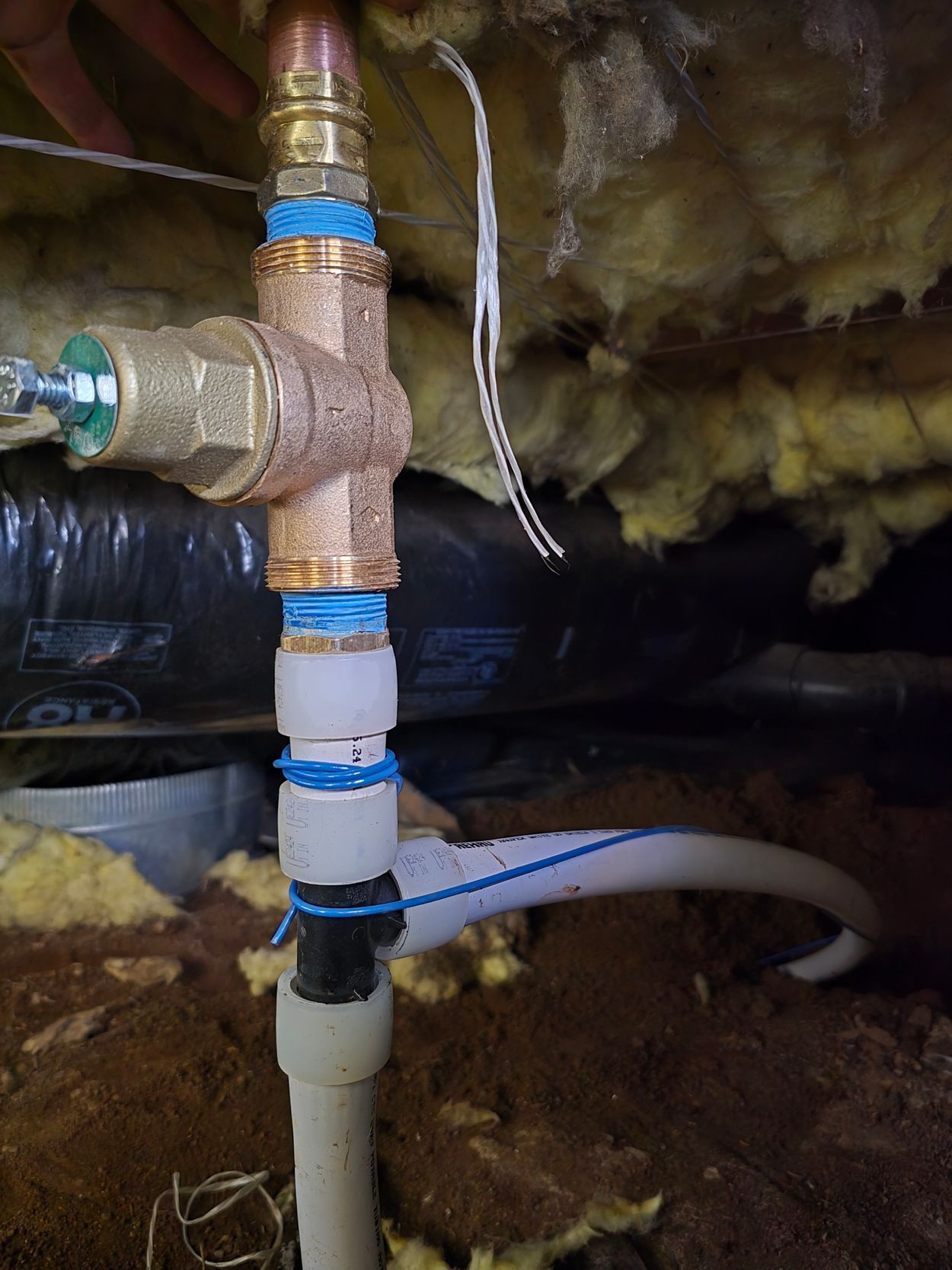
For homes with a crawl space in Yacolt, Hockinson, or rural Clark County: The valve may be in the crawl space itself or at the point where the line enters from the well or municipal supply. If your home uses a well, there are typically two shutoff points: one between the well and the pressure tank, and a second between the pressure tank and the household plumbing.
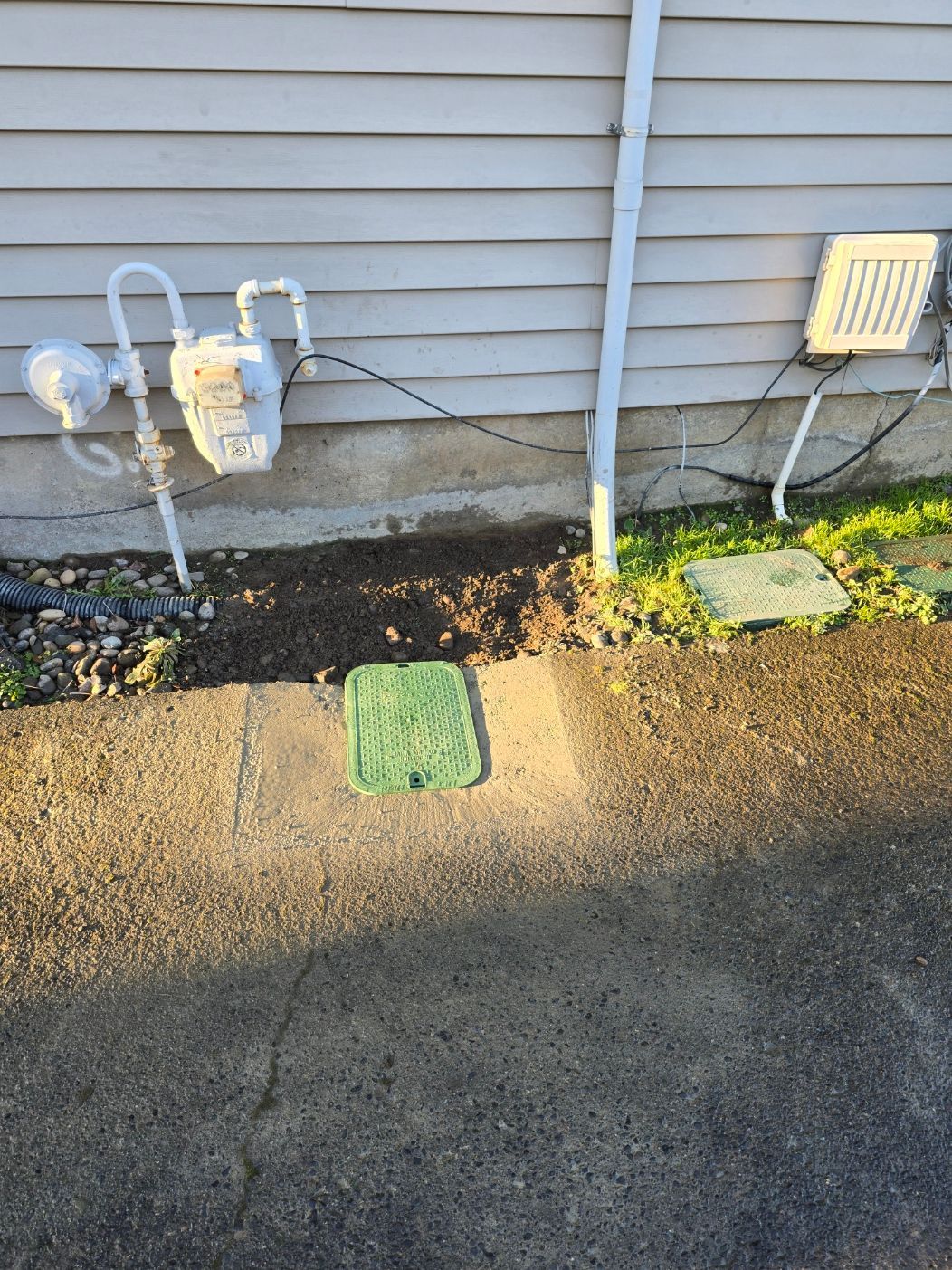
If you cannot locate the interior valve: There is a shutoff at the street inside the water meter box, typically marked with a lid at or near the property line. A curb stop key or T-handle wrench, available at any hardware store, is required to operate this valve. According to the WSSC Water utility guidance on shutoff valves, operating the curb-side valve is appropriate in an emergency when the interior valve cannot be reached or is not functioning.
Once you find the valve, note what type it is:
| Valve type | Appearance | How to close it |
|---|---|---|
| Ball valve | Lever handle, usually chrome or brass | Turn the lever 90 degrees so it is perpendicular to the pipe. This takes one quarter turn and stops flow completely |
| Gate valve | Round wheel handle | Turn clockwise until fully closed. May take several full rotations. Common in homes built before 1980 |
Gate valves are the most common failure point in older homes. They can seize after years of non-use and fail to close fully. If your home has a gate valve and it does not turn freely, or does not fully stop water flow, have it replaced with a ball valve. Service Source Plumbing handles this replacement throughout Clark County and it is one of the most practical preventive investments a homeowner can make.
Individual Fixture Shutoff Valves
Not every plumbing emergency requires shutting off the entire house. Many situations involve a single fixture or appliance, and every plumbed fixture in your home has its own individual shutoff valve that isolates that supply line without affecting the rest of the house.
Knowing these locations matters because they allow for a faster and less disruptive response to isolated problems.
| Fixture or appliance | Where to find the individual shutoff valve |
|---|---|
| Toilet | Behind or beside the base of the toilet, where the supply line connects to the wall. Turn clockwise to close |
| Kitchen sink | Inside the cabinet below the sink. Two valves will be present, one for hot and one for cold |
| Bathroom sink | Inside the vanity cabinet below the sink. Same two-valve arrangement |
| Washing machine | Behind the machine, two valves on the wall where the hoses connect. Turn both clockwise |
| Dishwasher | Under the kitchen sink, on the hot water supply line. Sometimes shares a valve with the sink |
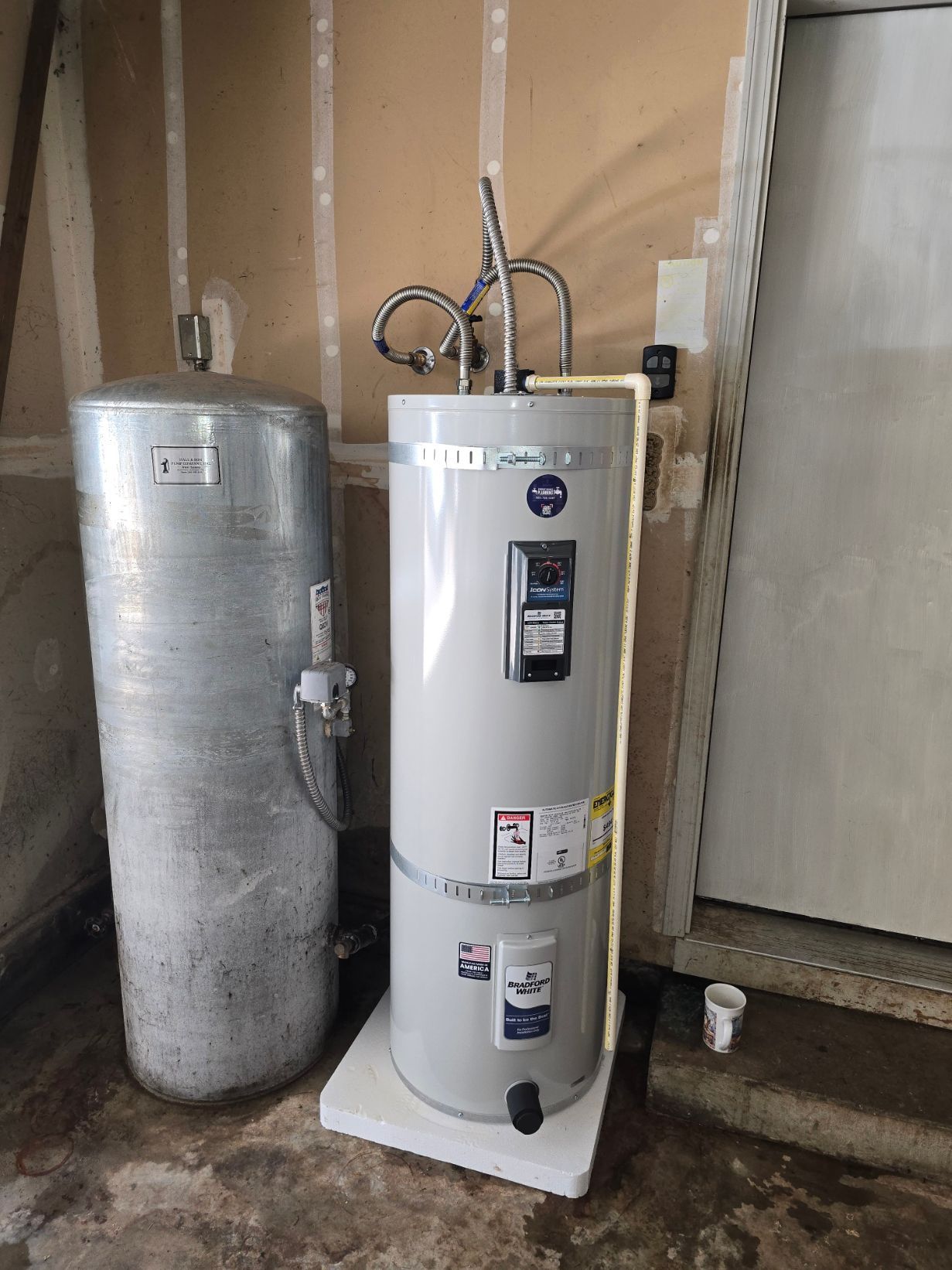
| Water heater | On the cold water supply line entering the top of the tank. Turn clockwise to close |
| Refrigerator ice maker | Behind the refrigerator or under the kitchen sink, small valve on the supply line |
| Outdoor hose bibs | In the crawl space or basement, on the pipe that feeds each exterior hose connection |
Shutting off the main water valve stops the active emergency. The next steps in the first thirty minutes determine how much additional damage occurs before the repair is made.
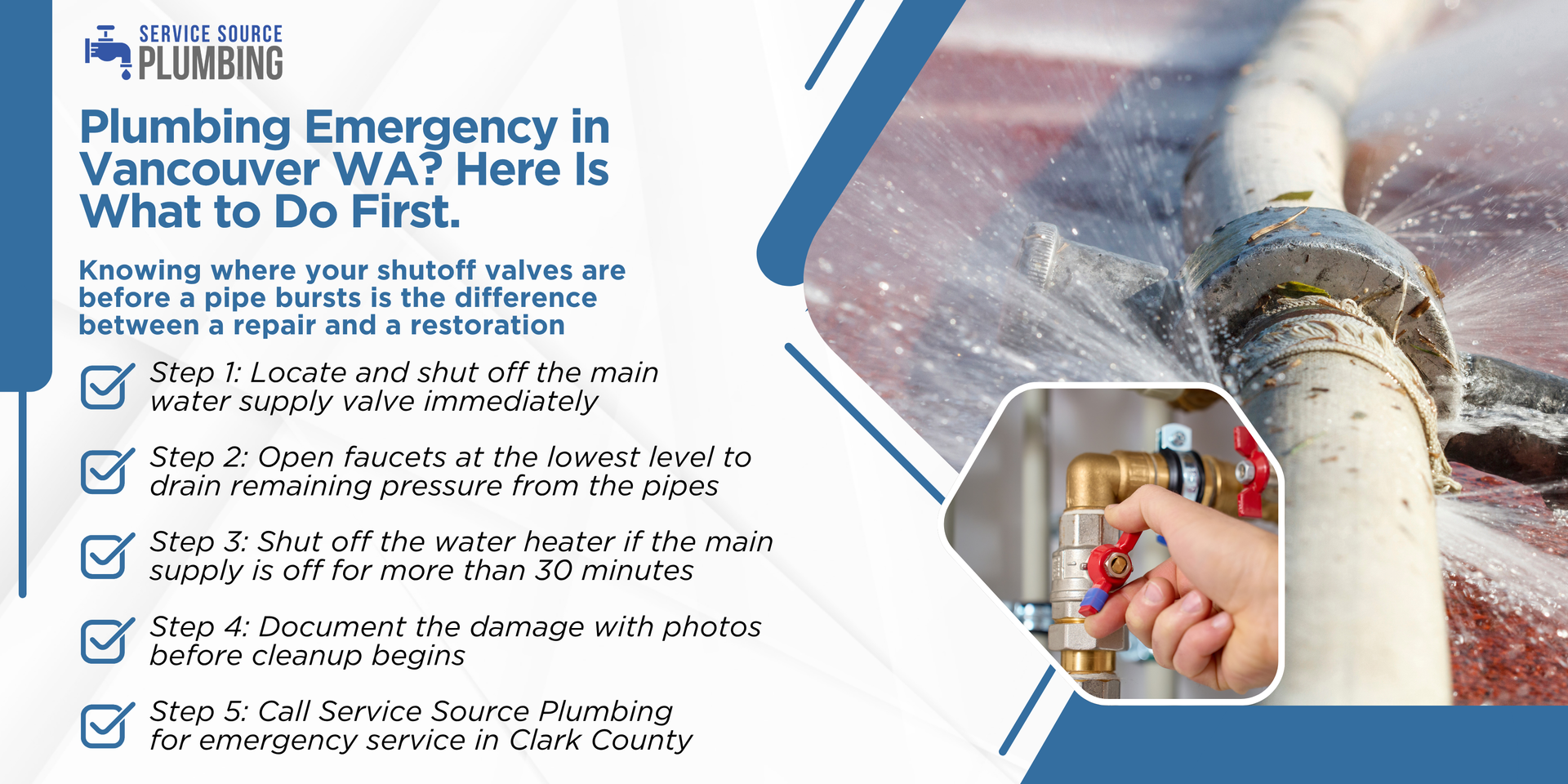
Open a faucet at the lowest level of the home. After the main valve is closed, water remains in the pipes under pressure. Opening a faucet on the ground floor or in the basement releases that pressure and drains the remaining water in the lines. This prevents continued dripping from the damaged area and relieves stress on the pipe fittings.
Shut off the water heater if the main supply will be off for more than thirty minutes. Running a water heater without water in the tank can damage the heating element and in some cases cause the tank to overheat. Turn the water heater to the pilot setting if it is gas, or switch the circuit breaker to the off position if it is electric.
Document everything before cleanup begins. Take photographs and video of all visible water, damaged materials, affected walls, flooring, and ceilings. This documentation is what your insurance company will use to process the claim. Once drying and cleanup begins, the evidence of the extent of damage may no longer be visible. According to the EPA and CDC guidance on mold prevention, mold can begin growing within 24 to 48 hours of a water intrusion event, which creates urgency around drying, but documentation should happen before that process starts.
Remove standing water as quickly as possible. Towels, mops, wet-dry vacuums, and any available tools should be used to remove standing water from floors immediately. Every additional hour that standing water sits in contact with flooring, walls, and subfloor materials increases the scope and cost of restoration.
Call Service Source Plumbing for emergency service. Once the supply is shut off and immediate safety steps are taken, an emergency plumber is the next call. Service Source Plumbing provides emergency plumbing services across Clark County including Vancouver, Battle Ground, Yacolt, and Hockinson. The team can assess the burst or failed component, make the repair, and restore service safely.
The Most Common Plumbing Emergencies in Clark County Homes
Understanding which situations are most likely to occur helps homeowners in Vancouver, Battle Ground, and surrounding areas recognize the early signs and respond faster.
Burst pipes from freezing: Pipes in unheated crawl spaces, exterior walls, and garages are most at risk during Clark County's coldest nights. A pipe that has frozen and then thaws often bursts at the weakest point along the freeze. The water inside expands as it freezes, and that expansion is what fractures the pipe wall. Homes in rural Yacolt and Hockinson with longer supply runs in exposed locations are particularly vulnerable.
Supply line failures: The flexible braided supply lines that connect the main plumbing to toilets, sinks, and appliances have a typical service life of eight to ten years. A supply line that has been in place for fifteen years and has never been inspected is a significant risk. When these lines fail, they fail completely and release water continuously until the fixture shutoff valve or the main valve is closed.
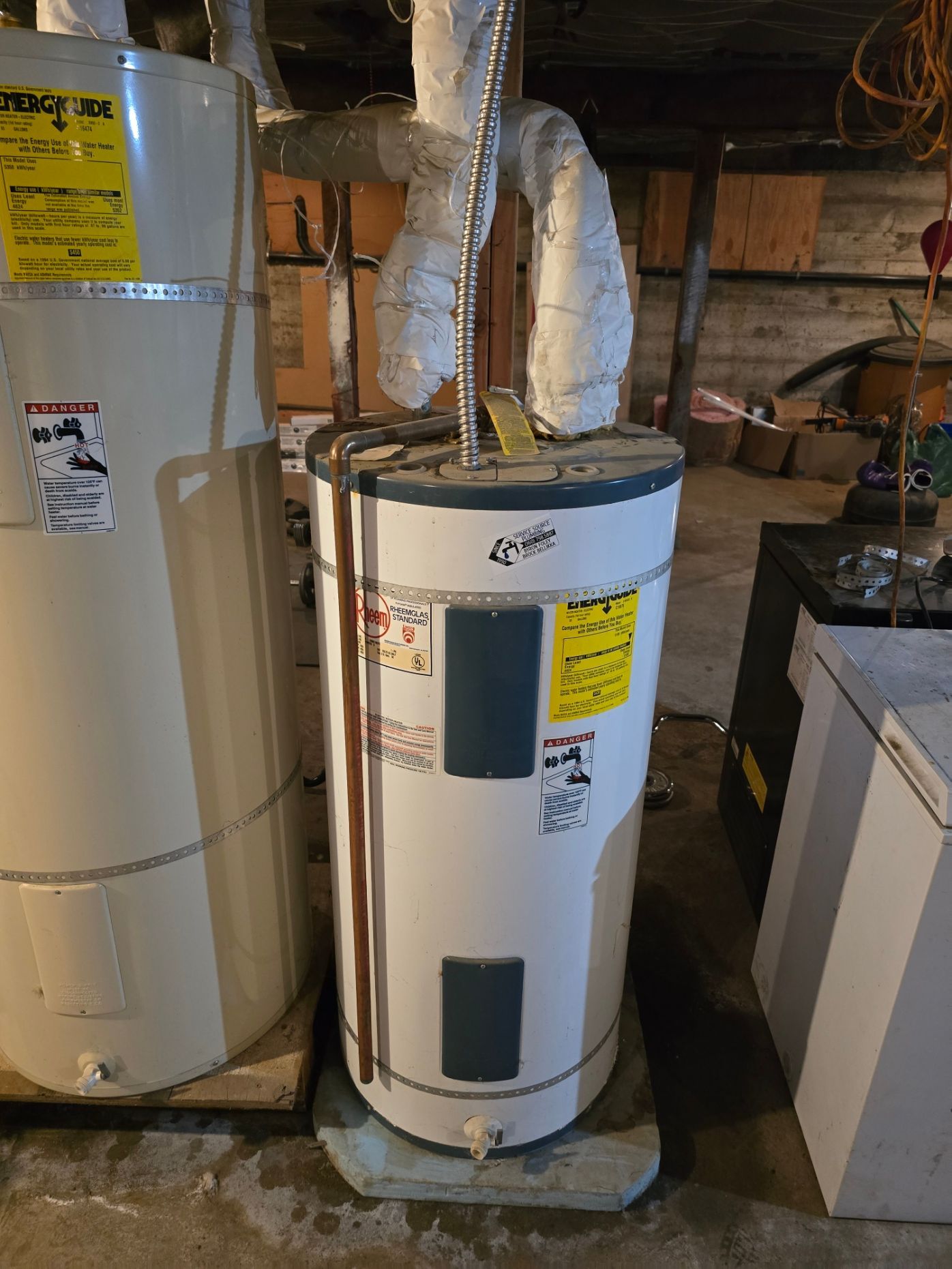
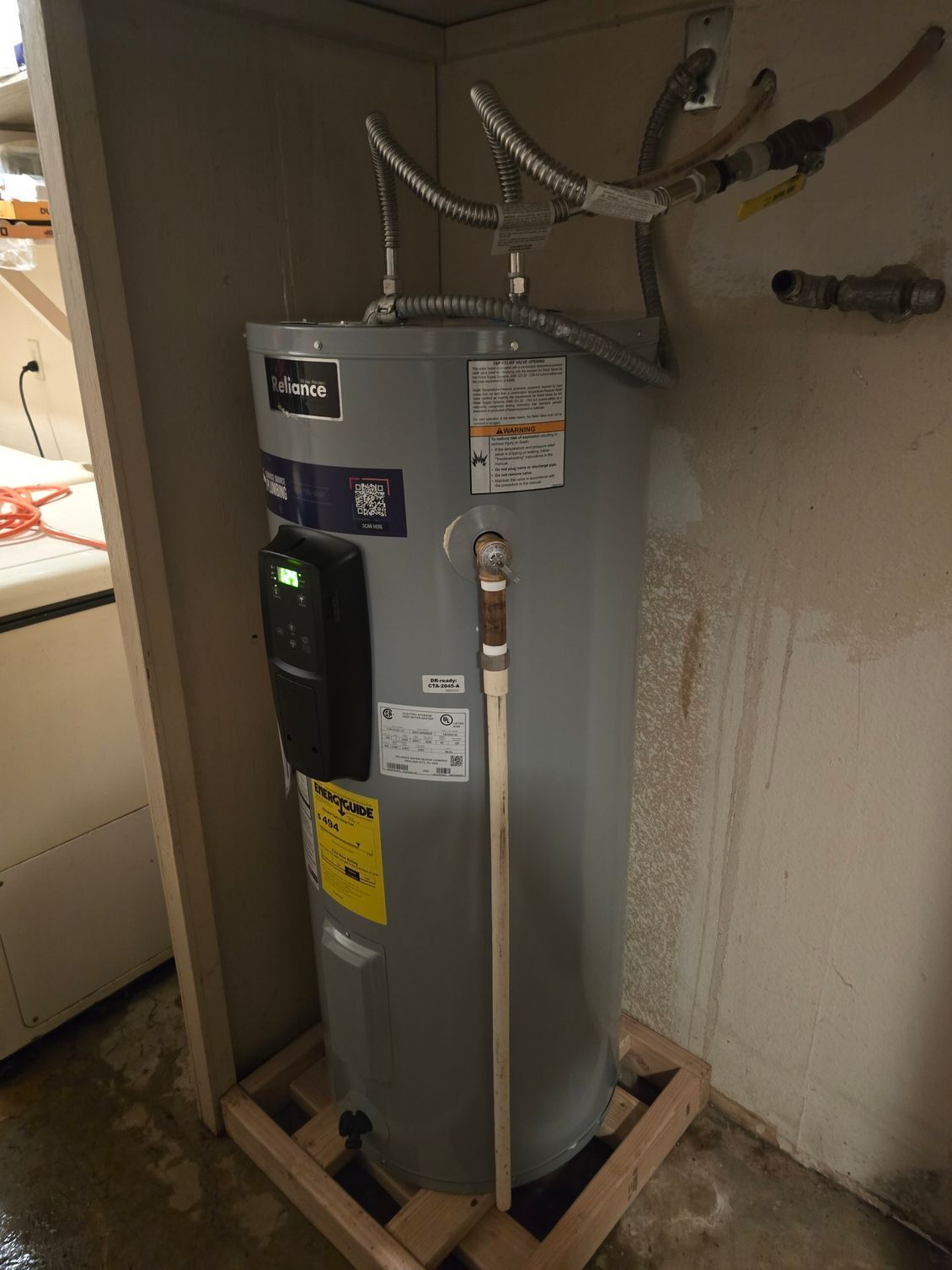
Water heater connection failures: The connections at the top of the water heater, where the hot and cold supply lines attach, are a common failure point in older units. The inlet and outlet connections can corrode, particularly in Clark County homes where mineral content in the water accelerates that process. An annual inspection of these connections is one of the most effective preventive steps a homeowner can take.
Pipe joint failures in older homes: Homes in established Vancouver neighborhoods, particularly those built in the 1970s and 1980s, may have galvanized steel or early copper plumbing that has reached or exceeded its intended service life. Joints and fittings that have been under pressure for decades are susceptible to slow leaks that eventually become failures.
For a related look at how to address corrosion before it becomes an emergency, the
Service Source Plumbing blog on warning signs of corroding pipes walks through what to look for in Clark County homes.
Frequently Asked Questions
What should I do first when I discover a plumbing emergency at home?
Shut off the water supply immediately. If you can identify which fixture or appliance is the source, close that individual shutoff valve. If the problem is unclear or the individual valve cannot be found, shut off the main water supply valve. Do not wait to locate the source before shutting off the supply. The main valve is the safest choice when there is any uncertainty about where the water is coming from.
Where is the main shutoff valve in a home with a crawl space in Yacolt or Hockinson?
In homes with crawl spaces, the main shutoff valve is typically located either in the crawl space near the point where the supply line enters from the meter or well, or at the access point to the crawl space where the pipe transitions into the home. If your home uses well water, there will typically be a shutoff between the well and the pressure tank, and a second one between the tank and the household supply. Service Source Plumbing can identify and label these locations during a service visit.
My main shutoff valve is stuck and will not turn. What do I do?
Do not force it. Applying excessive pressure to a seized gate valve can break it entirely and make the situation worse. If the interior valve cannot be operated, shut off water at the street meter box using a curb stop key. Contact Service Source Plumbing to replace the failed gate valve with a ball valve as soon as the emergency is resolved. A stuck shutoff valve is one of the most preventable but overlooked hazards in older homes.
How long do I have before water damage becomes a mold problem?
According to EPA guidance on mold prevention, mold can begin growing within 24 to 48 hours of a water intrusion event. In the Pacific Northwest's humid climate, that window may be shorter. The priority after shutting off the supply is removing standing water and beginning the drying process as quickly as possible, while also documenting all damage for insurance purposes before cleanup begins.
Does homeowners insurance cover a burst pipe in Clark County?
Standard homeowners insurance policies typically cover water damage from sudden and accidental events, including burst pipes and supply line failures. Coverage generally does not apply to gradual leaks, neglected maintenance, or flooding from external sources. Document the damage thoroughly with photographs before any cleanup begins, and contact your insurer as early as possible. Service Source Plumbing can provide documentation of the repair for insurance purposes upon request.
Does Service Source Plumbing offer emergency plumbing service in Vancouver and Battle Ground WA?
Yes. Service Source Plumbing provides emergency plumbing services throughout Clark County, including Vancouver, Battle Ground, Yacolt, Hockinson, and surrounding communities. If you have an active plumbing emergency, call (360) 798-5887 directly.
If you have a plumbing emergency in Vancouver, Battle Ground, Yacolt, Hockinson, or anywhere in Clark County, shut off your water supply first and then contact Service Source Plumbing. The team handles burst pipe repair, supply line replacement, and emergency plumbing response throughout the region.
why choose
service source plumbing?
Get in Touch Today
Homeowners and businesses in Battle Ground, Duluth, Hockinson, Vancouver, Orchards, and Walnut Grove rely on us for our:
- 24/7 emergency services – We’re always ready to assist with urgent plumbing issues.
- Experienced professionals – Our team is trained in advanced drain cleaning techniques.
- State-of-the-art equipment – We use the latest tools to ensure safe and effective unclogging.
- Commitment to customer satisfaction – We deliver reliable, long-term plumbing solutions.
- Preventative inspections – We don’t just fix the issue; we help you prevent future problems.